Reference image
Object guide
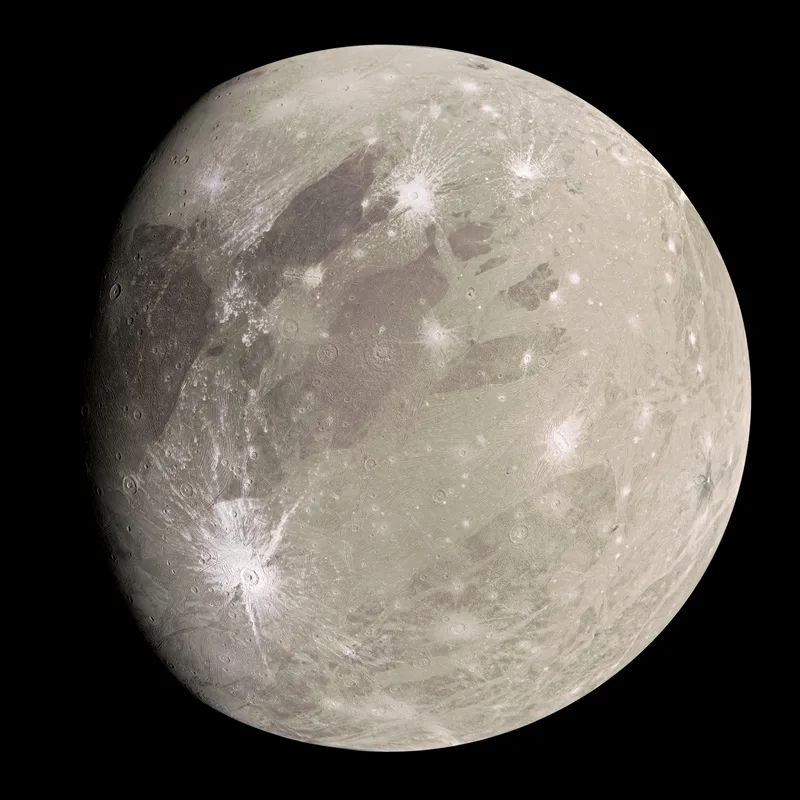
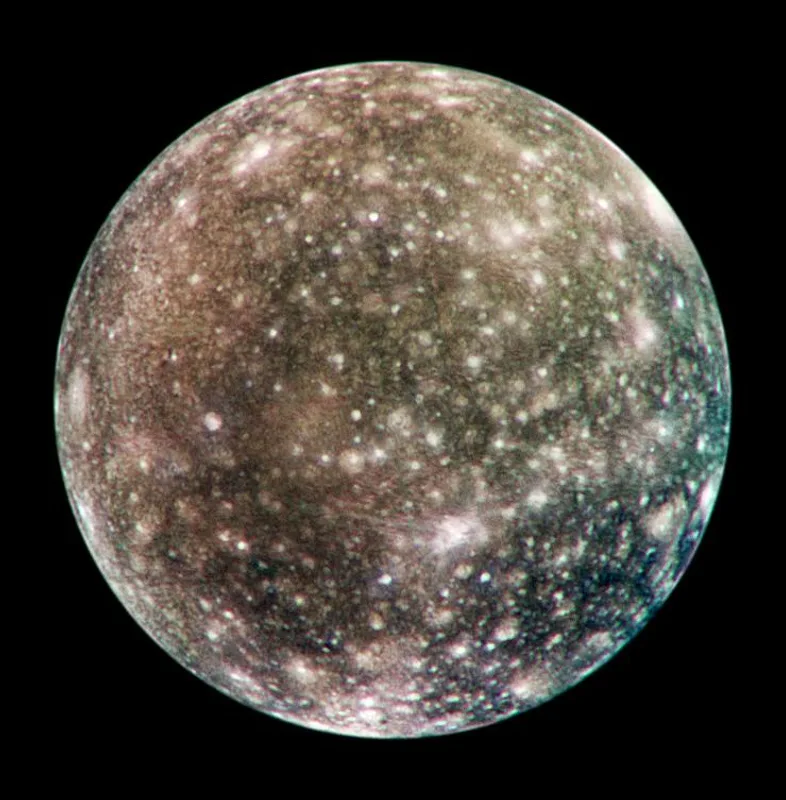
Ganymede is the largest moon in the Solar System (larger than Mercury) and the only moon known to have its own intrinsic magnetic field. Its surface is a mixture of older, heavily cratered terrain and younger grooved regions. Ganymede is approximately 5,268.2 km across.
How to observe Ganymede
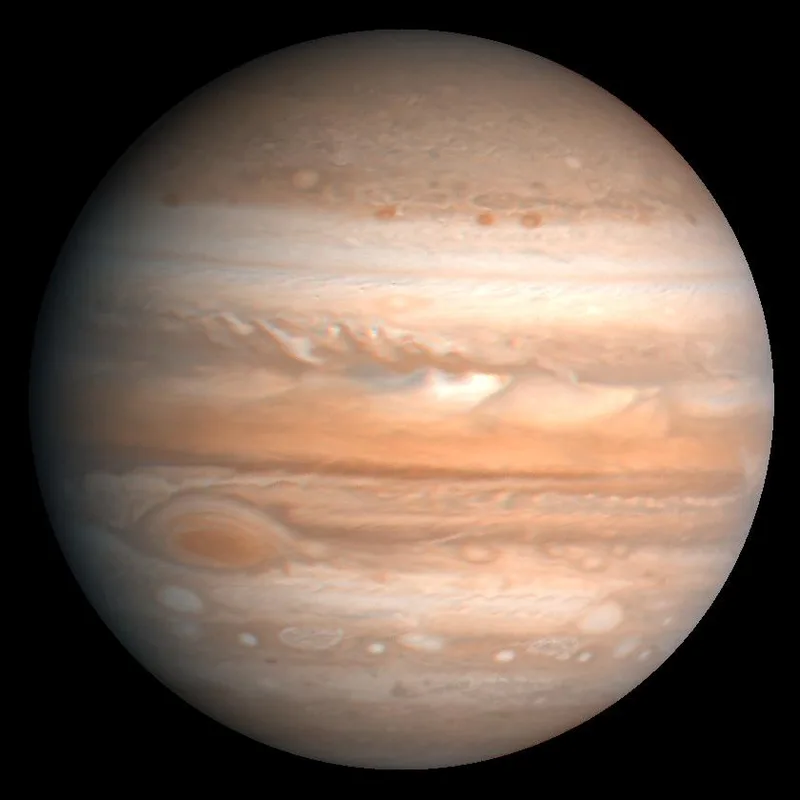
Ganymede is resolved as a separate world mainly through imaging or spacecraft data; visually, its relationship to jupiter is the key observing context.
Scientific context
Useful scale comparisons are 0.413 Earth diameters, 0.146 g surface gravity, 0.02 Earth years per orbit. These values are rounded from the catalogue measurements shown on this page.
- Radius
- 2,634.1 km
- Diameter
- 5,268.2 km
- Mass
- 1.48E+23 kg
- Mean density
- 1.933 g/cm³
- Surface gravity
- 1.428 m/s² (0.146 g)
- Orbital period
- 7.1546 days (0.02 years)
- Parent body
- jupiter
0.413 Earth diameters0.146 g surface gravity0.02 Earth years per orbit
Source: NASA Science (checked 2026-08-09). Values are rounded catalogue measurements.
Interactive orbit model
Aug 13, 2026, 22:251×
Calculated positions / separate exploration scales