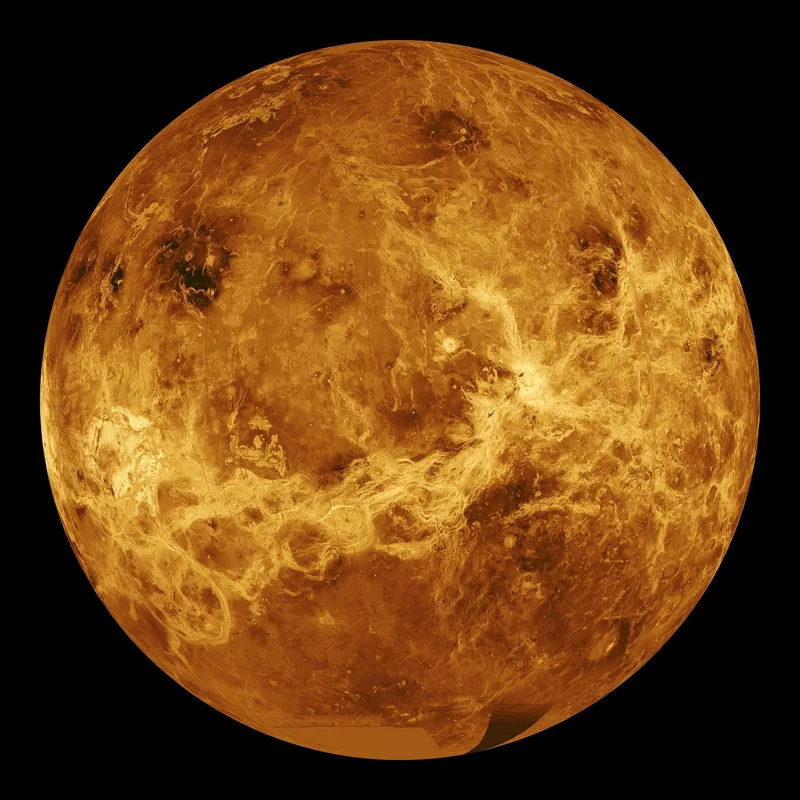
Venus is similar in size to Earth but has a crushing carbon-dioxide atmosphere and sulfuric-acid clouds. A runaway greenhouse effect produces surface temperatures hot enough to melt lead; surface features (volcanic plains, large shield volcanoes) have been revealed by radar. Venus is approximately 12,102 km across.
How to observe Venus
Venus is best observed near opposition or greatest elongation as appropriate; steady seeing and repeated short observations reveal more than excessive magnification.
Scientific context
Useful scale comparisons are 0.95 Earth diameters, 0.904 g surface gravity, 0.615 Earth years per orbit. These values are rounded from the catalogue measurements shown on this page.
- Radius
- 6,051 km
- Diameter
- 12,102 km
- Mass
- 4.867E+24 kg
- Mean density
- 5.244 g/cm³
- Surface gravity
- 8.87 m/s² (0.904 g)
- Mean temperature
- 464°C
- Orbital period
- 224.7 days (0.615 years)
- Semi-major axis
- 0.72 AU
- Mean sunlight travel time
- 5.99 minutes
Source: NASA Science (checked 2026-08-09). Values are rounded catalogue measurements.