Reference image
Object guide
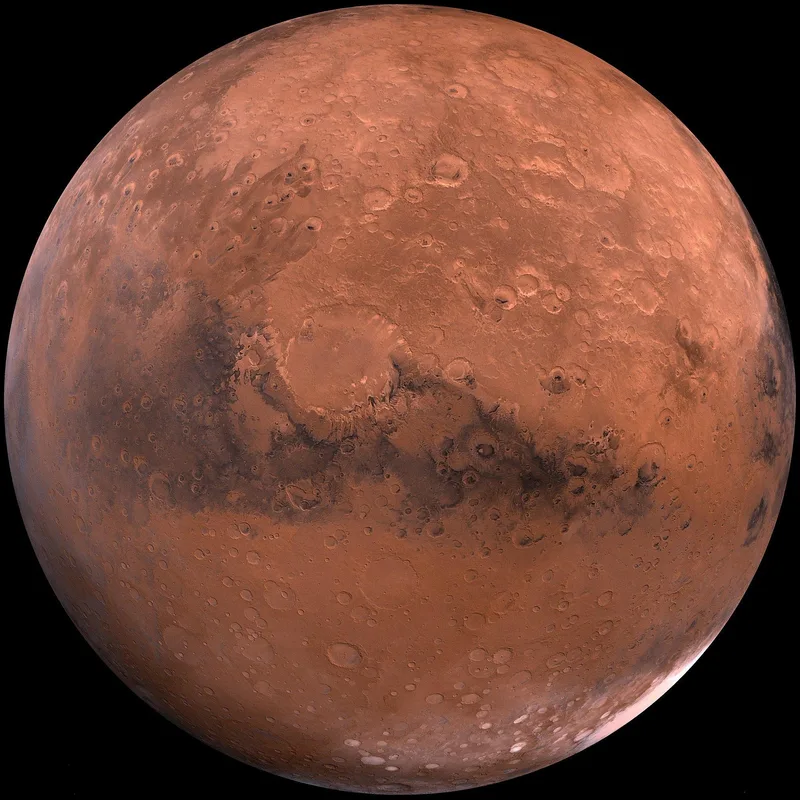
Mars, the Red Planet, has a cold, dry surface covered in iron-oxide dust. Evidence of ancient river channels and lakebeds shows it once had liquid water on the surface. It hosts the largest volcano and the deepest canyon in the Solar System. Mars is approximately 6,778 km across.
How to observe Mars
Mars is best observed near opposition or greatest elongation as appropriate; steady seeing and repeated short observations reveal more than excessive magnification.
Scientific context
Useful scale comparisons are 0.532 Earth diameters, 0.378 g surface gravity, 1.881 Earth years per orbit. These values are rounded from the catalogue measurements shown on this page.
- Radius
- 3,389 km
- Diameter
- 6,778 km
- Mass
- 6.417E+23 kg
- Mean density
- 3.936 g/cm³
- Surface gravity
- 3.71 m/s² (0.378 g)
- Mean temperature
- -63°C
- Orbital period
- 687 days (1.881 years)
- Semi-major axis
- 1.52 AU
- Mean sunlight travel time
- 12.64 minutes
0.532 Earth diameters0.378 g surface gravity1.881 Earth years per orbit
Source: NASA Science (checked 2026-08-09). Values are rounded catalogue measurements.
24-hour altitude profile
90°
60°
30°
0°
-10°
10:25
14:25
18:25
22:25
02:25
06:25
10:25
Interactive orbit model
Aug 13, 2026, 22:251×
Calculated positions / separate exploration scales