Reference image
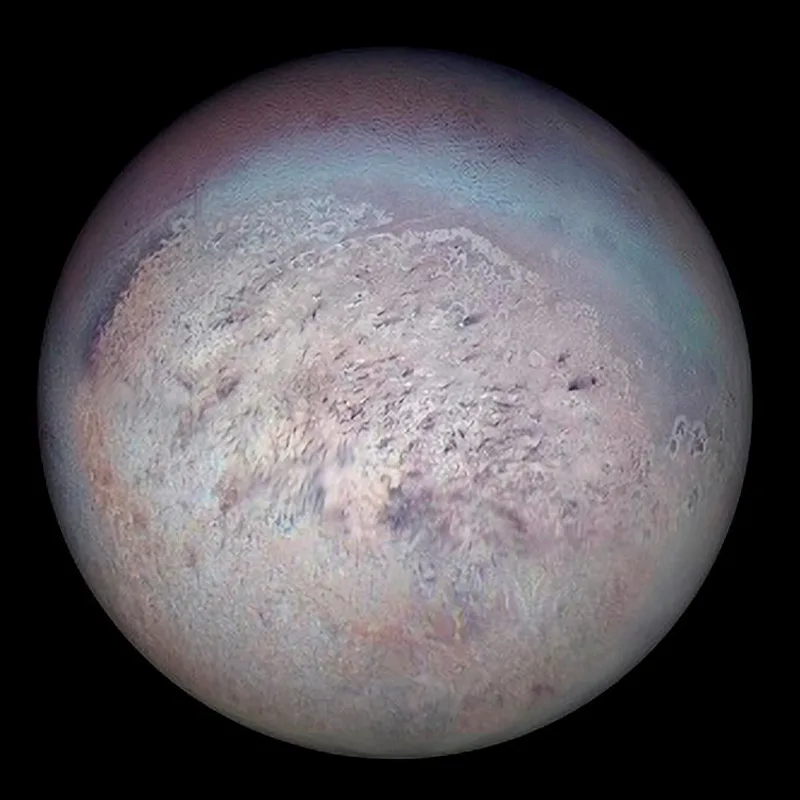
Object guide
Triton is Neptune's largest moon and orbits in a retrograde direction, indicating it was likely captured from the Kuiper Belt. Its surface shows active geysers and a young terrain in places. Triton is approximately 2,706.8 km across.
How to observe Triton
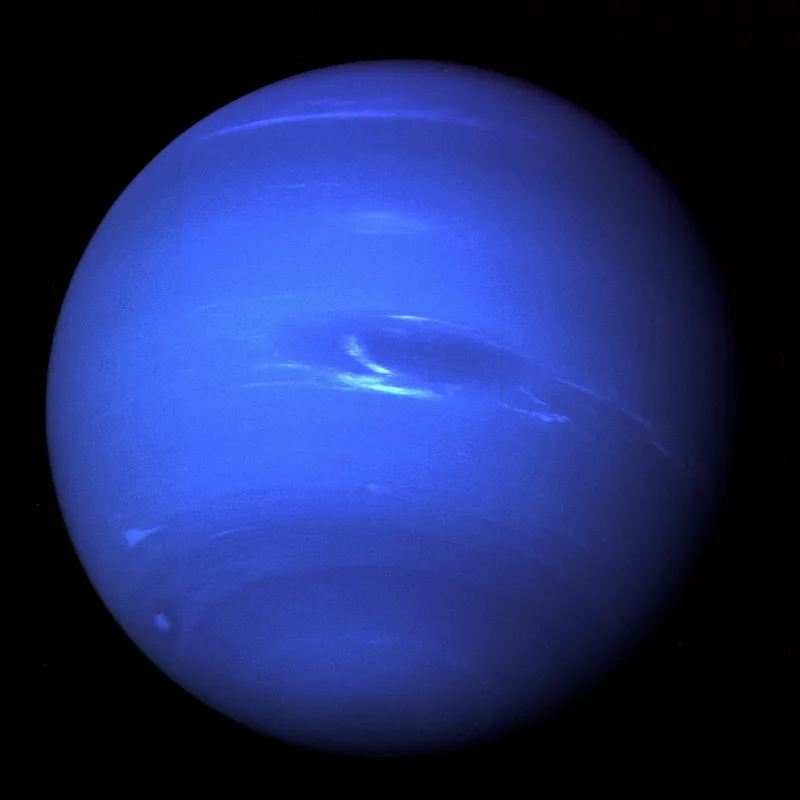
Triton is resolved as a separate world mainly through imaging or spacecraft data; visually, its relationship to neptune is the key observing context.
Scientific context
Useful scale comparisons are 0.212 Earth diameters, 0.079 g surface gravity, -0.016 Earth years per orbit. These values are rounded from the catalogue measurements shown on this page.
- Radius
- 1,353.4 km
- Diameter
- 2,706.8 km
- Mass
- 2.14E+22 kg
- Mean density
- 2.061 g/cm³
- Surface gravity
- 0.779 m/s² (0.079 g)
- Parent body
- neptune
0.212 Earth diameters0.079 g surface gravity-0.016 Earth years per orbit
Source: NASA Science (checked 2026-08-09). Values are rounded catalogue measurements.
Interactive orbit model
Aug 13, 2026, 22:251×
Calculated positions / separate exploration scales