Reference image
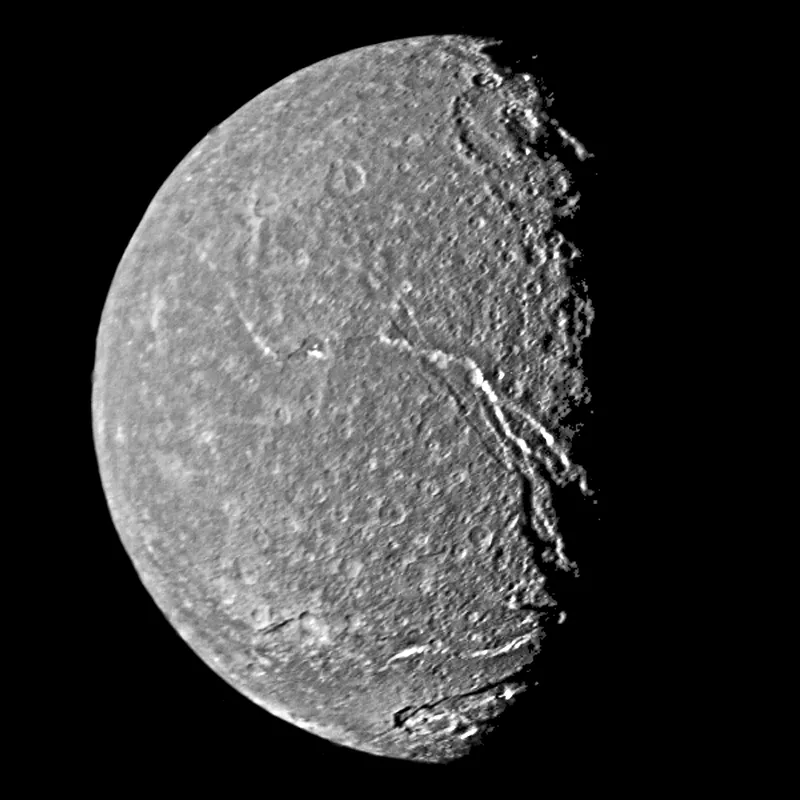
Object guide
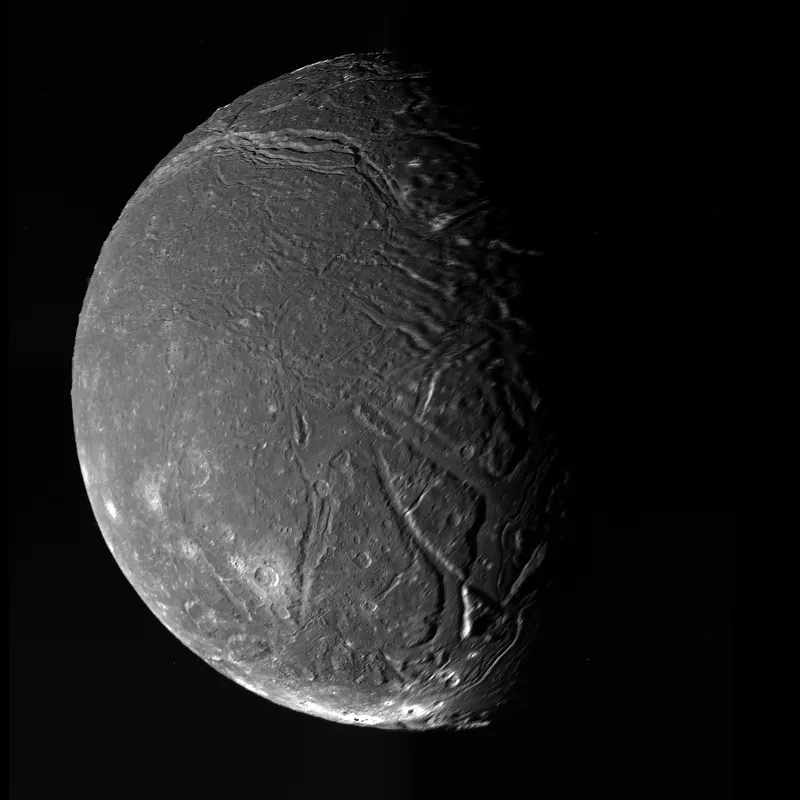
Titania is Uranus' largest moon and shows signs of internal geological activity and faulting. Titania is approximately 1,577.8 km across.
How to observe Titania
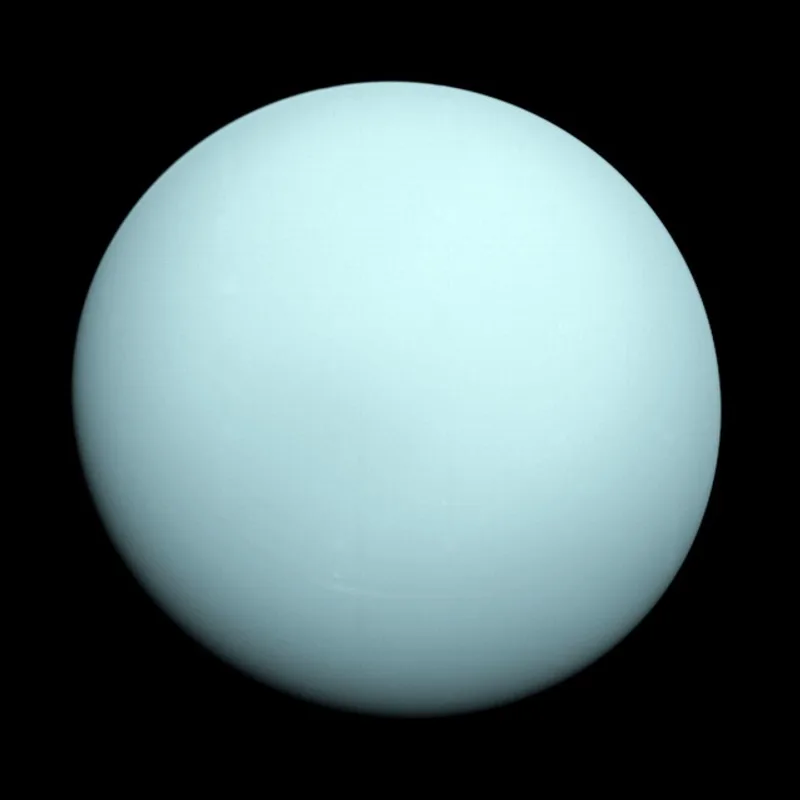
Titania is resolved as a separate world mainly through imaging or spacecraft data; visually, its relationship to uranus is the key observing context.
Scientific context
Useful scale comparisons are 0.124 Earth diameters, 0.039 g surface gravity, 0.024 Earth years per orbit. These values are rounded from the catalogue measurements shown on this page.
- Radius
- 788.9 km
- Diameter
- 1,577.8 km
- Mass
- 3,527,000,000,000,000,000,000 kg
- Mean density
- 1.715 g/cm³
- Surface gravity
- 0.379 m/s² (0.039 g)
- Orbital period
- 8.706 days (0.024 years)
- Parent body
- uranus
0.124 Earth diameters0.039 g surface gravity0.024 Earth years per orbit
Source: NASA Science (checked 2026-08-09). Values are rounded catalogue measurements.
Interactive orbit model
Aug 13, 2026, 22:251×
Calculated positions / separate exploration scales