Reference image
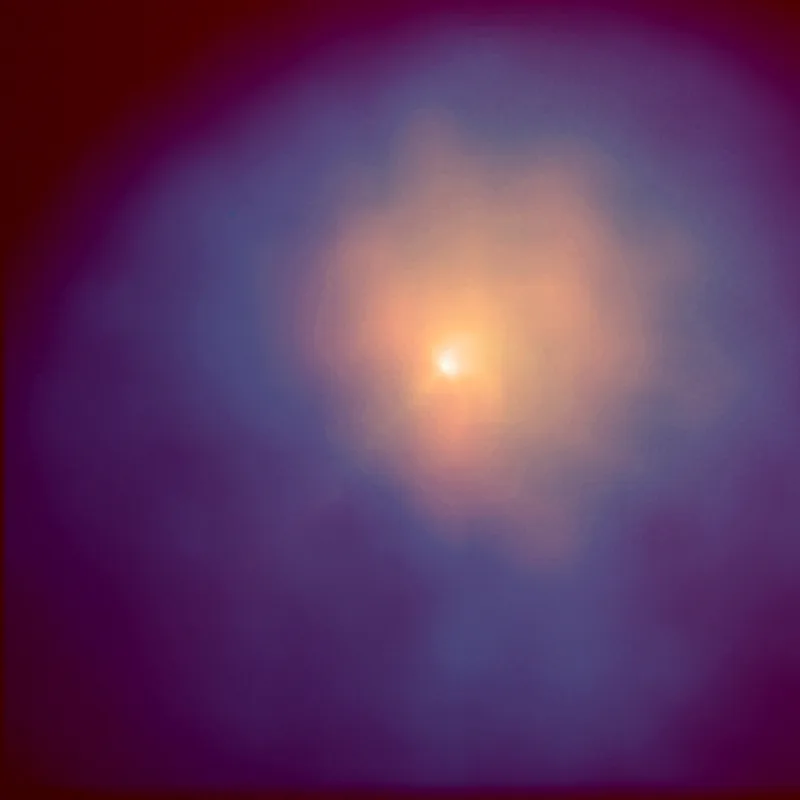
Object guide
Comet Hyakutake passed close to Earth in 1996 and produced a spectacular, long-tailed display. It is a long-period comet with an orbit that will not return in recorded history. Hyakutake is approximately 3 km across.
How to observe Hyakutake
Hyakutake changes in brightness and position around perihelion. Confirm a current ephemeris before observing because catalogue orbital values alone are not a live forecast.
Scientific context
Useful scale comparisons are 0 Earth diameters, 0 g surface gravity, 2737.851 Earth years per orbit. These values are rounded from the catalogue measurements shown on this page.
- Radius
- 1.5 km
- Diameter
- 3 km
- Mass
- 5,000,000,000,000 kg
- Mean density
- 0.354 g/cm³
- Surface gravity
- 0.000005 m/s² (0 g)
- Orbital period
- 1,000,000 days (2,737.851 years)
0 Earth diameters0 g surface gravity2737.851 Earth years per orbit
Source: NASA/JPL Small-Body Database (checked 2026-08-09). Values are rounded catalogue measurements.
Interactive orbit model
Aug 13, 2026, 22:251×
Calculated positions / separate exploration scales