Reference image
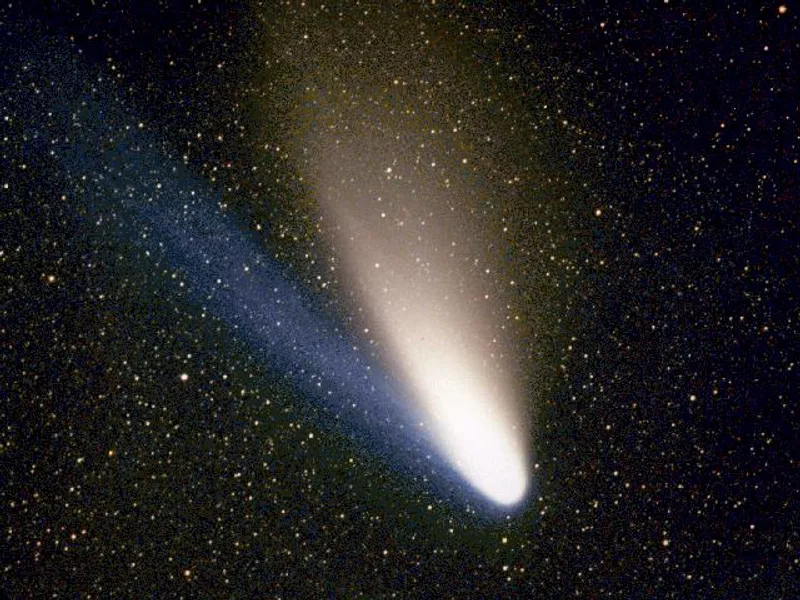
Object guide
Comet Hale–Bopp became spectacularly visible in 1997, one of the brightest comets of the 20th century. It has a very long orbital period and will not return for thousands of years. Hale–Bopp is approximately 60 km across.
How to observe Hale–Bopp
Hale–Bopp changes in brightness and position around perihelion. Confirm a current ephemeris before observing because catalogue orbital values alone are not a live forecast.
Scientific context
Useful scale comparisons are 0.005 Earth diameters, 0 g surface gravity, 2532.512 Earth years per orbit. These values are rounded from the catalogue measurements shown on this page.
- Radius
- 30 km
- Diameter
- 60 km
- Mass
- 22,000,000,000,000,000 kg
- Mean density
- 0.195 g/cm³
- Surface gravity
- 0.0002 m/s² (0 g)
- Orbital period
- 925,000 days (2,532.512 years)
0.005 Earth diameters0 g surface gravity2532.512 Earth years per orbit
Source: NASA/JPL Small-Body Database (checked 2026-08-09). Values are rounded catalogue measurements.
Interactive orbit model
Aug 13, 2026, 22:251×
Calculated positions / separate exploration scales