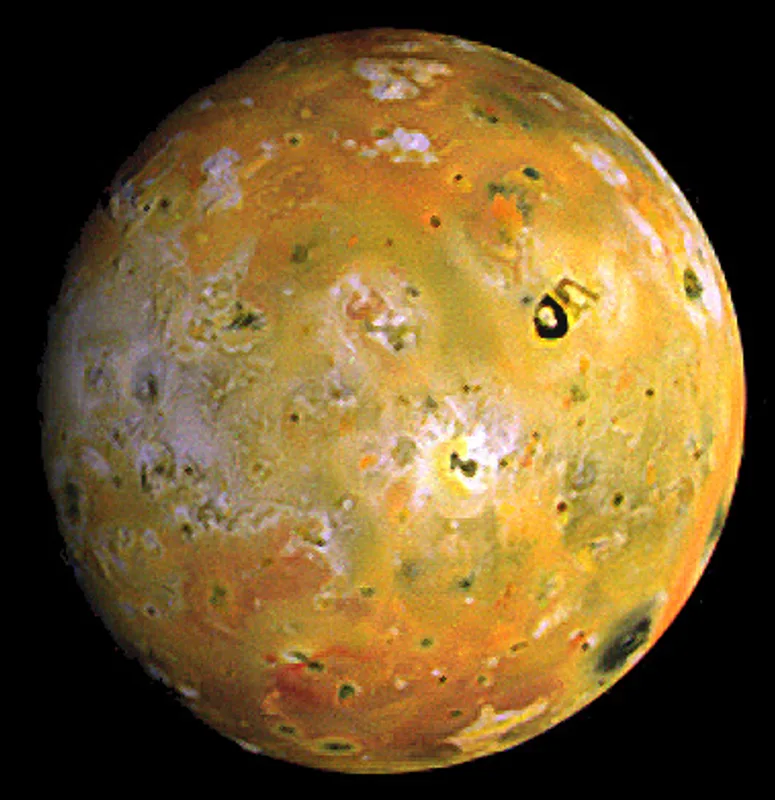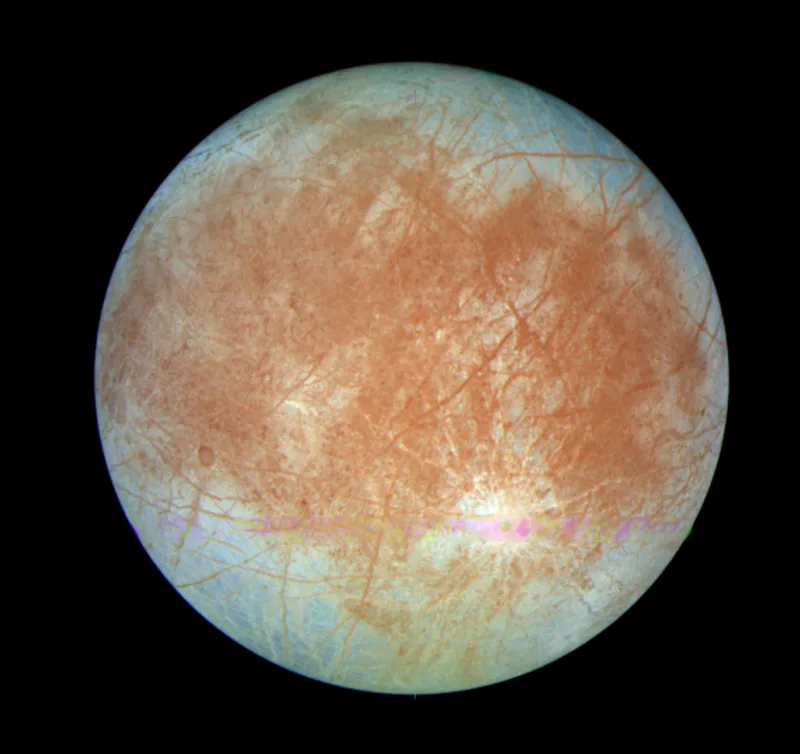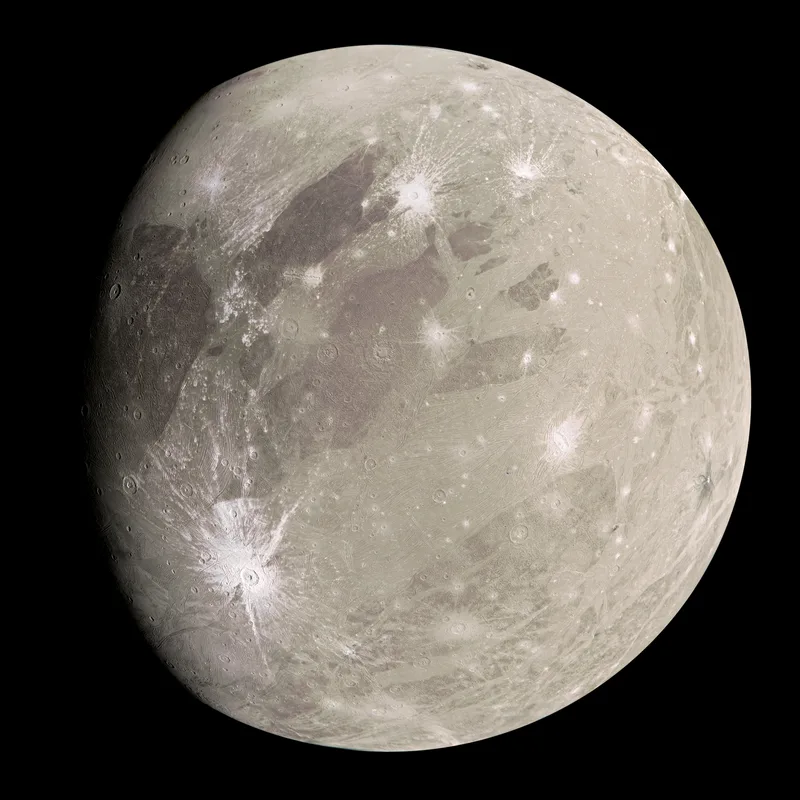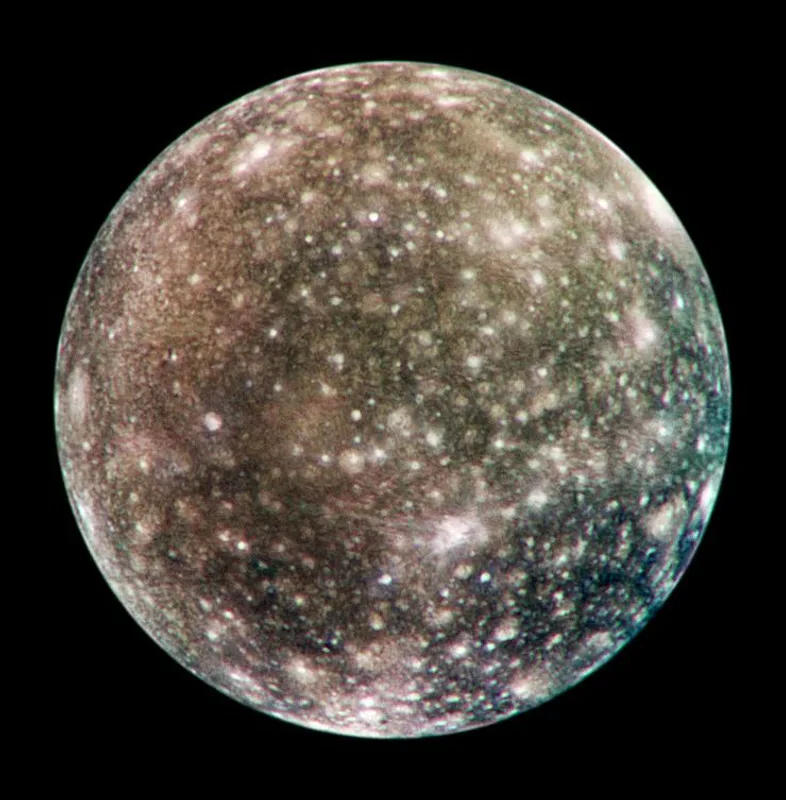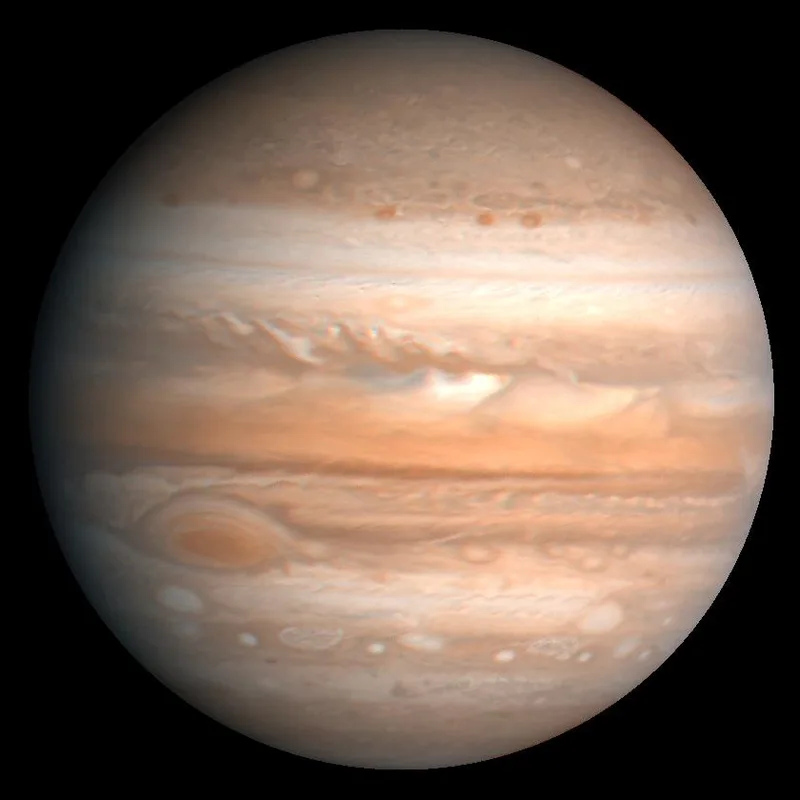
Jupiter is the largest planet, a gas giant of hydrogen and helium about 11 times Earth's diameter and more massive than all the other planets combined. It spins in just 9.93 hours, which flattens its globe and stretches its clouds into bands. Its gravity shapes the orbits of many asteroids and comets, and its large family of moons includes worlds of real astrobiological interest.
How to observe Jupiter
Start with the four bright Galilean moons and the two main equatorial cloud belts. Revisit over several hours to see the moons move and Jupiter rotate. A moon can disappear into shadow or pass in front of the disc; higher magnification helps only when the air is steady.
Scientific context
The Great Red Spot is a giant storm that has been watched for more than 150 years, although it has been shrinking in recent decades. The Juno spacecraft, in orbit since 2016, has probed the deep atmosphere, magnetic field, and polar cyclones. Jupiter takes 11.86 years to orbit the Sun, so it moves roughly one zodiac constellation per year.
- Radius
- 69,911 km
- Diameter
- 139,822 km
- Mass
- 1.898E+27 kg
- Mean density
- 1.326 g/cm³
- Surface gravity
- 24.79 m/s² (2.528 g)
- Mean temperature
- -110°C
- Orbital period
- 4,332.59 days (11.862 years)
- Semi-major axis
- 5.2 AU
- Mean sunlight travel time
- 43.25 minutes
At your observing time
21 Nov 2026, 10:34 · now
- Apparent magnitude
- -2.1
- Disc diameter
- 37.2 arcsec
- Constellation
- Leo
- Next opposition
- 11 Feb 2027, 00:17 UTC