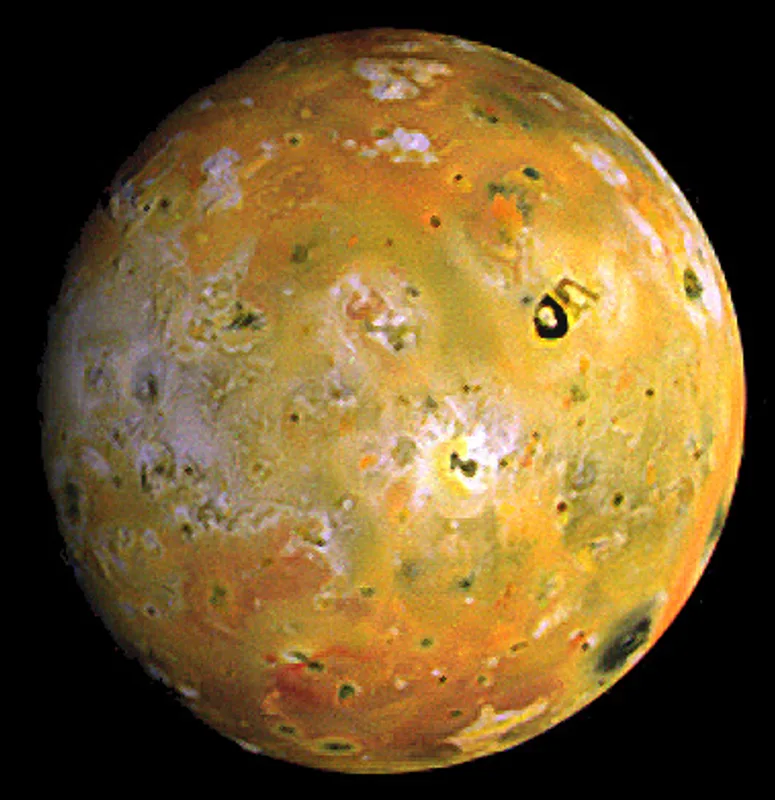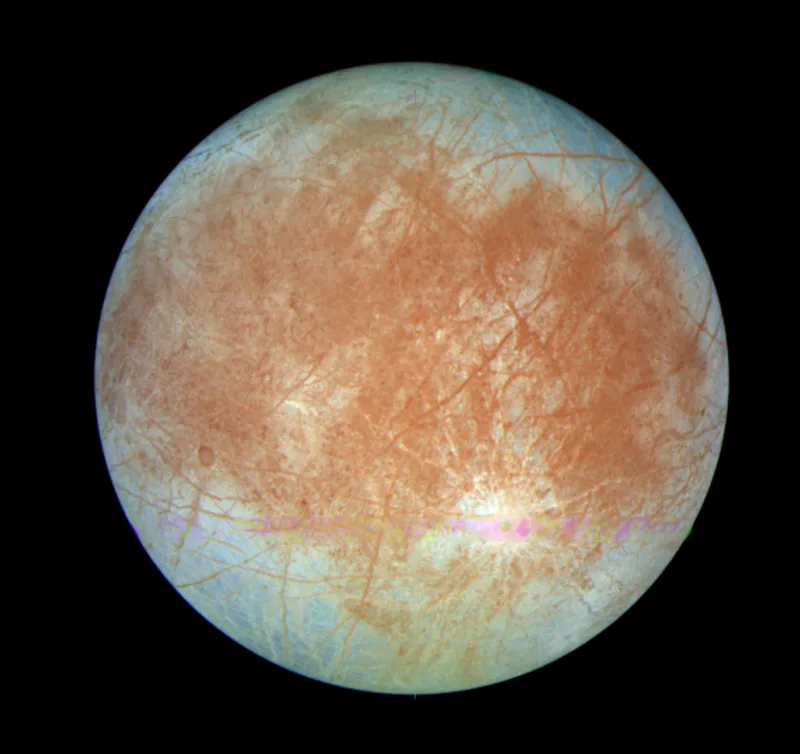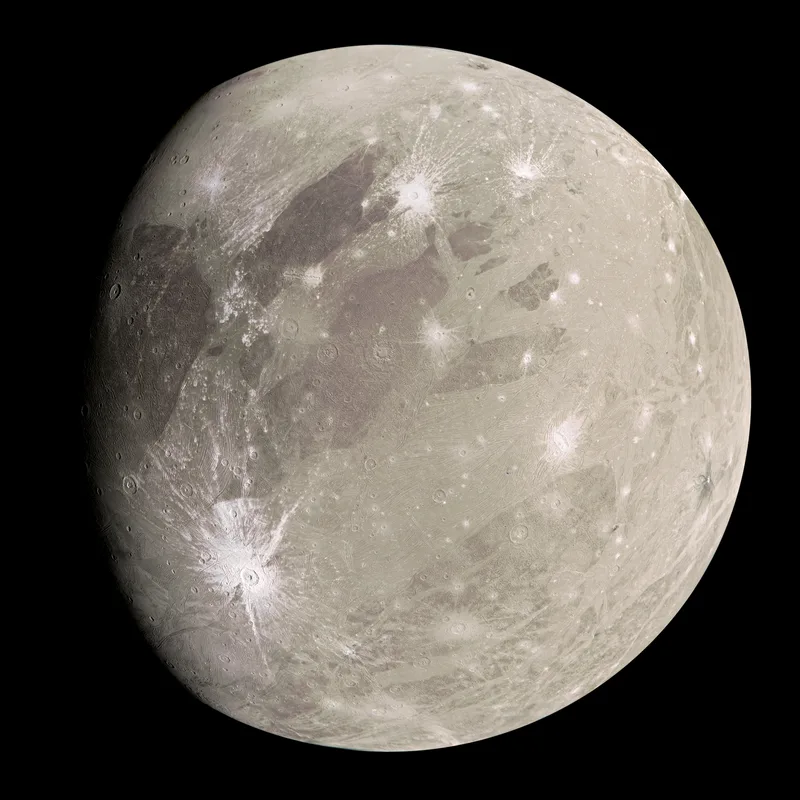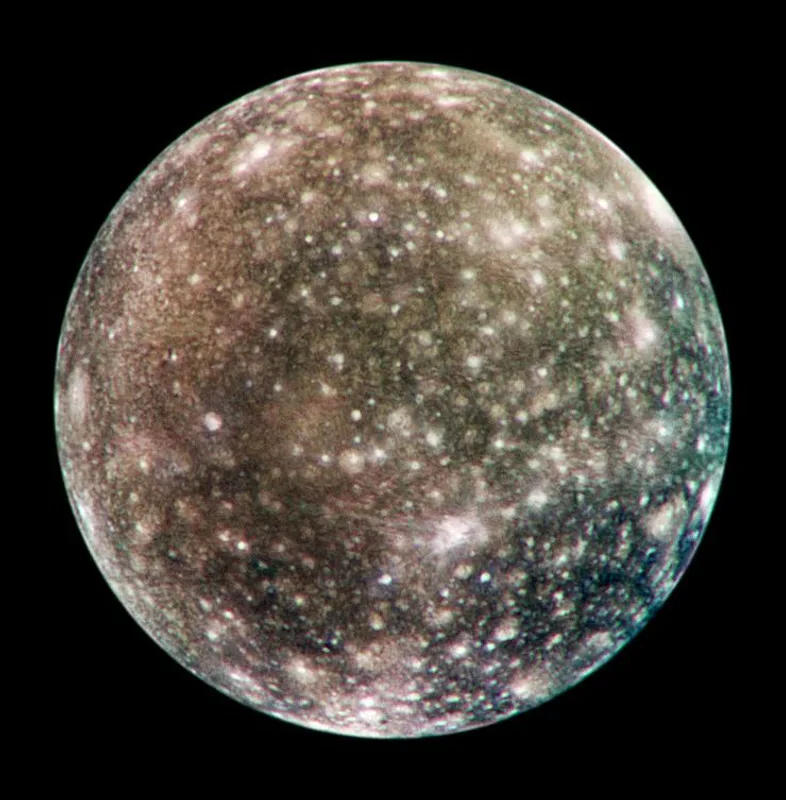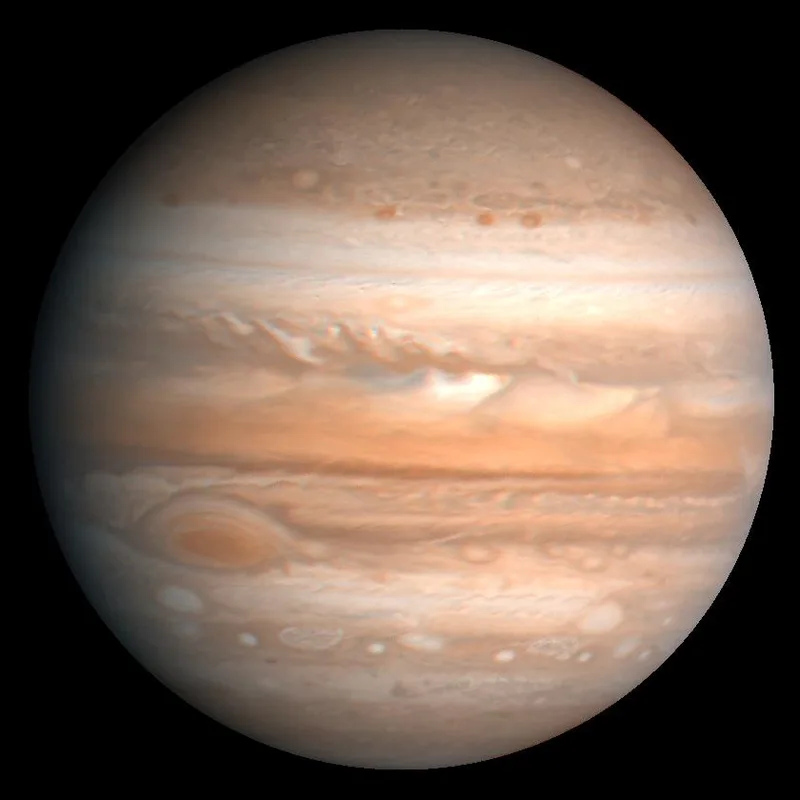
Jupiter is the largest planet and a gas giant of hydrogen and helium. Its strong gravity sculpts the outer Solar System, and its magnetosphere and storms (notably the Great Red Spot) dominate its appearance. It hosts many moons, several with astrobiological interest. Jupiter is approximately 139,822 km across.
How to observe Jupiter
Start with the four bright Galilean moons and the two main equatorial cloud belts. Revisit over several hours to see the moons move and Jupiter rotate. A moon can disappear into shadow or pass in front of the disc; higher magnification helps only when the air is steady.
Scientific context
Useful scale comparisons are 10.973 Earth diameters, 2.528 g surface gravity, 11.862 Earth years per orbit. These values are rounded from the catalogue measurements shown on this page.
- Radius
- 69,911 km
- Diameter
- 139,822 km
- Mass
- 1.898E+27 kg
- Mean density
- 1.326 g/cm³
- Surface gravity
- 24.79 m/s² (2.528 g)
- Mean temperature
- -110°C
- Orbital period
- 4,332.59 days (11.862 years)
- Semi-major axis
- 5.2 AU
- Mean sunlight travel time
- 43.25 minutes
Source: NASA Science ↗
At your observing time
3 Oct 2026, 14:54 UTC · Change observing time
- Apparent magnitude
- -1.9
- Disc diameter
- 32.7 arcsec
- Constellation
- Leo
- Next opposition
- 11 Feb 2027, 00:17 UTC