Impact crater

Atlas

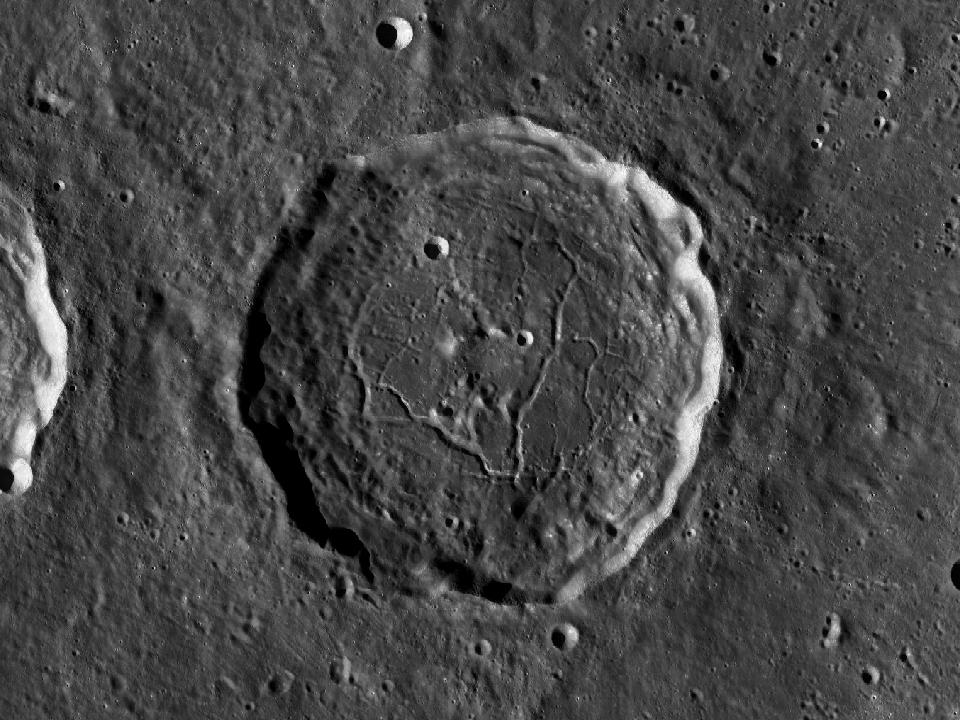
A northern crater east of Hercules. Rilles cross its uneven floor; resolving them requires steady air.

Open in Moon atlas ↗
Atlas and surrounding lunar terrain in the LROC Wide Angle Camera mosaic
Atlas · North up, east right. Open image ↗
NASA / GSFC / Arizona State University · LROC WAC mosaic via USGS. Regional map crop; lighting is fixed and does not follow the selected date.
Show location on the Moon
1.0×
EARTH-FACING HEMISPHERE

Preparing the lunar surface…

NSWESelect a formation · zoom to explore

Lunar north up, with geocentric libration. Full atlas mode shows the entire facing surface; switch to Selected phase for today’s illumination. Choose a different date in the atlas.

How to observe Atlas

Use Hercules as your reference and compare floor texture. Fine interior details are much harder than detecting the crater itself.

Finding the region

Look at 46.74° N, 44.38° E on the lunar disc. The chart marker identifies the catalogue centre. Start with a wide field and use the nearby formations below as landmarks.

Equipment & conditions

Start at low magnification to identify the rim. Move to a moderate power when the air is steady; low sunlight usually makes walls and floor relief easier to distinguish. A bright ray system can be more conspicuous near full Moon.

Lighting

For surface relief, try a time when the Sun is low over this region. To compare surface brightness and any bright rays, return under higher illumination. The atlas calculates the solar elevation at the formation’s centre for any selected date.

View Atlas in the atlas

IAU / USGS Gazetteer

Official feature record

View original record ↗
Approved name
Atlas
Feature classification
Crater, craters
Catalogue diameter
88.12 km
Centre latitude
46.74° N
Centre longitude
44.38° E
Name origin (Gazetteer)
Mythological Greek Titan.

Coordinates are selenographic, with east-positive longitude. Dimensions are the Gazetteer’s catalogue values; for extended formations they do not represent a circular crater diameter. Data snapshot: 2026-09-16. Observing guidance above is separate from the official record.

Nearby formations

The four closest catalogue entries, measured from their centres.

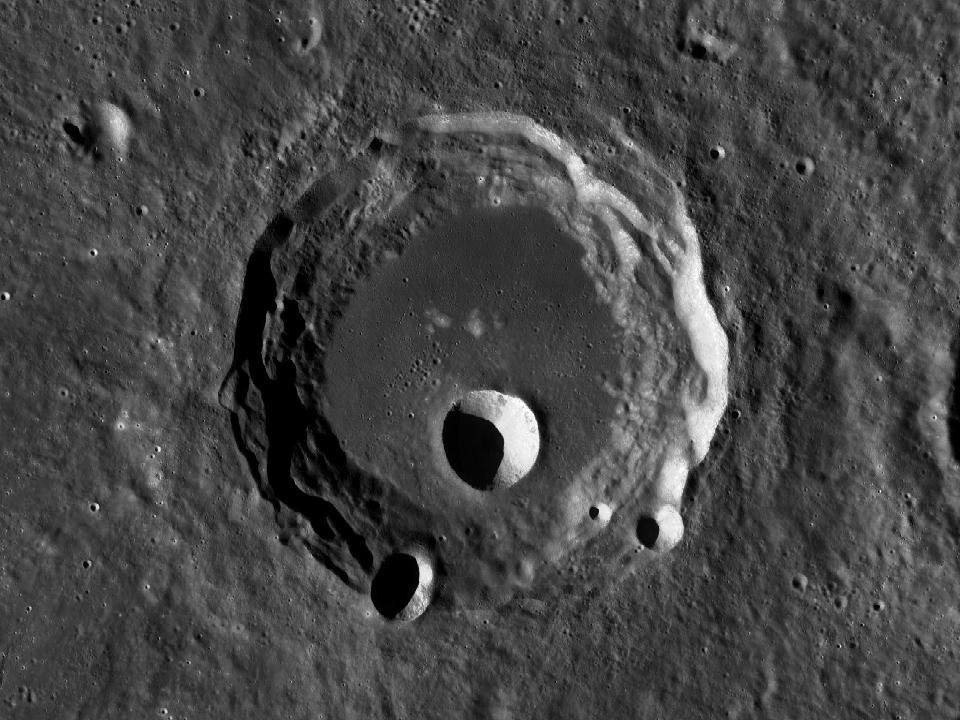
LROC photograph of HerculesImpact crater

Hercules

A northern crater paired with Atlas. Their proximity makes them a useful comparison target during the same observing session.

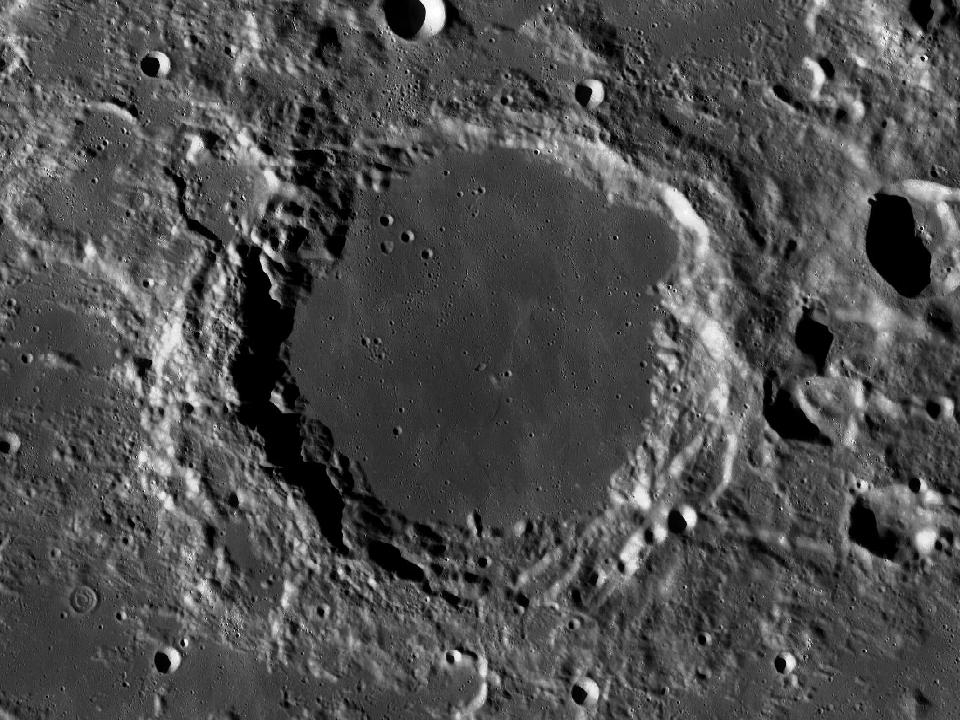
LROC photograph of EndymionImpact crater

Endymion

A dark-floored crater close to the northeastern limb. Perspective compresses its outline into an oval.

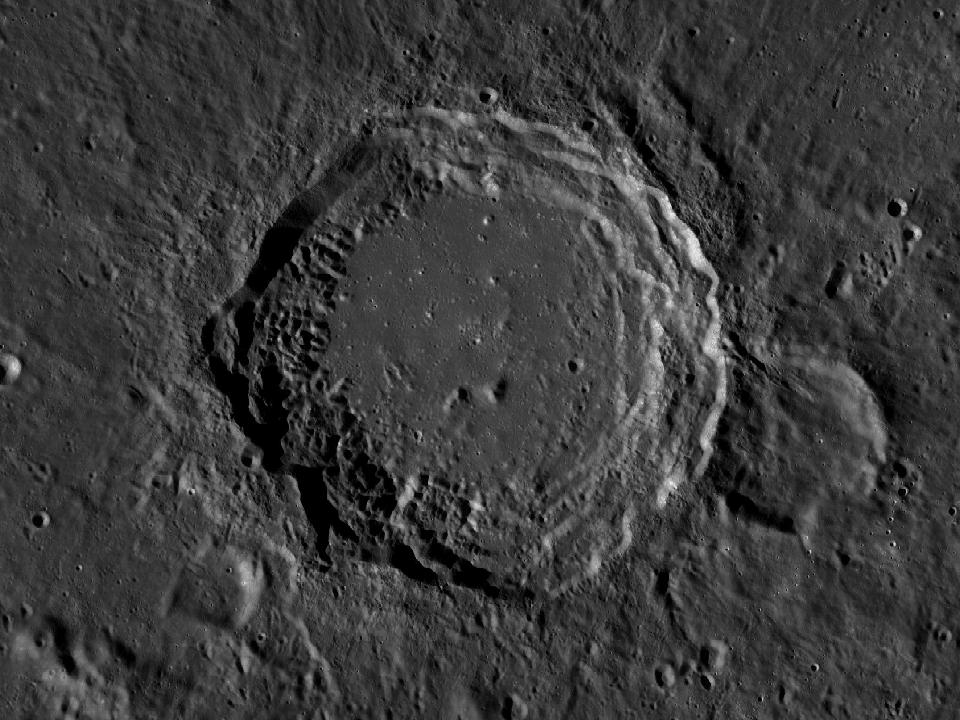
LROC photograph of AristotelesImpact crater

Aristoteles

A substantial northern crater near the eastern end of Mare Frigoris. Together with Eudoxus it forms an easily recognisable pair.

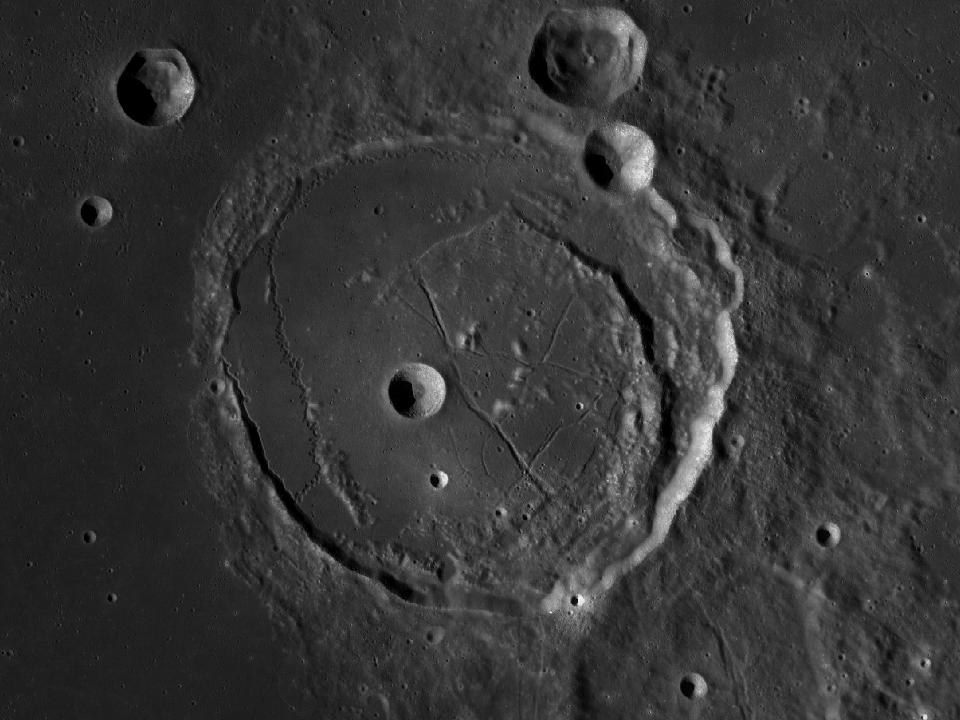
LROC photograph of PosidoniusImpact crater

Posidonius

A large crater on the northeastern margin of Mare Serenitatis. Its fractured floor is easier to distinguish under low sunlight.