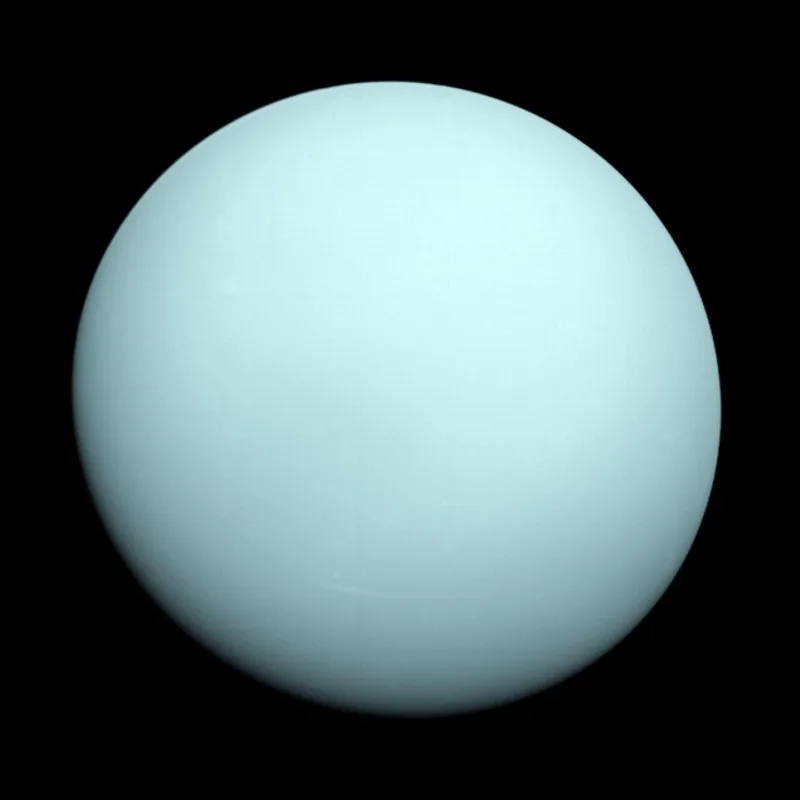
Uranus is an ice giant about four times Earth's diameter, with a pale blue-green color caused by methane in its atmosphere. Its axis is tilted 97.77°, so it essentially rolls along its orbit on its side, probably the result of a giant collision early in its history. It orbits at 19.2 AU and takes 84 years to go around the Sun, so each pole spends decades in continuous daylight and then decades in darkness.
How to observe Uranus
Use a finder chart to distinguish Uranus from nearby stars. A telescope can show a tiny blue-green disc, but reliable atmospheric detail is a demanding observation. Its moons require substantially more aperture and contrast than the planet itself.
Scientific context
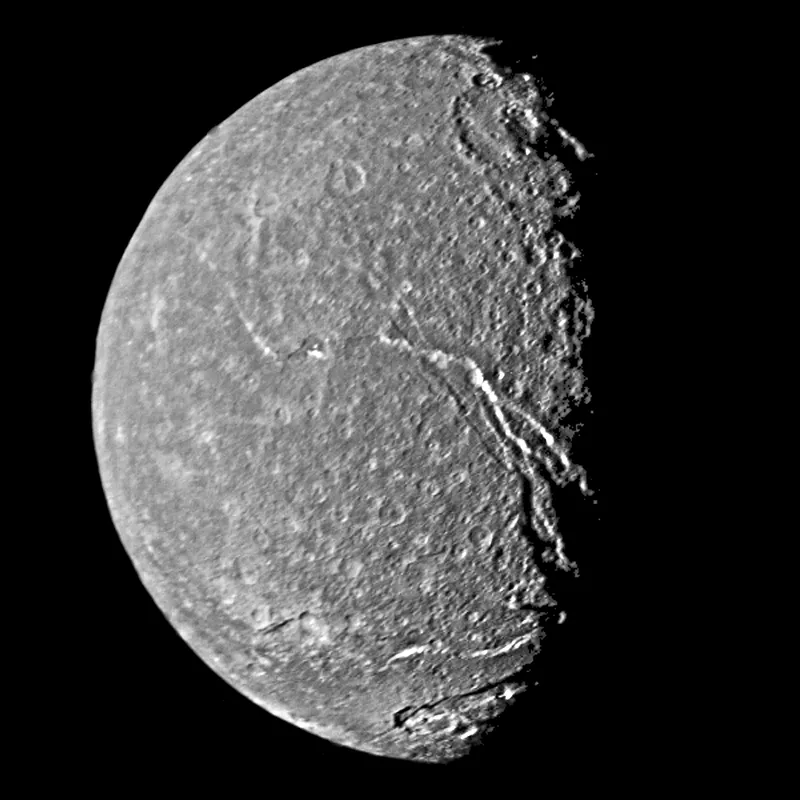
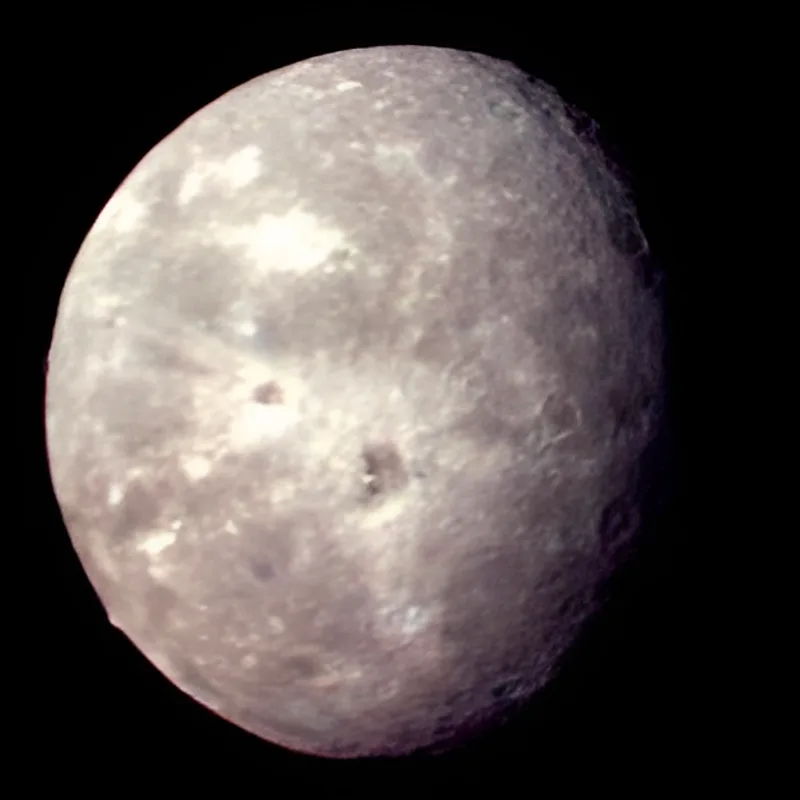
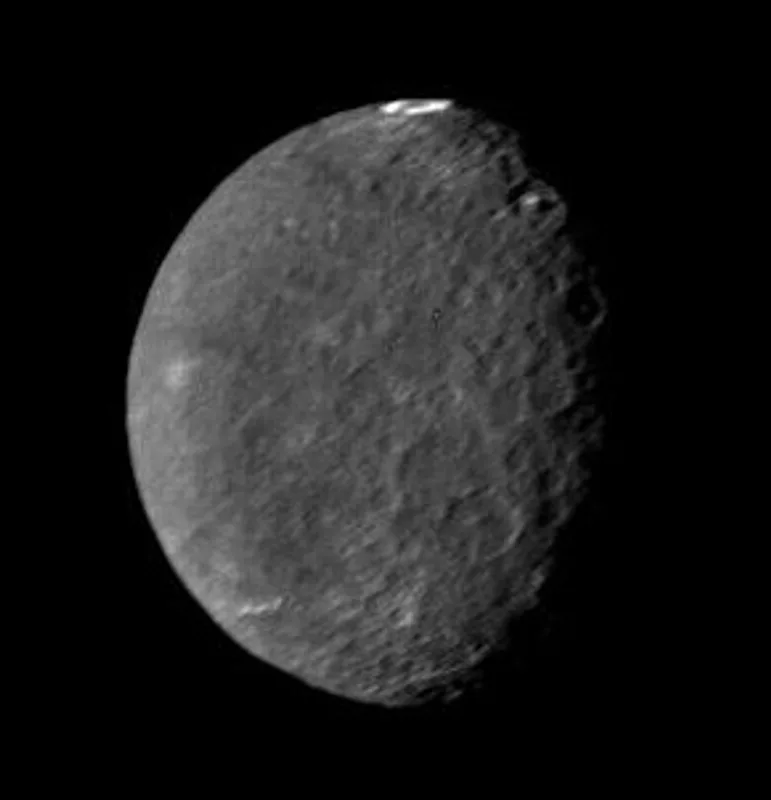
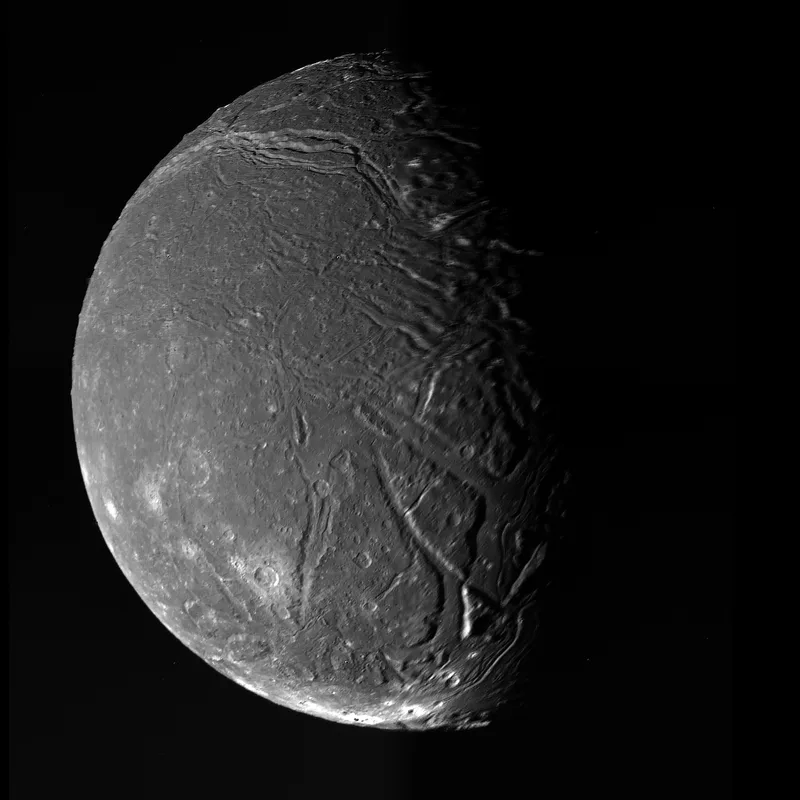
William Herschel discovered Uranus in 1781, the first planet found with a telescope. Voyager 2 remains the only spacecraft to have visited, flying past in 1986. The planet has a set of dark, narrow rings and a family of icy moons that formation studies still try to explain.
- Radius
- 25,362 km
- Diameter
- 50,724 km
- Mass
- 8.681E+25 kg
- Mean density
- 1.27 g/cm³
- Surface gravity
- 8.69 m/s² (0.886 g)
- Mean temperature
- -195°C
- Orbital period
- 30,687 days (84.016 years)
- Semi-major axis
- 19.2 AU
- Mean sunlight travel time
- 159.68 minutes
At your observing time
21 Nov 2026, 10:34 · now
- Apparent magnitude
- 5.6
- Disc diameter
- 3.8 arcsec
- Constellation
- Taurus
- Next opposition
- 25 Nov 2026, 22:27 UTC