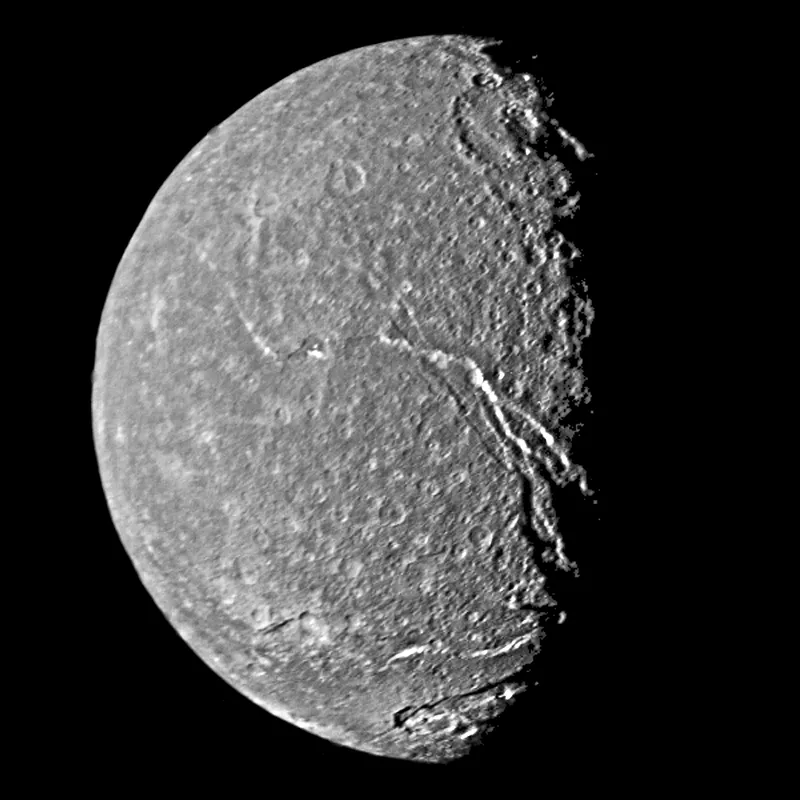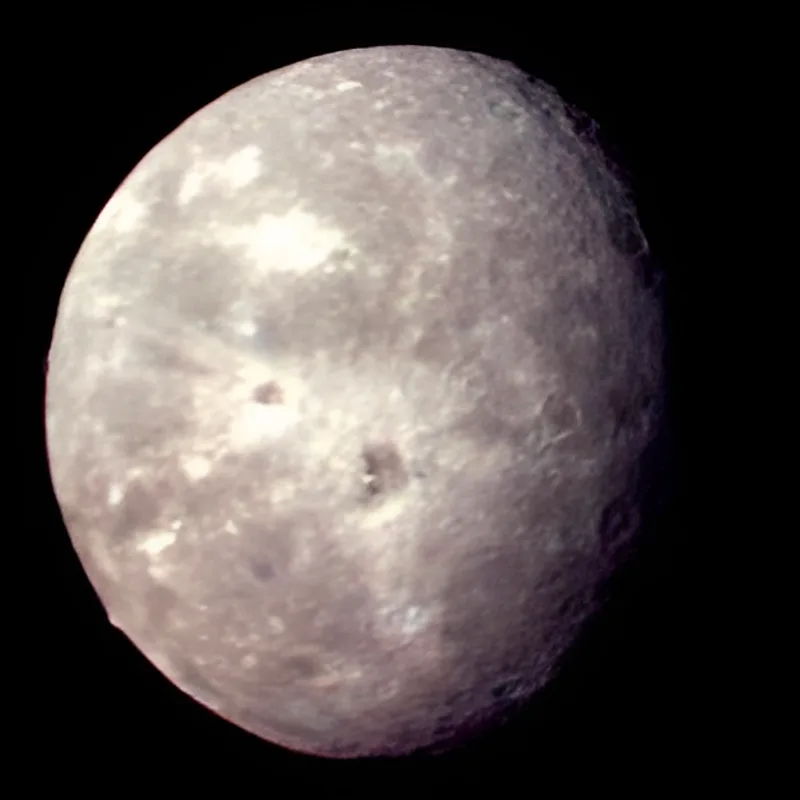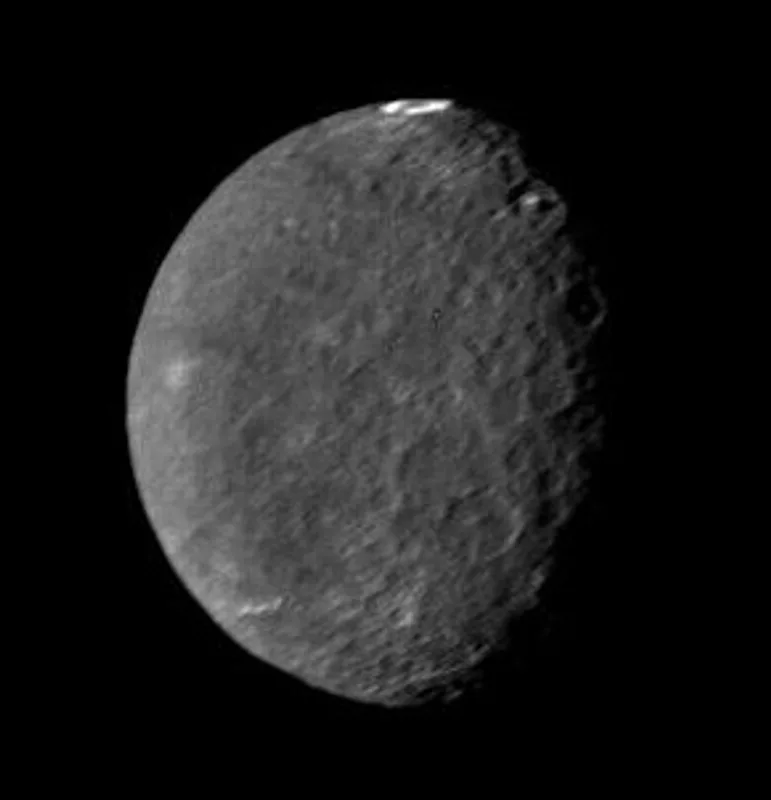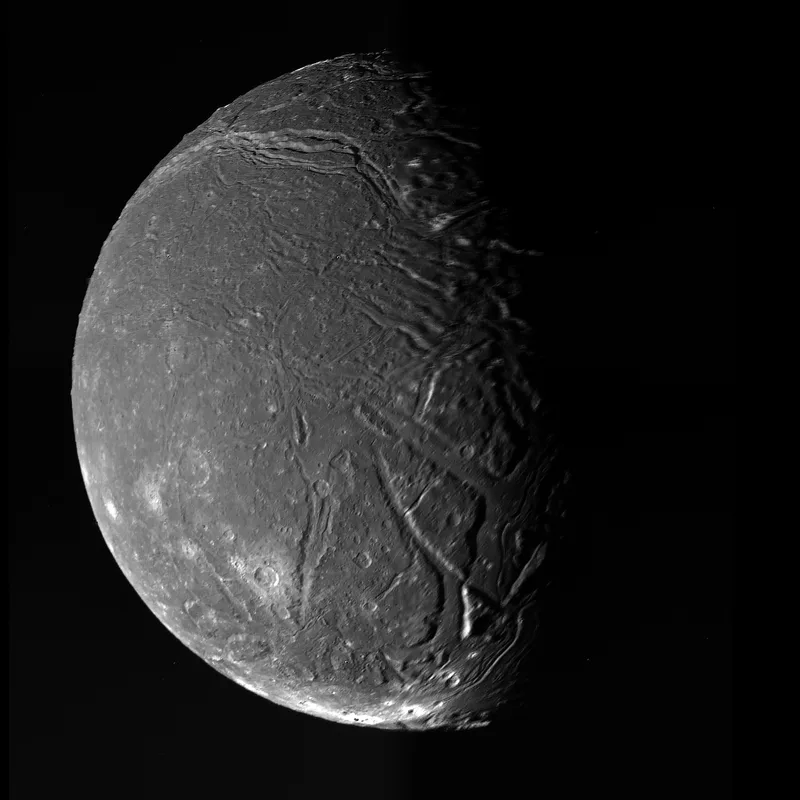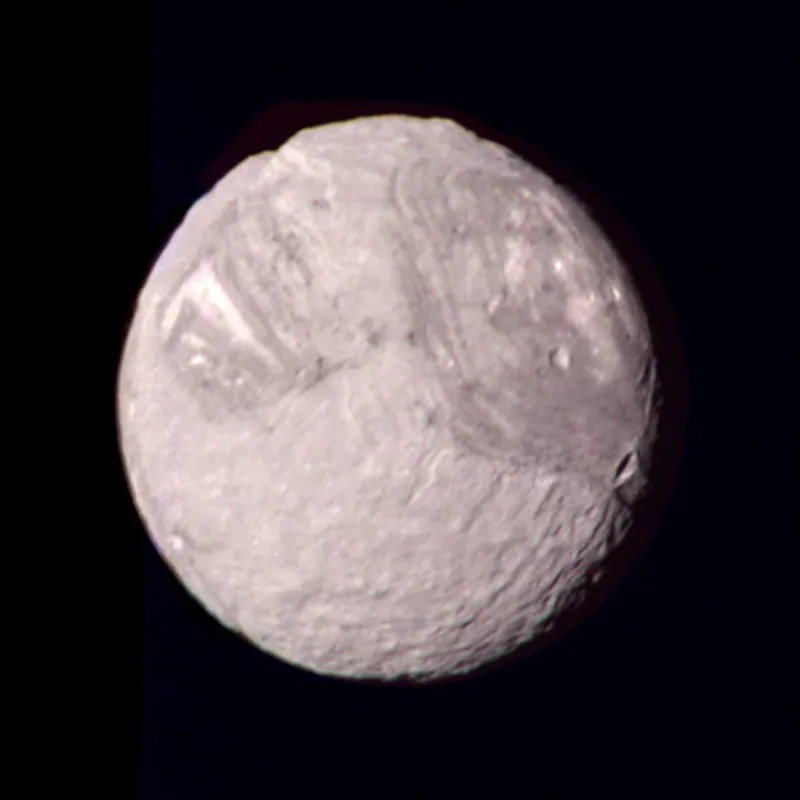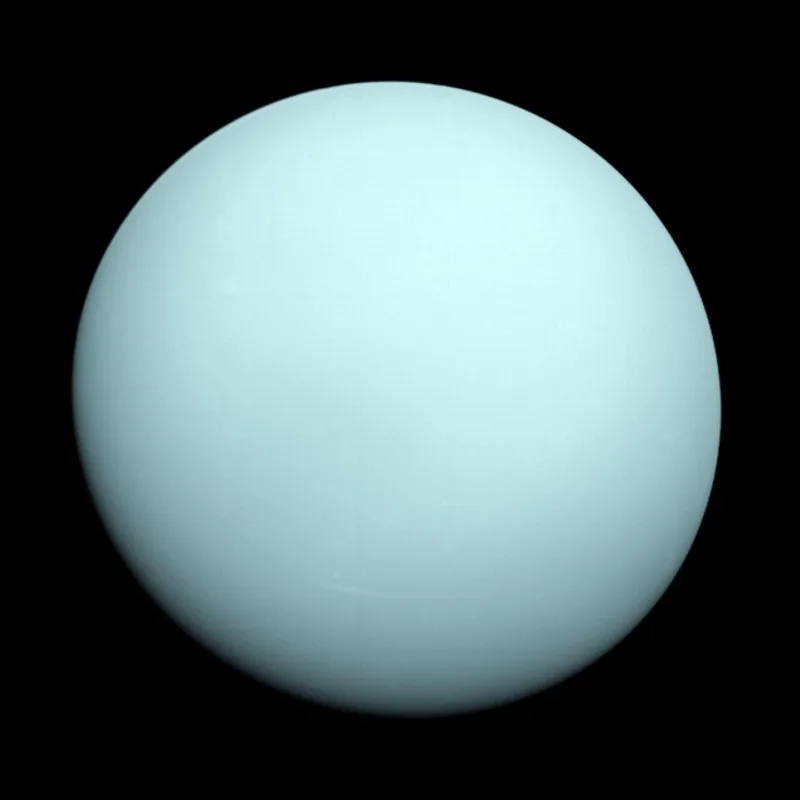
Uranus is an ice giant with a pale blue color from methane; it rotates on its side, likely due to a giant collision early in its history. Its ring system and moons are icy and highly interesting for interior/formation studies. Uranus is approximately 50,724 km across.
How to observe Uranus
Use a finder chart to distinguish Uranus from nearby stars. A telescope can show a tiny blue-green disc, but reliable atmospheric detail is a demanding observation. Its moons require substantially more aperture and contrast than the planet itself.
Scientific context
Useful scale comparisons are 3.981 Earth diameters, 0.886 g surface gravity, 84.016 Earth years per orbit. These values are rounded from the catalogue measurements shown on this page.
- Radius
- 25,362 km
- Diameter
- 50,724 km
- Mass
- 8.681E+25 kg
- Mean density
- 1.27 g/cm³
- Surface gravity
- 8.69 m/s² (0.886 g)
- Mean temperature
- -195°C
- Orbital period
- 30,687 days (84.016 years)
- Semi-major axis
- 19.2 AU
- Mean sunlight travel time
- 159.68 minutes
Source: NASA Science ↗
At your observing time
3 Oct 2026, 14:54 UTC · Change observing time
- Apparent magnitude
- 5.6
- Disc diameter
- 3.7 arcsec
- Constellation
- Taurus
- Next opposition
- 25 Nov 2026, 22:27 UTC