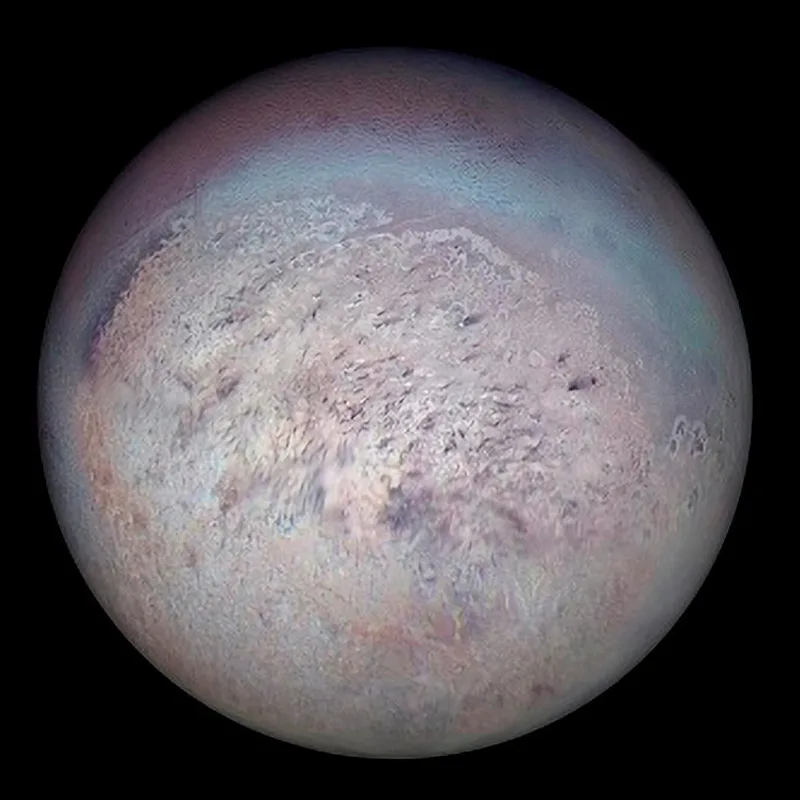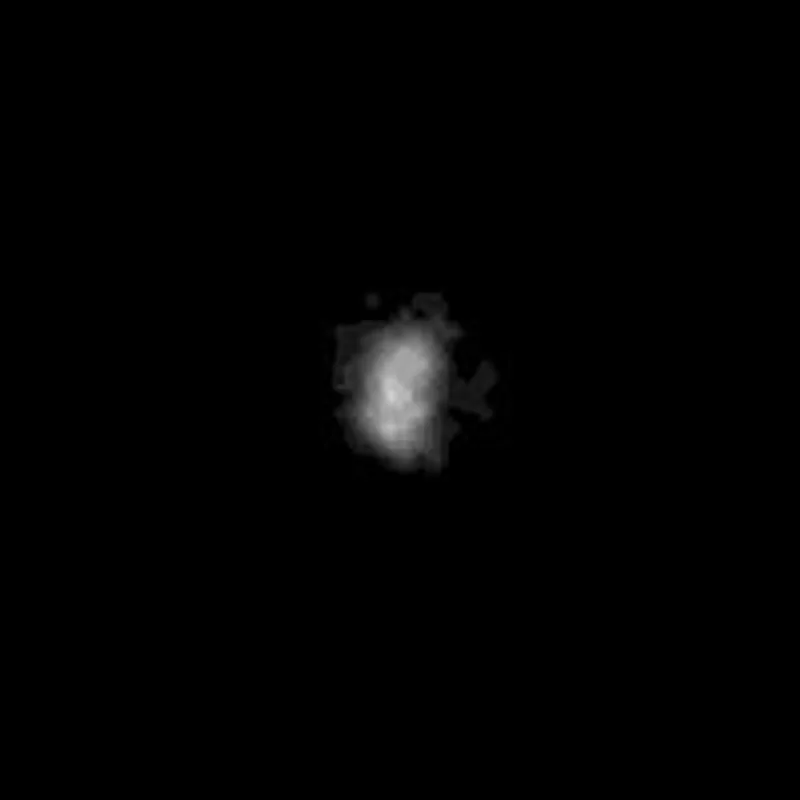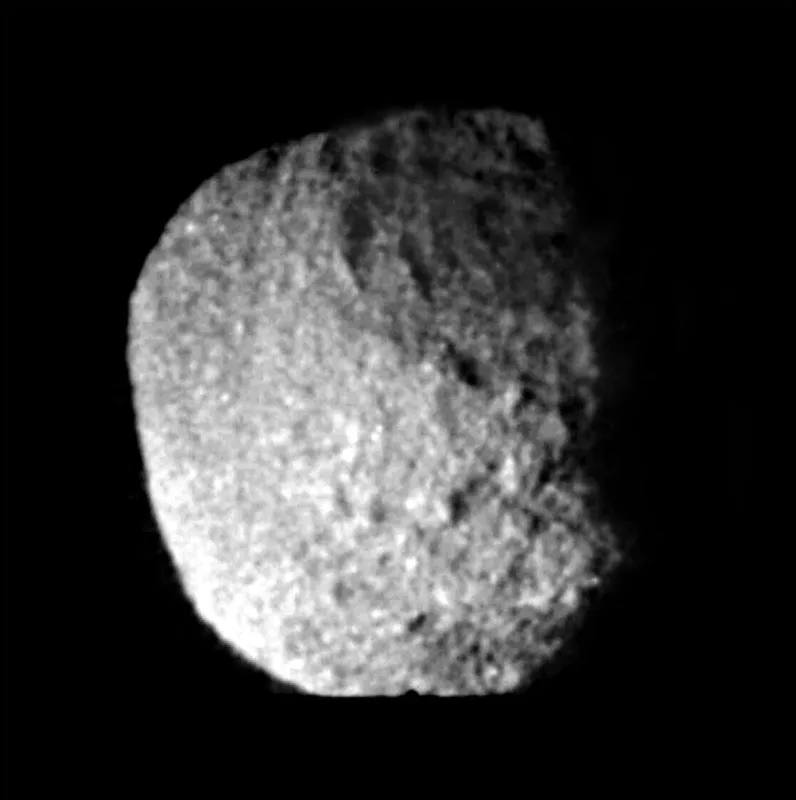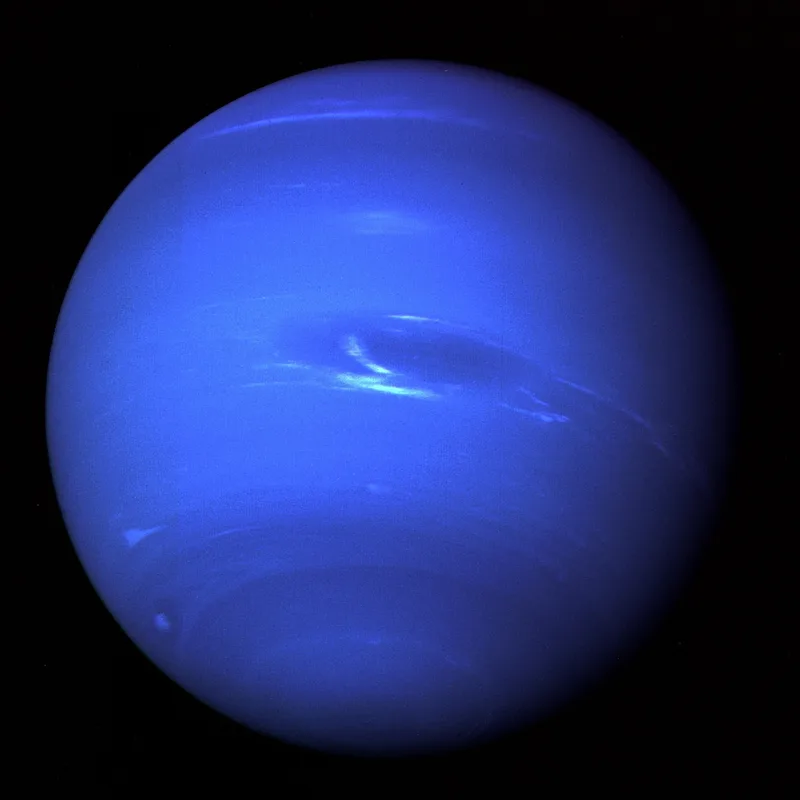
Neptune is the outermost planet, an ice giant almost four times Earth's diameter orbiting at about 30 AU. A single orbit takes nearly 165 years, so Neptune only completed its first full circuit since its discovery in 2011. Methane helps give it a deep blue color, and its winds are the fastest measured on any planet. Its largest moon, Triton, orbits backward, a strong sign that it was captured.
How to observe Neptune
Neptune requires optical aid and a careful finder-chart match. At low power it looks almost stellar; increased magnification may reveal a very small bluish disc in steady air. Do not expect the cloud detail seen in spacecraft photographs. Opposition helps with placement and brightness.
Scientific context
Neptune was found in 1846 after mathematicians predicted its position from small irregularities in the orbit of Uranus. Voyager 2 flew past in 1989, revealing the Great Dark Spot storm and active geysers on Triton.
- Radius
- 24,622 km
- Diameter
- 49,244 km
- Mass
- 1.024E+26 kg
- Mean density
- 1.638 g/cm³
- Surface gravity
- 11.15 m/s² (1.137 g)
- Mean temperature
- -200°C
- Orbital period
- 60,190 days (164.791 years)
- Semi-major axis
- 30.05 AU
- Mean sunlight travel time
- 249.92 minutes
At your observing time
21 Nov 2026, 10:34 · now
- Apparent magnitude
- 7.8
- Disc diameter
- 2.3 arcsec
- Constellation
- Pisces
- Next opposition
- 28 Sep 2027, 14:08 UTC