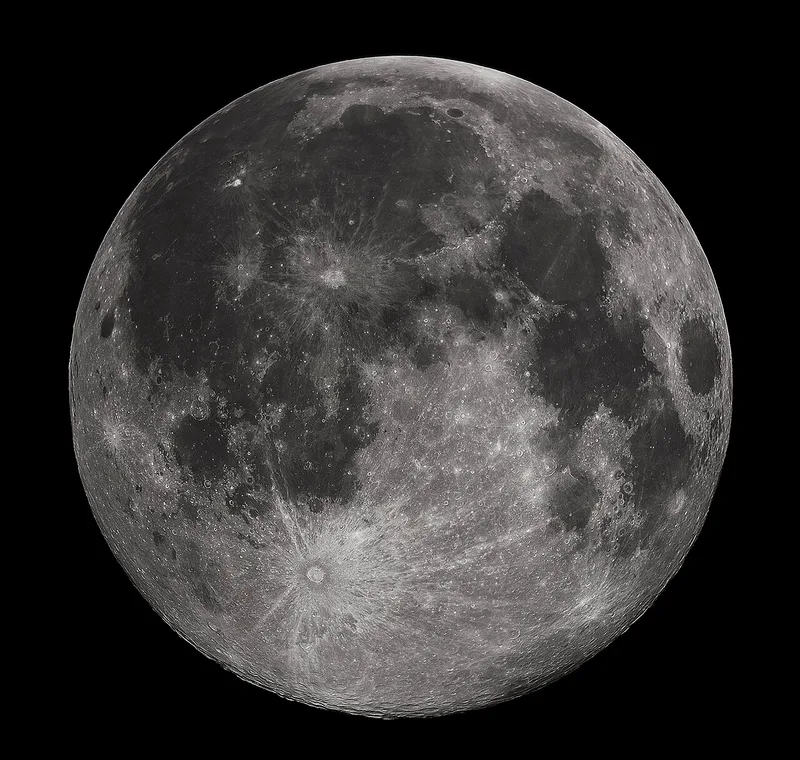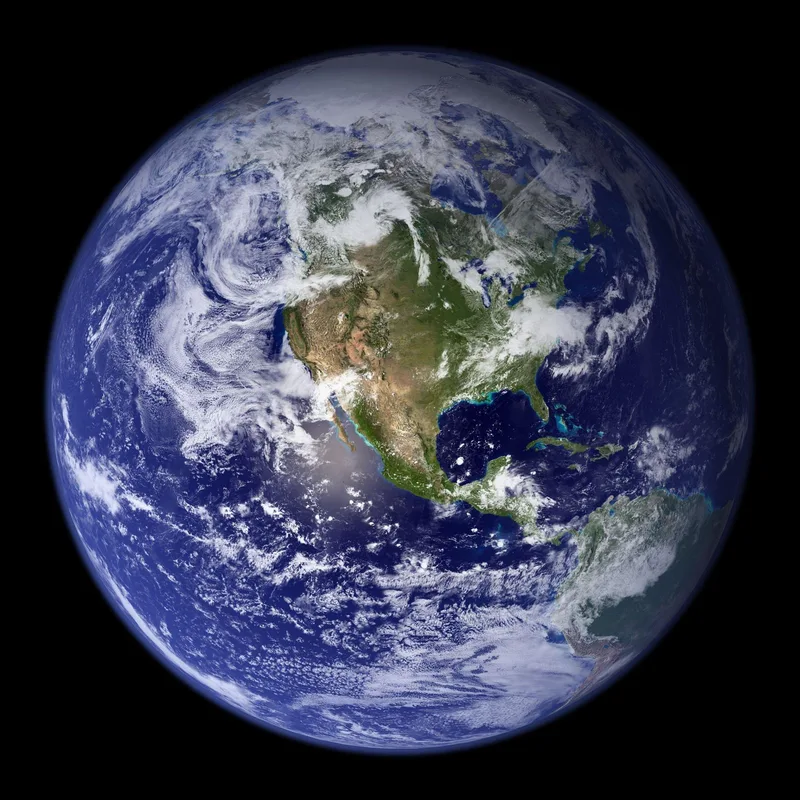
Earth is the third planet from the Sun and the only world known to support life. About 71% of its surface is covered by water, and its atmosphere, magnetic field, and active geology keep conditions stable enough for complex ecosystems. It orbits at 1 AU, the unit astronomers use for distances in the Solar System, and its 23.44° axial tilt gives us the seasons that change which stars and planets fill the night sky through the year.
How to observe Earth
Earth is the observing platform for these charts, so a geocentric opposition or apparent disc size is not meaningful. Explore its orbit in the solar-system viewer and choose your observing location for the other planets.
Scientific context
Earth's single large Moon helps stabilize its axial tilt and raises the tides. The magnetic field deflects most of the solar wind and channels charged particles toward the poles, which is what produces aurora. Sunlight takes about 8.3 minutes to cross the distance from the Sun to Earth.
- Radius
- 6,371 km
- Diameter
- 12,742 km
- Mass
- 5.972E+24 kg
- Mean density
- 5.513 g/cm³
- Surface gravity
- 9.807 m/s² (1 g)
- Mean temperature
- 15°C
- Orbital period
- 365.25 days (1 years)
- Semi-major axis
- 1 AU
- Mean sunlight travel time
- 8.32 minutes