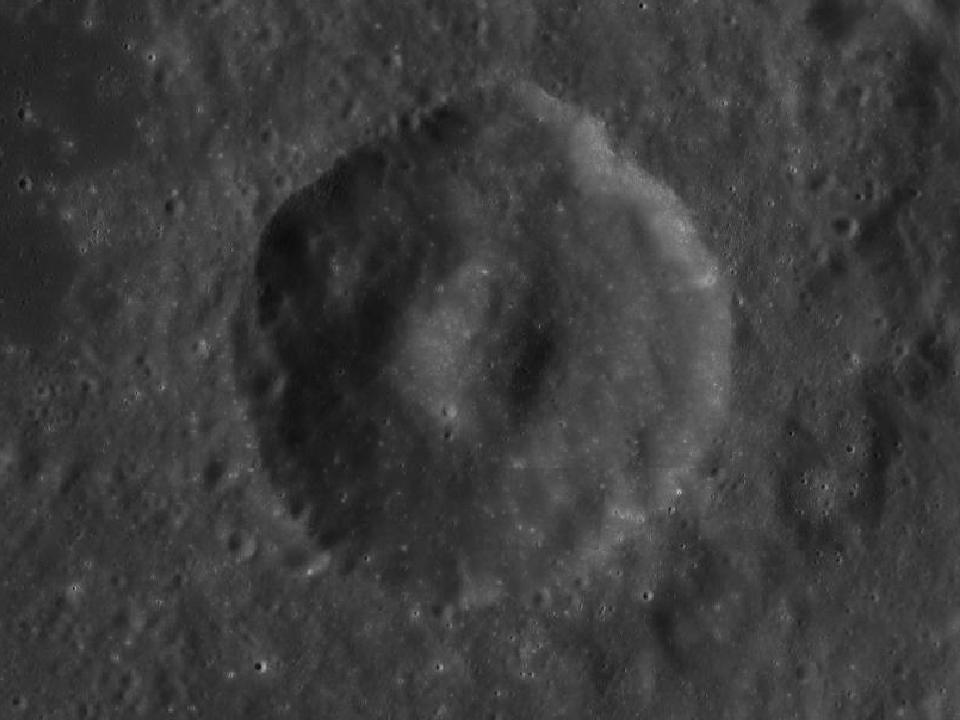
 Impact crater
Alpetragius
A smaller crater west of the Alphonsus–Arzachel region. Its unusually prominent central feature gives it a distinctive appearance.
Find lunar craters, seas and mountain ranges. Select a date to see their illumination, or open a formation for photographs, coordinates and observing notes.
Lunar north is up by default. The chart includes geocentric libration; it does not match your telescope’s rotation automatically. Lighting models the day–night boundary on a sphere, not individual crater shadows or eclipses. Full atlas mode reveals the unlit terrain.
Formations with sunlight 0–12° above the surface at the selected time.
Suggestions describe surface lighting, not weather or guaranteed visibility. Check the local Moon altitude and forecast before observing.
Times are shown in UTC. Select a phase to explore that moment.
49 formations with photographs, official coordinates and observing notes.
49 formations · filters also apply to map markers
Impact craterA smaller crater west of the Alphonsus–Arzachel region. Its unusually prominent central feature gives it a distinctive appearance.
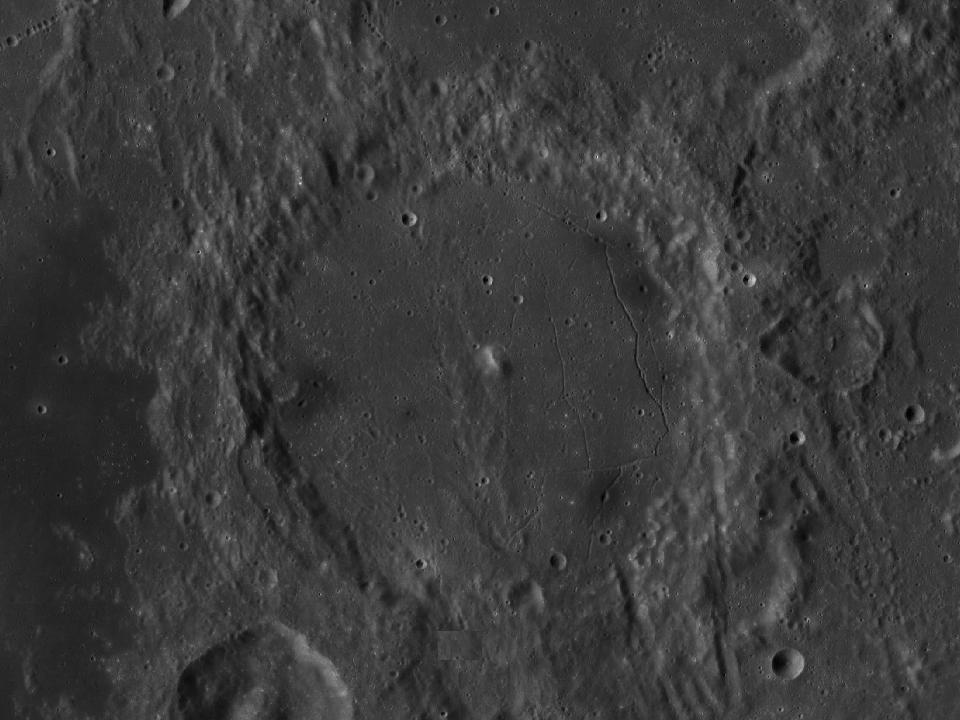 Impact crater
The middle crater of the Ptolemaeus–Alphonsus–Arzachel chain. Its floor and modest central peak contrast with the neighbouring formations.
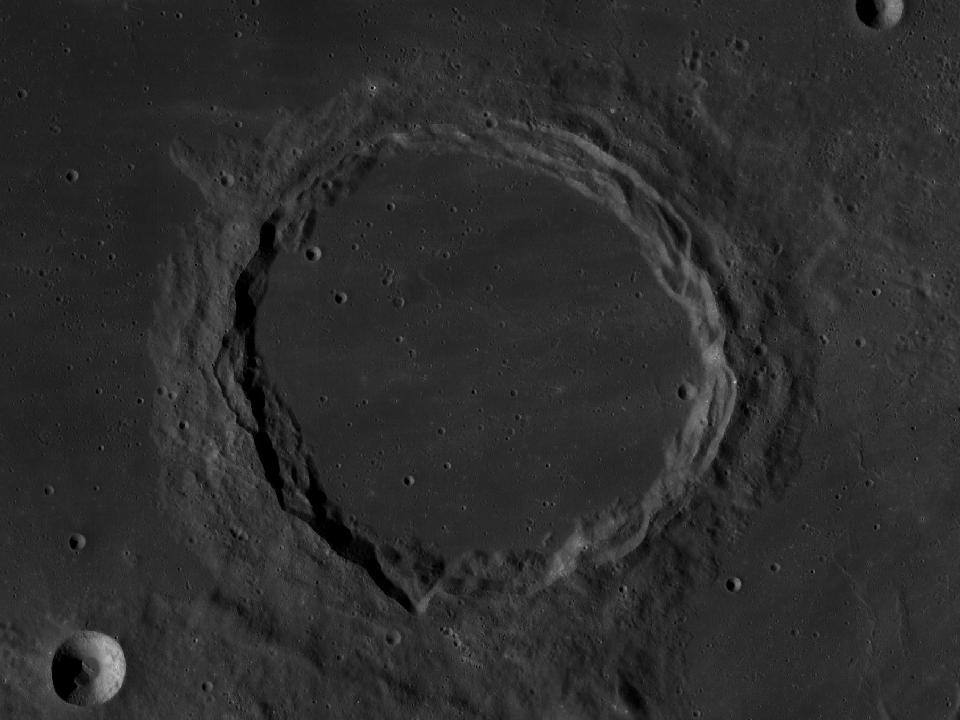 Impact crater
A broad, dark-floored crater within Mare Imbrium. The relatively smooth interior is a useful contrast to nearby mountain ranges and smaller impact craters.
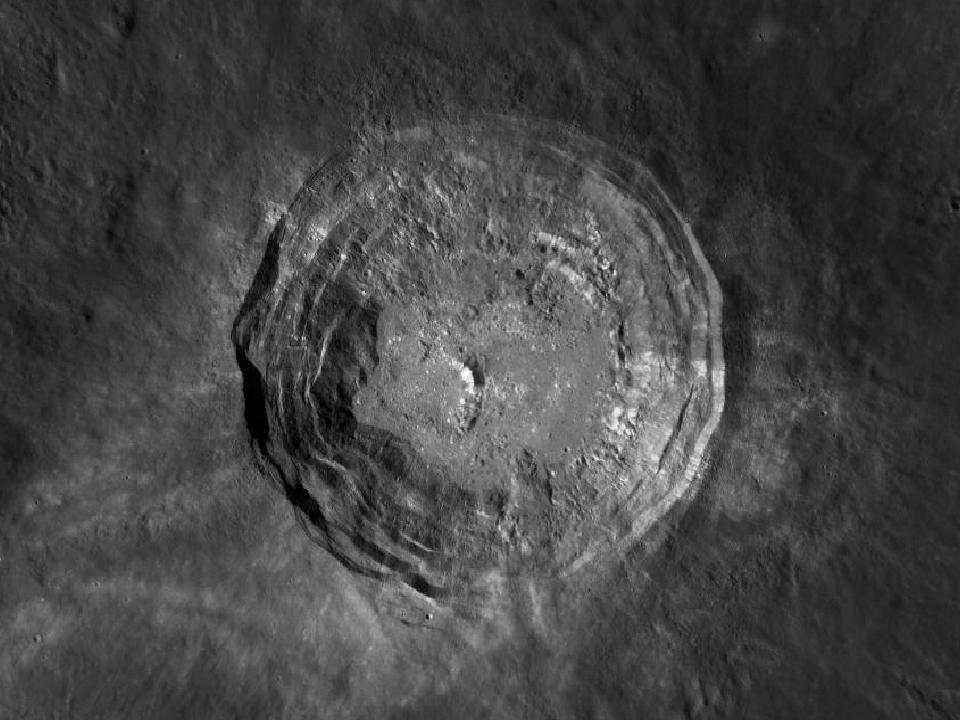 Impact crater
A bright crater beside the darker Aristarchus plateau in Oceanus Procellarum. Vallis Schroteri winds across the neighbouring plateau.
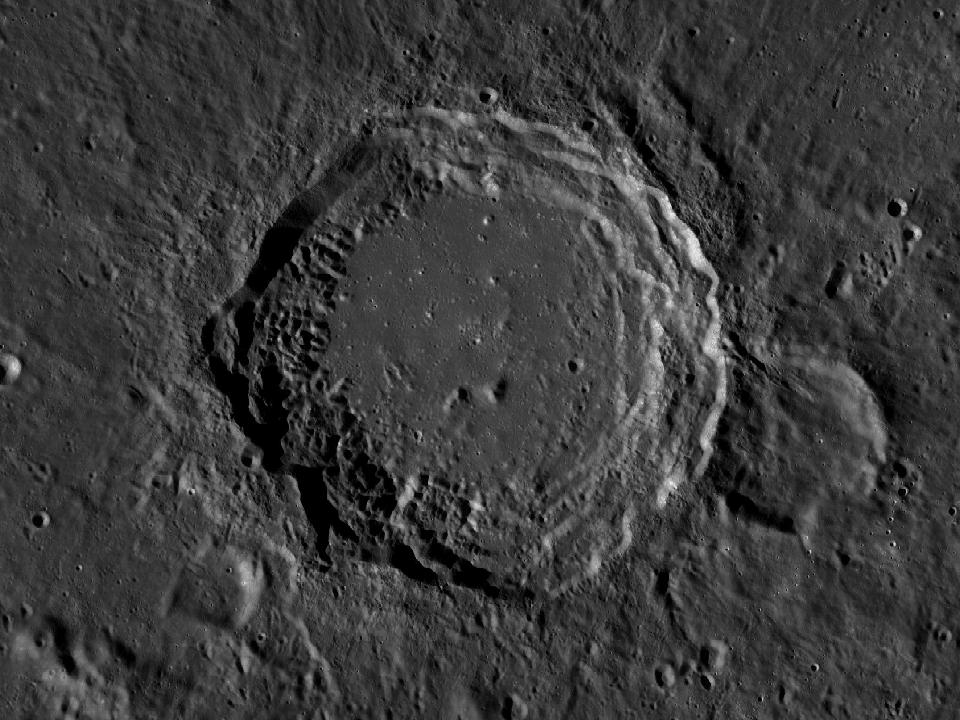 Impact crater
A substantial northern crater near the eastern end of Mare Frigoris. Together with Eudoxus it forms an easily recognisable pair.
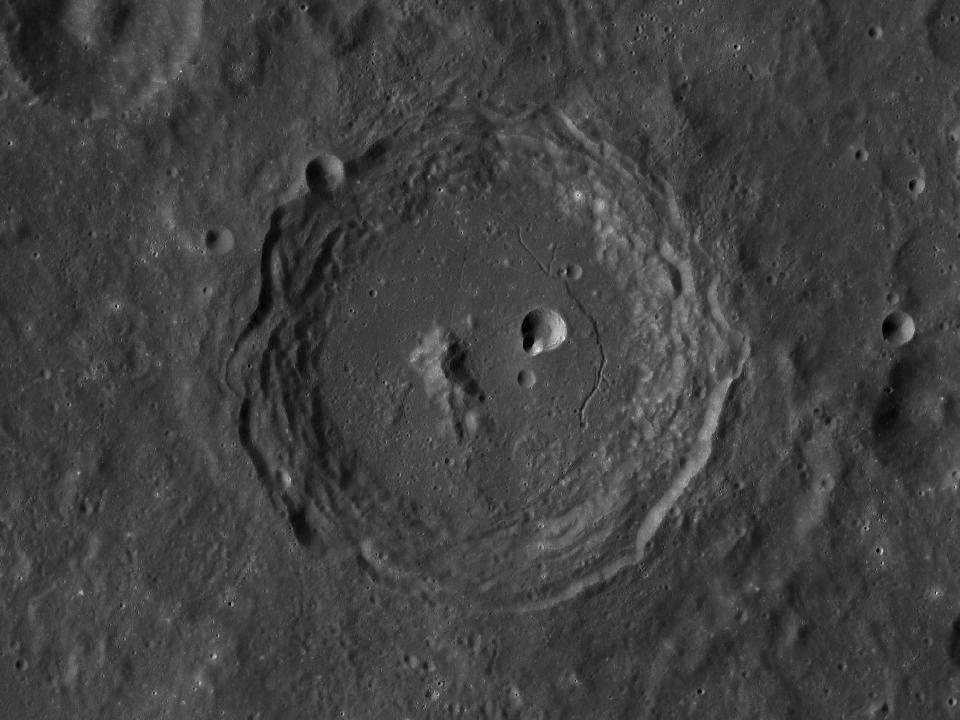 Impact crater
The southern crater of a recognisable central chain with Ptolemaeus and Alphonsus. It has a central peak and clearly defined inner walls.
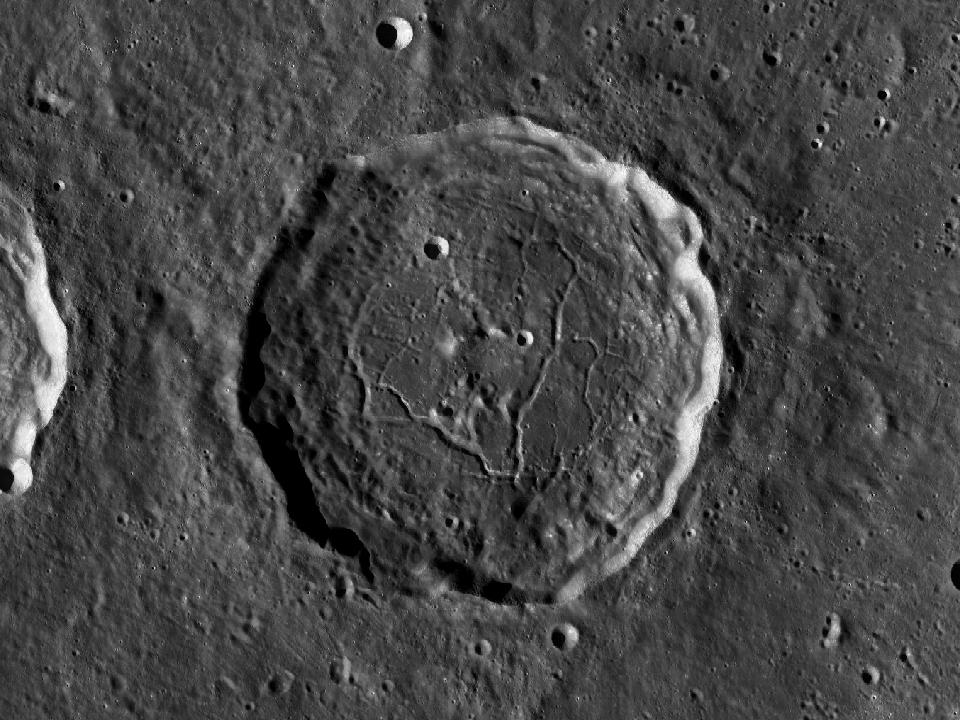 Impact crater
A northern crater east of Hercules. Rilles cross its uneven floor; resolving them requires steady air.
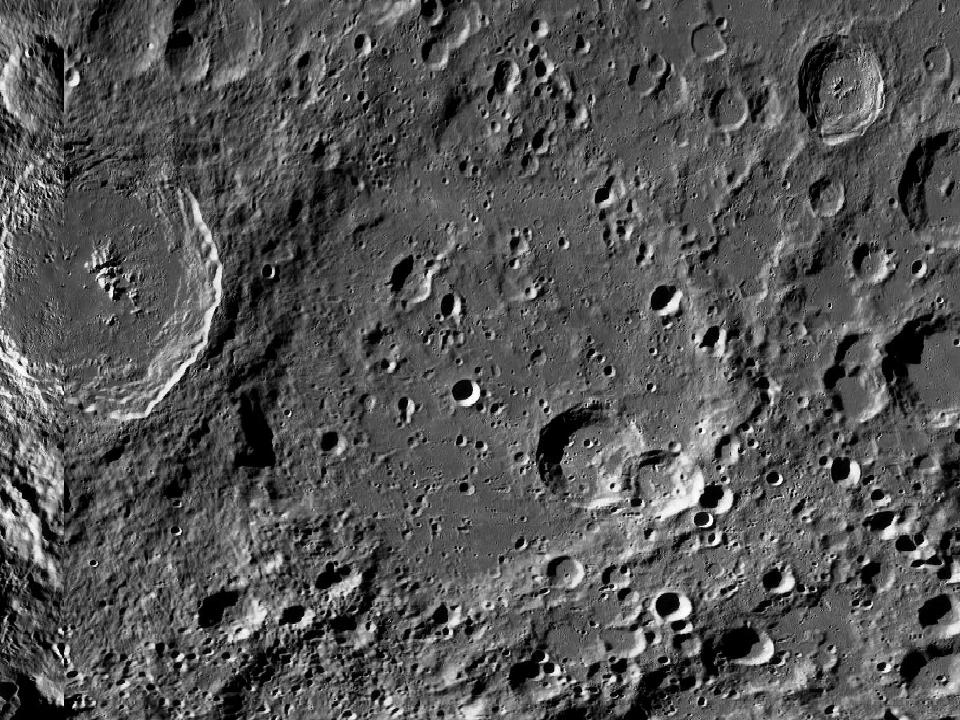 Impact crater
A vast, battered formation near the southwestern limb. Foreshortening makes the interior much harder to inspect than the catalogue size might suggest.
 Impact crater
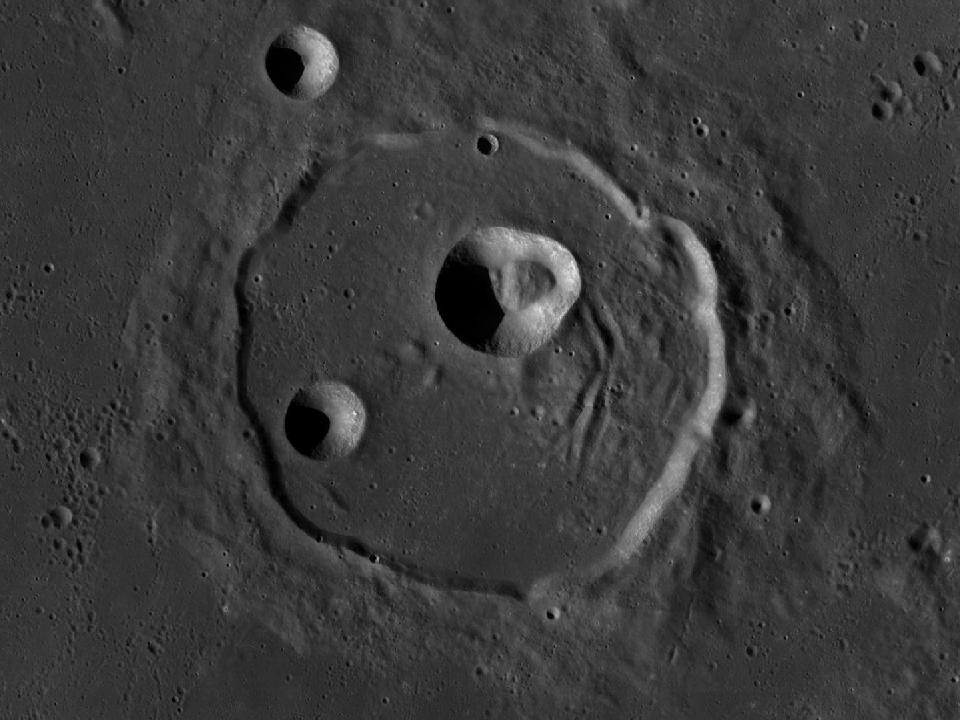
A crater in the northeastern part of Mare Imbrium, close to the Alpine region. Smaller craters inside help distinguish it from nearby formations.
 Impact crater
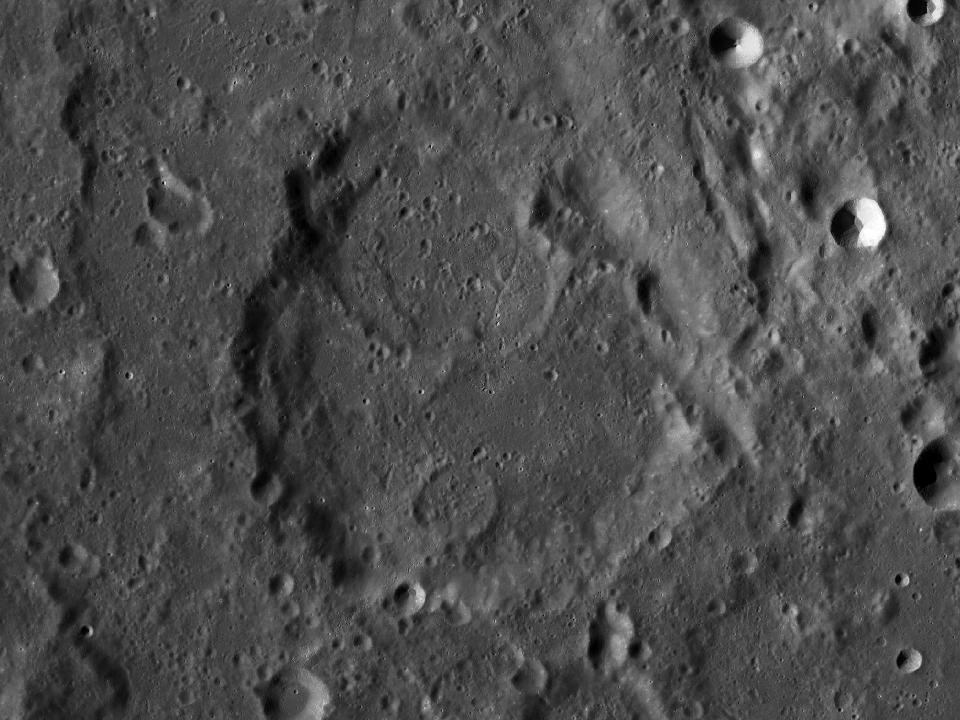
The southern member of a conspicuous three-crater group west of Mare Nectaris. Its irregular interior offers a contrast to nearby Theophilus.
 Impact crater
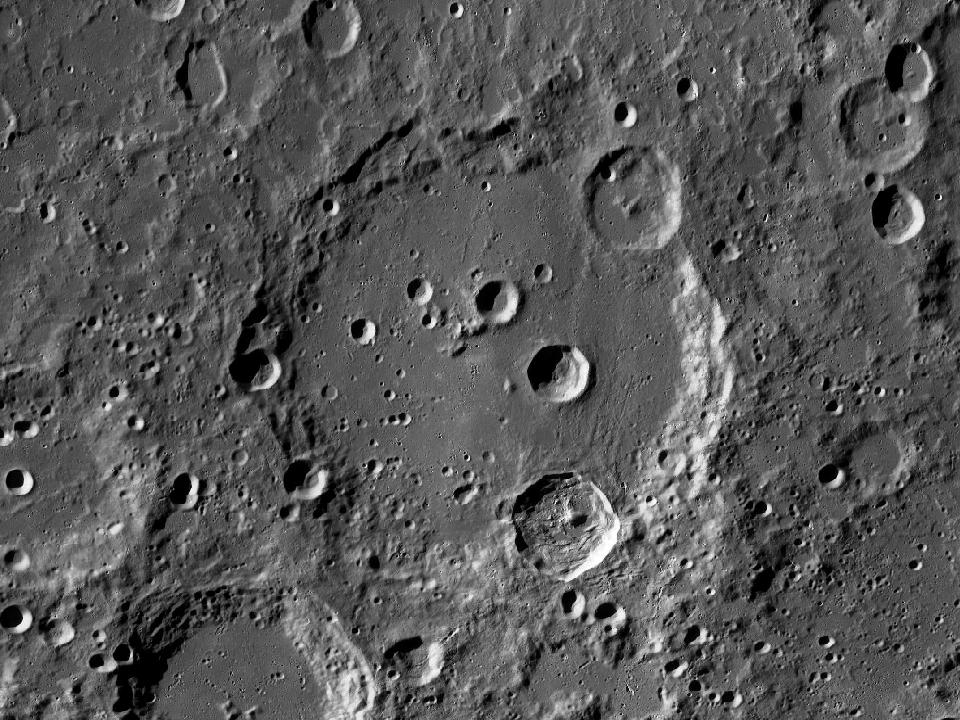
A large southern crater containing a distinctive curved sequence of smaller craters. The largest interior craters are visible well before the smaller craterlets.
 Impact crater
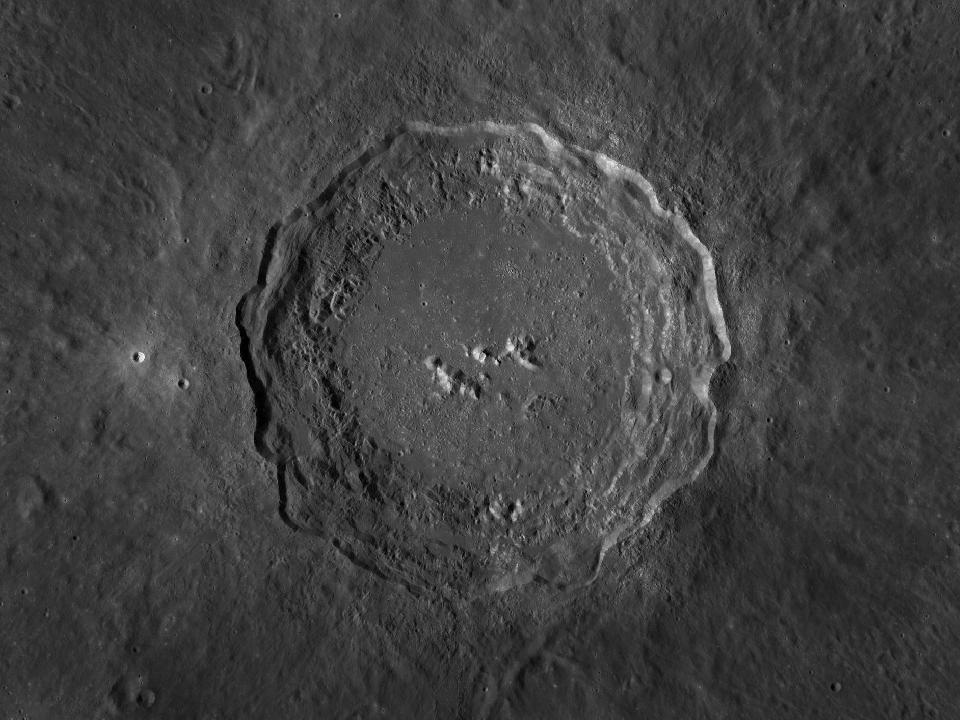
A prominent impact crater south of Mare Imbrium. It has terraced inner walls, central peaks and a broad field of ejecta.
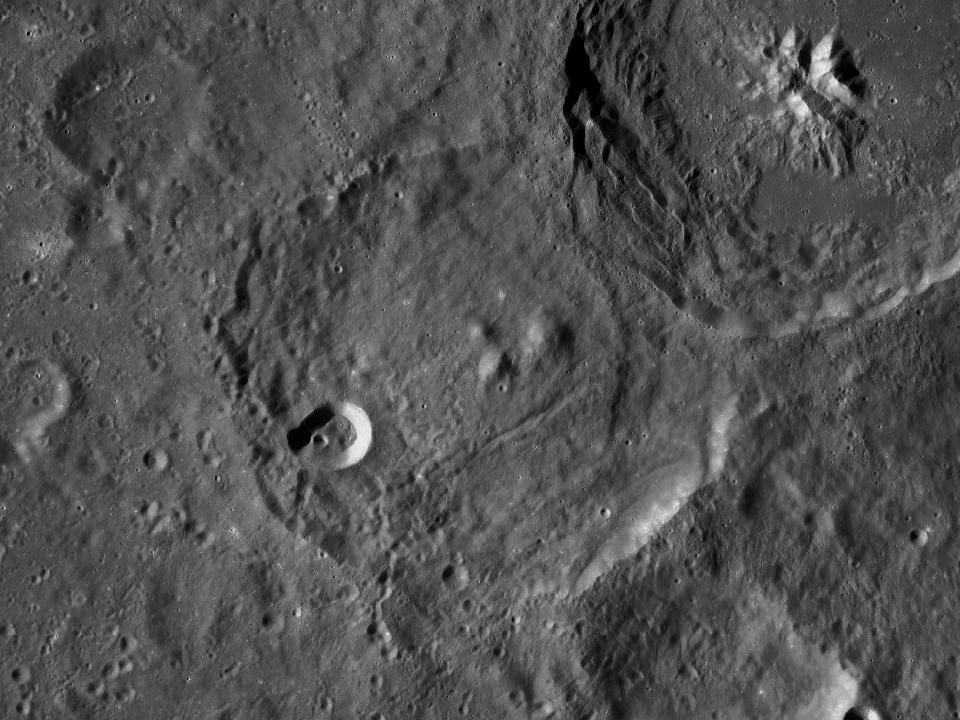 Impact crater
A worn crater beside Mare Nectaris, partly overlapped by Theophilus. The adjoining rims illustrate how later impacts reshape older terrain.
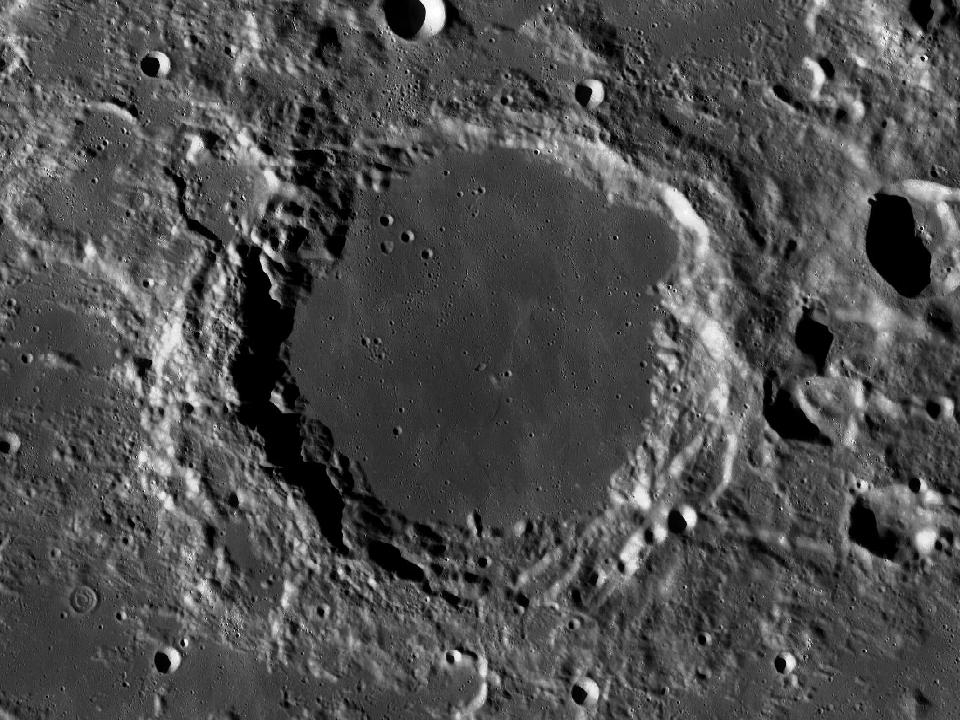 Impact crater
A dark-floored crater close to the northeastern limb. Perspective compresses its outline into an oval.
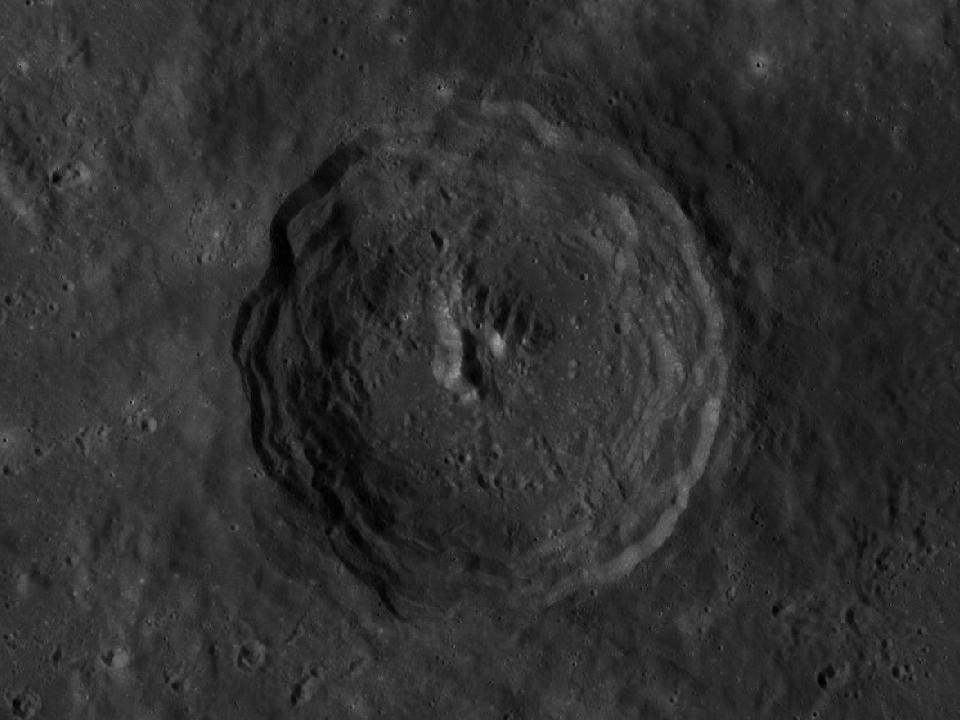 Impact crater
A sharply defined crater at the southwestern end of Montes Apenninus. It provides a useful landmark between the mountain chain and the plains farther west.
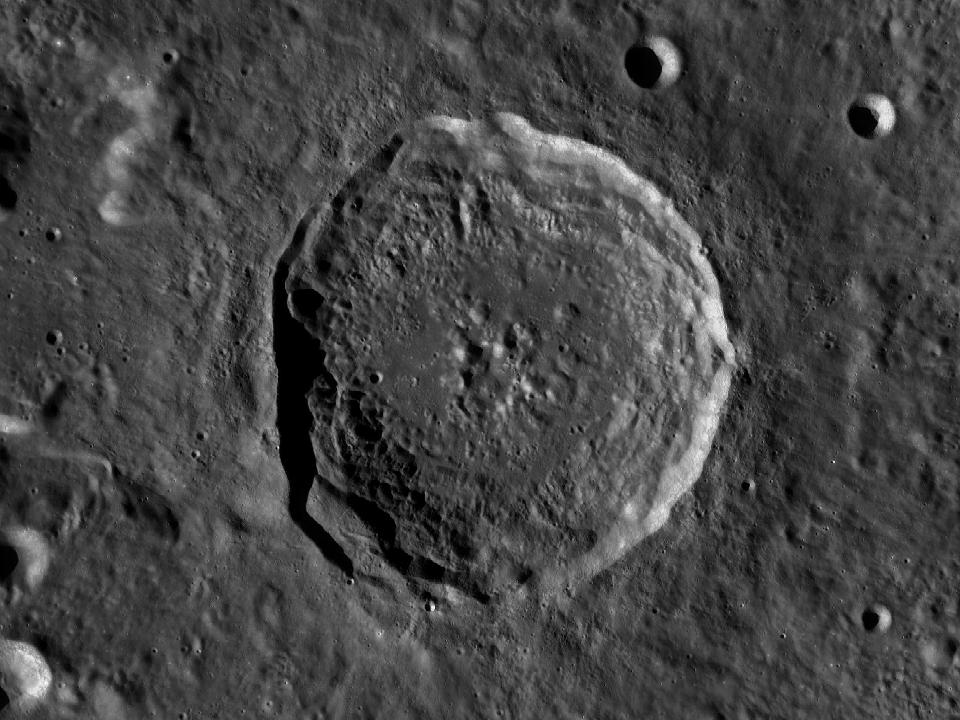 Impact crater
A northern highland crater immediately south of Aristoteles. Its terraced walls enclose an uneven floor.
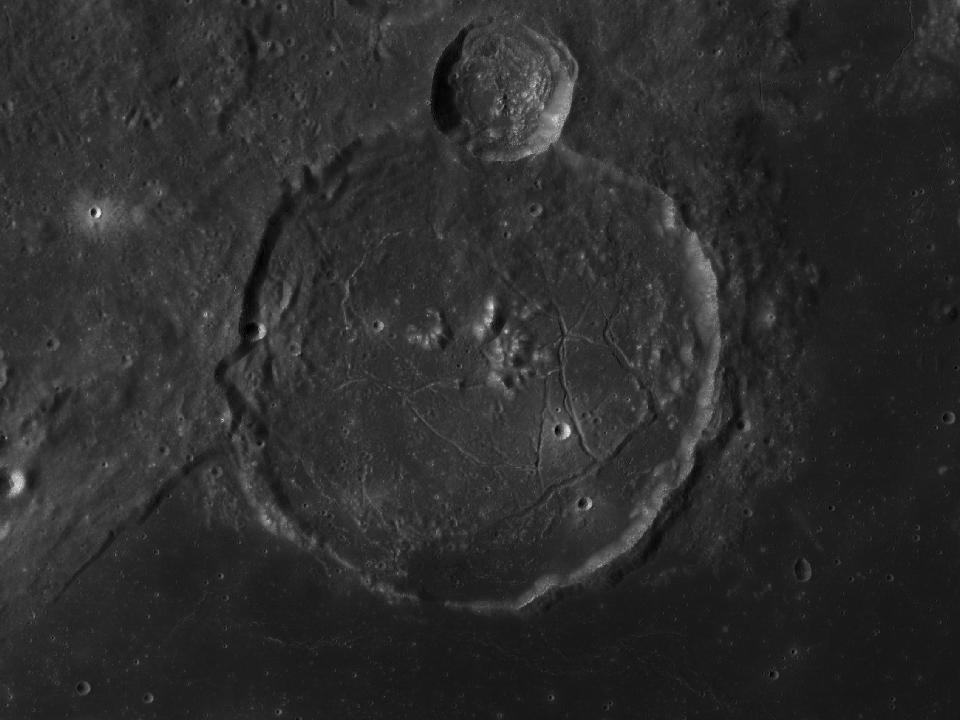 Impact crater
A large crater on the northern edge of Mare Humorum. Its floor contains central peaks and a network of fractures.
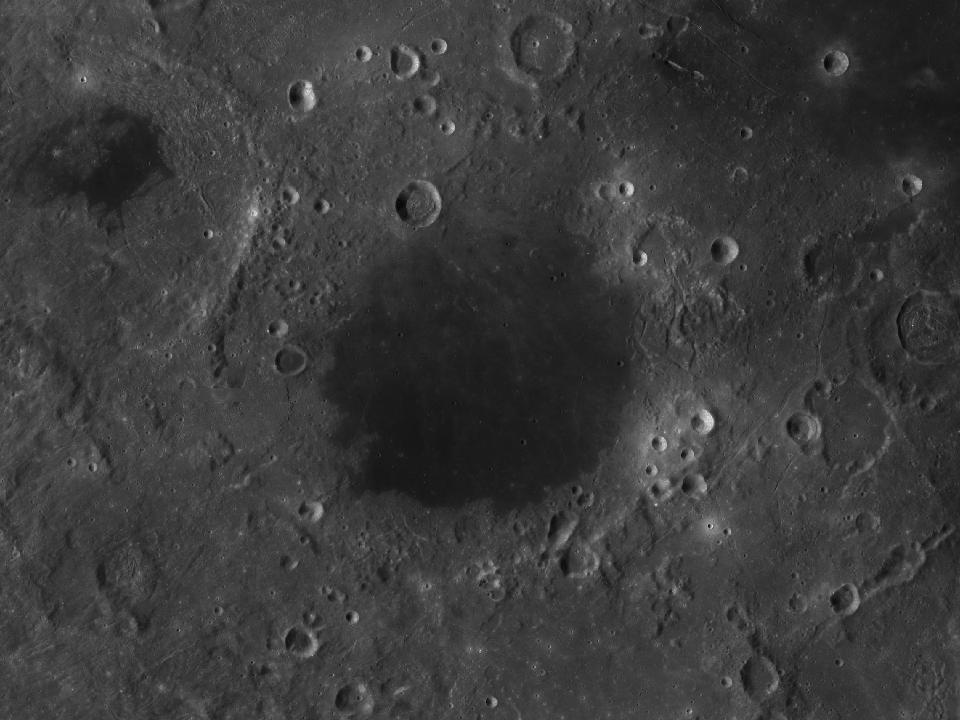 Impact crater
A conspicuously dark enclosed plain near the western limb. Its strong contrast makes it a useful landmark even when fine relief is difficult to see.
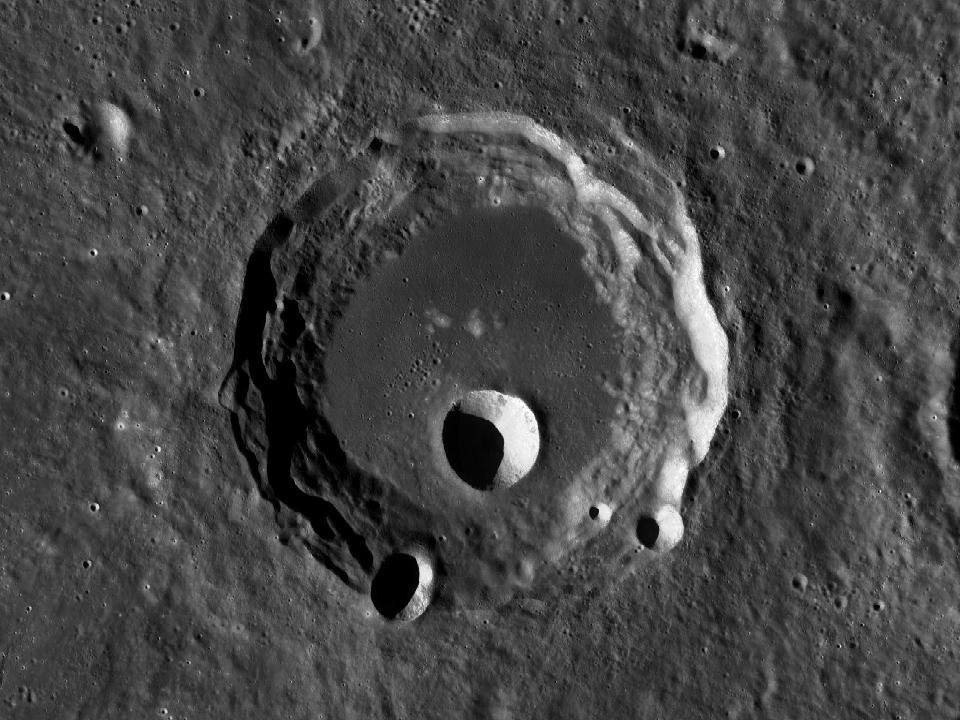 Impact crater
A northern crater paired with Atlas. Their proximity makes them a useful comparison target during the same observing session.
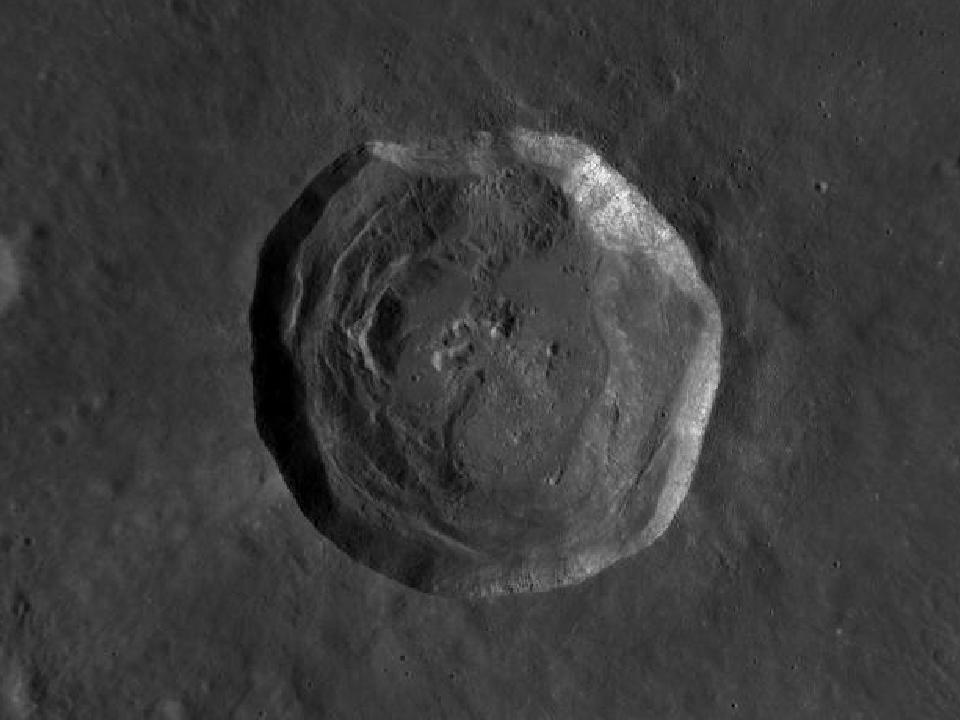 Impact crater
An isolated ray crater in the western maria, smaller than Copernicus but easy to locate by its bright surroundings.
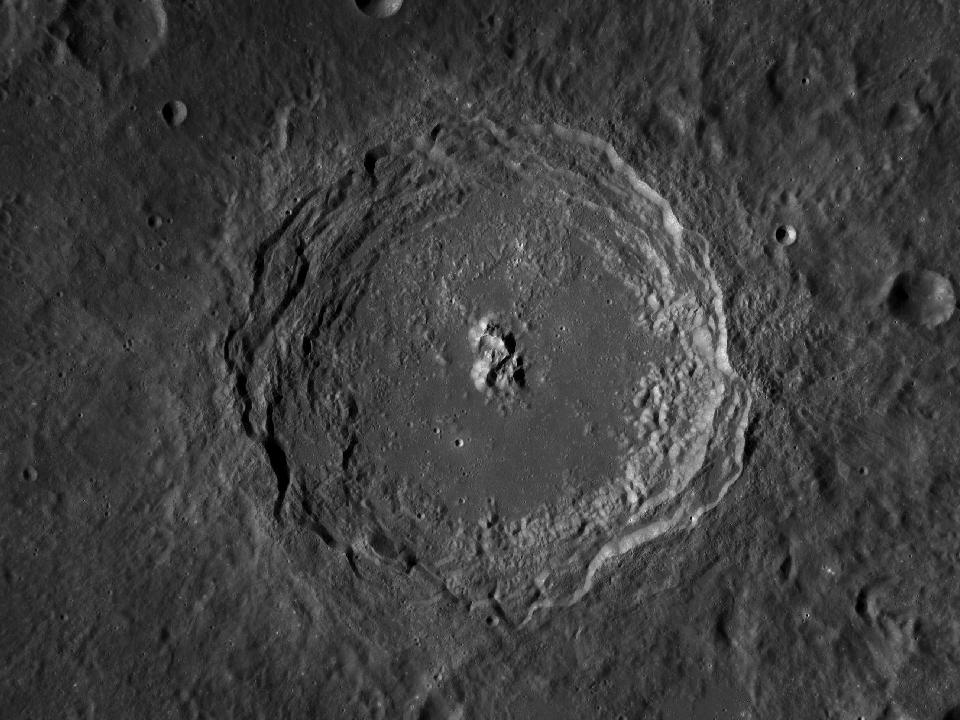 Impact crater
A conspicuous crater along the eastern edge of Mare Fecunditatis. The dark mare forms a helpful background for locating the brighter crater.
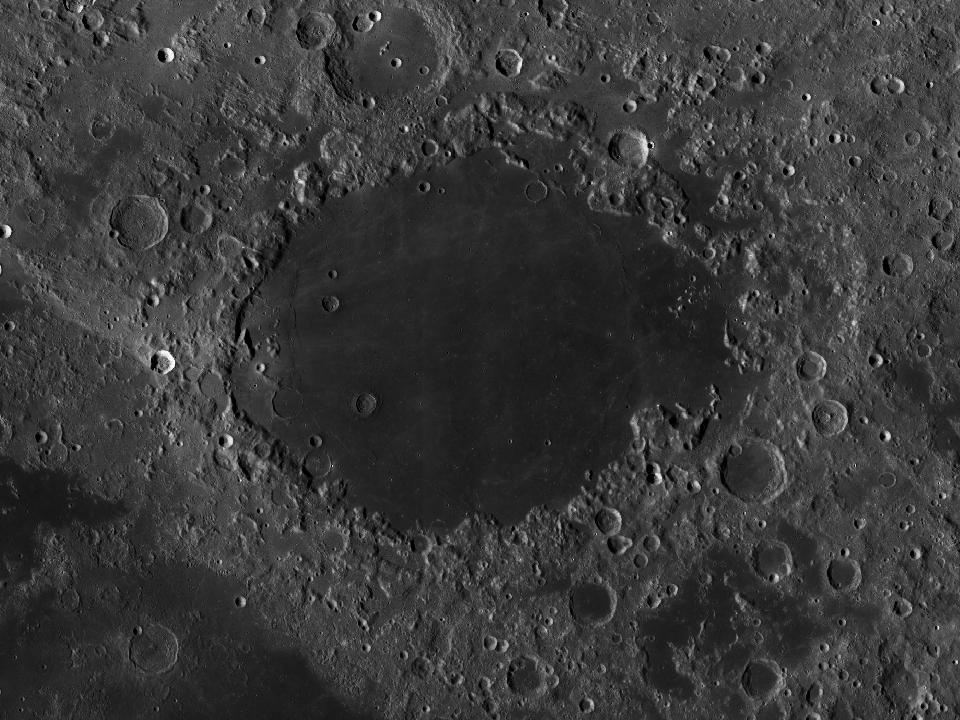 Sea / bay
The Sea of Crises is a distinct dark plain near the eastern limb, separated from the main network of maria.
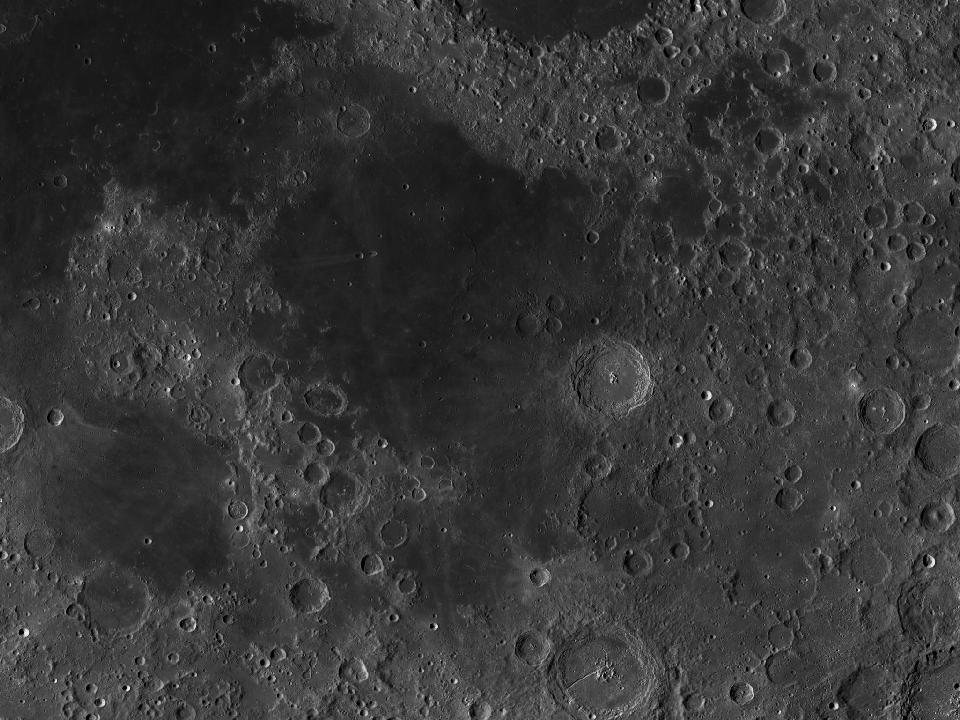 Sea / bay
The Sea of Fertility occupies part of the southeastern near side. Its dark surface helps outline craters along the edge.
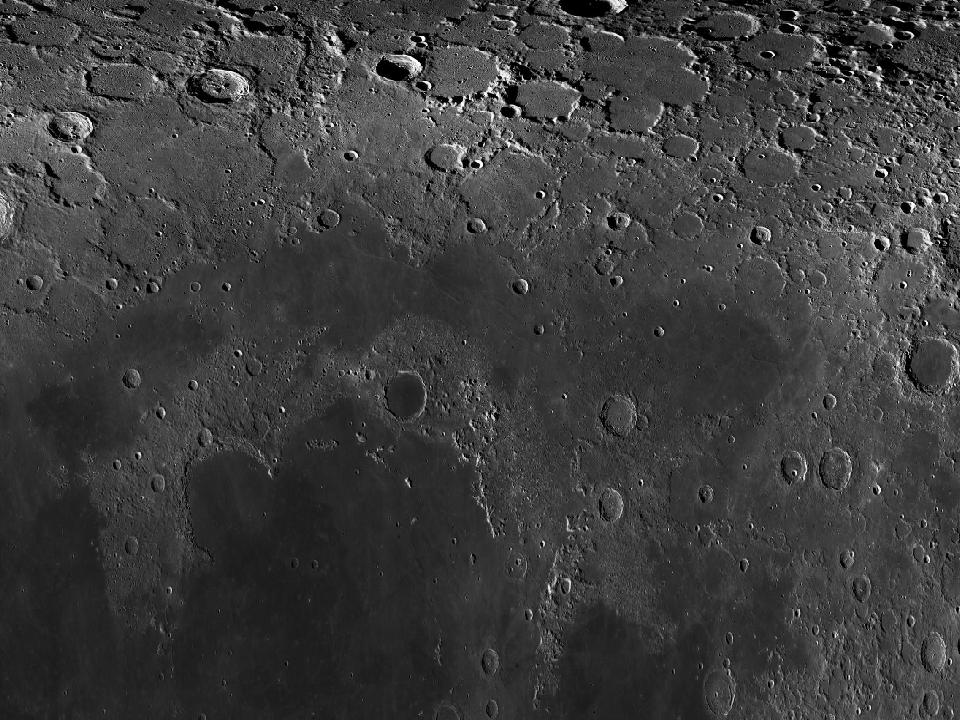 Sea / bay
The Sea of Cold is an elongated dark belt across the northern near side. It links several useful northern landmarks.
 Sea / bay
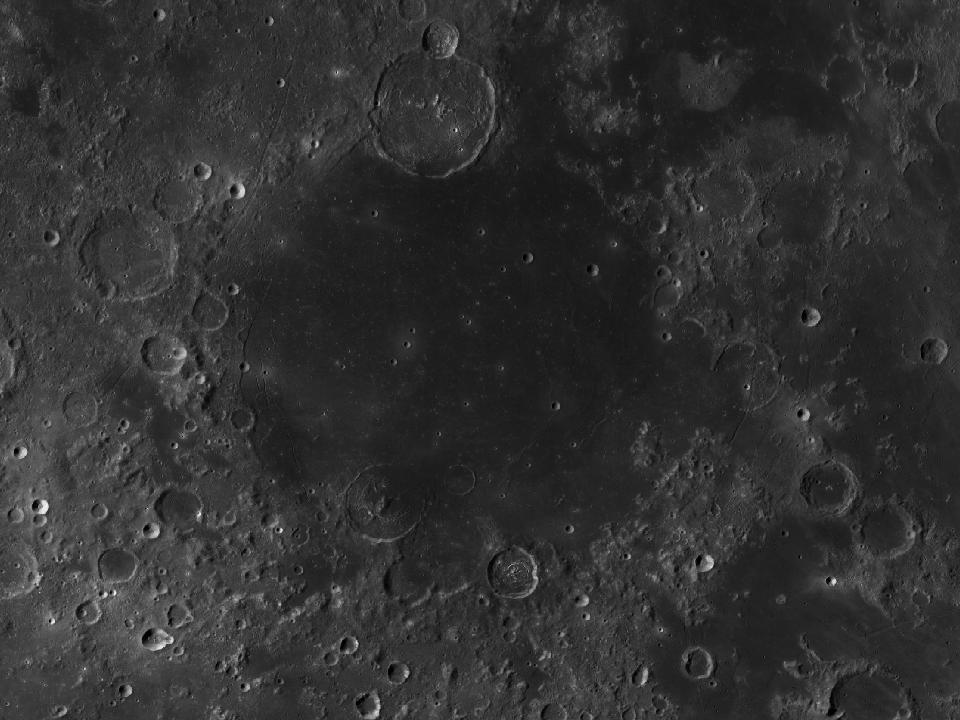
The Sea of Moisture is a rounded dark plain in the southwestern near side. Gassendi marks its northern edge.
 Sea / bay
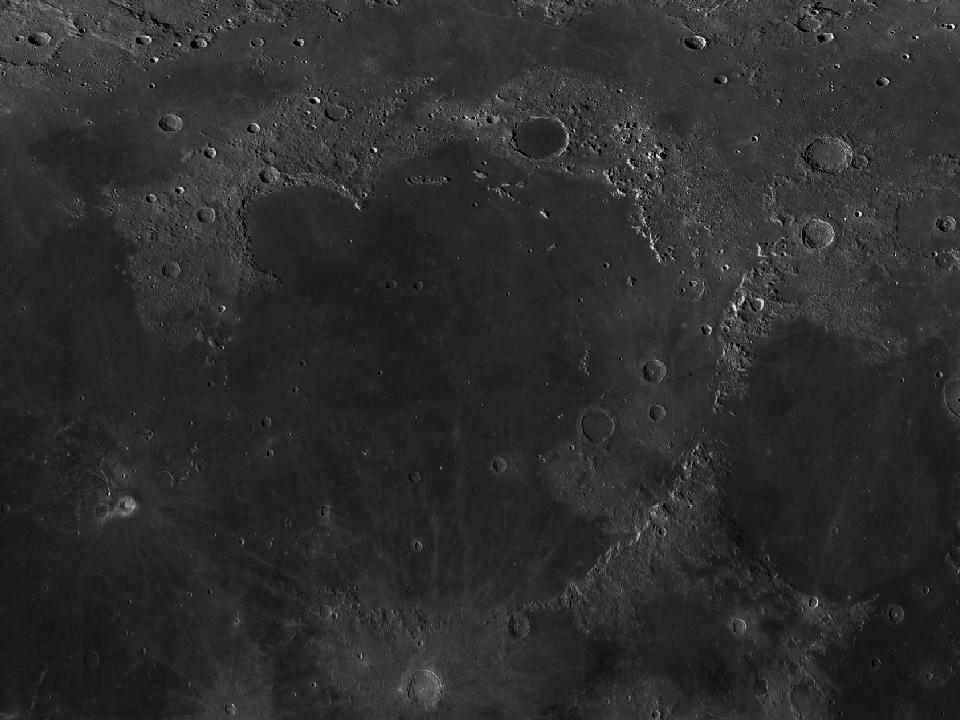
The Sea of Rains is a large lava plain in the northwestern near side. Mountain arcs and prominent craters provide numerous landmarks around its margins.
 Sea / bay
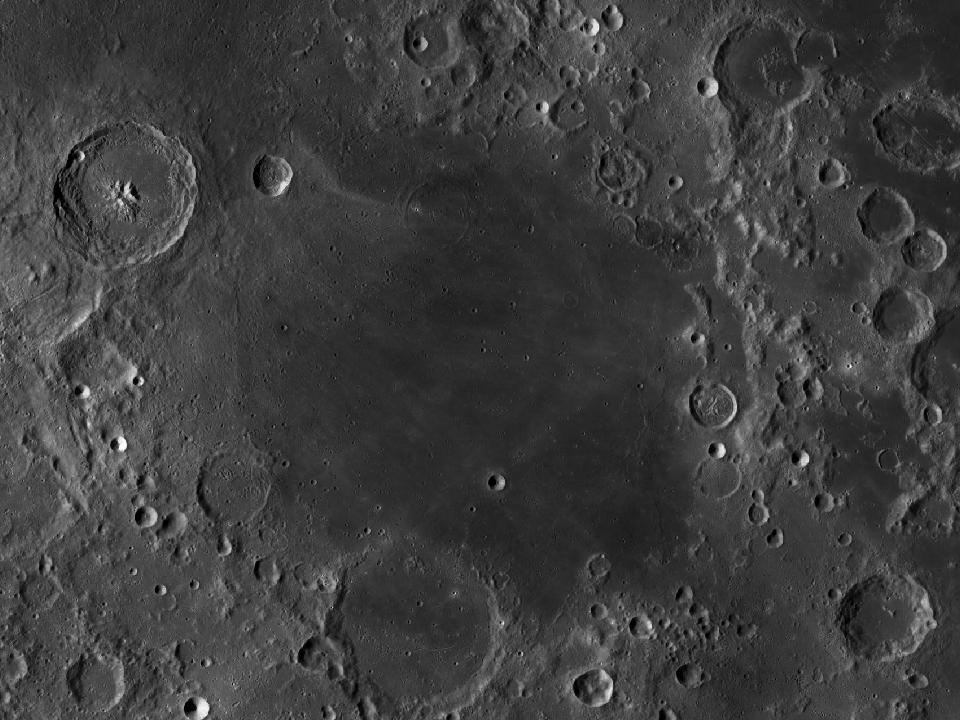
The Sea of Nectar is a compact dark plain southeast of the main central maria. The adjoining highlands contain a striking chain of large craters.
 Sea / bay
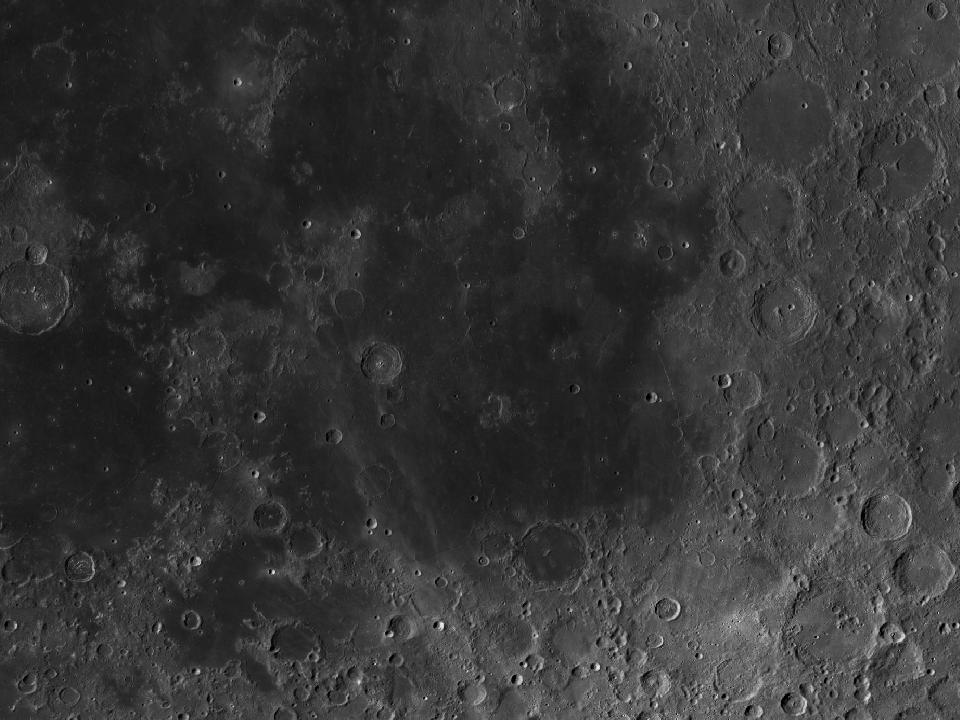
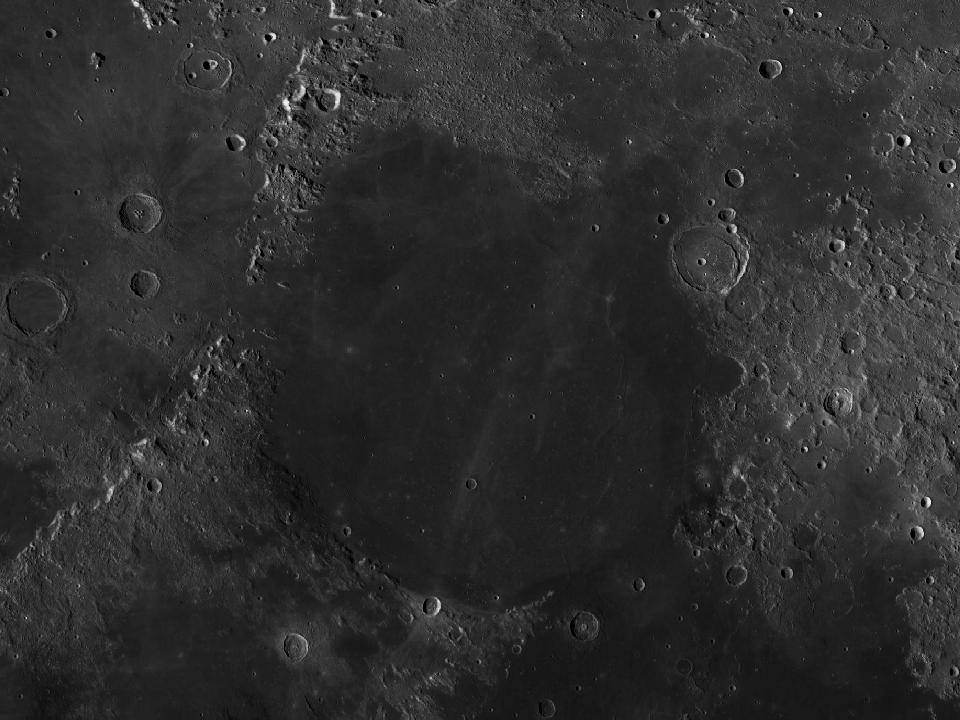
The Sea of Clouds is an irregular dark region south of the lunar equator. Partly buried formations and neighbouring highlands make its borders varied.
 Sea / bay
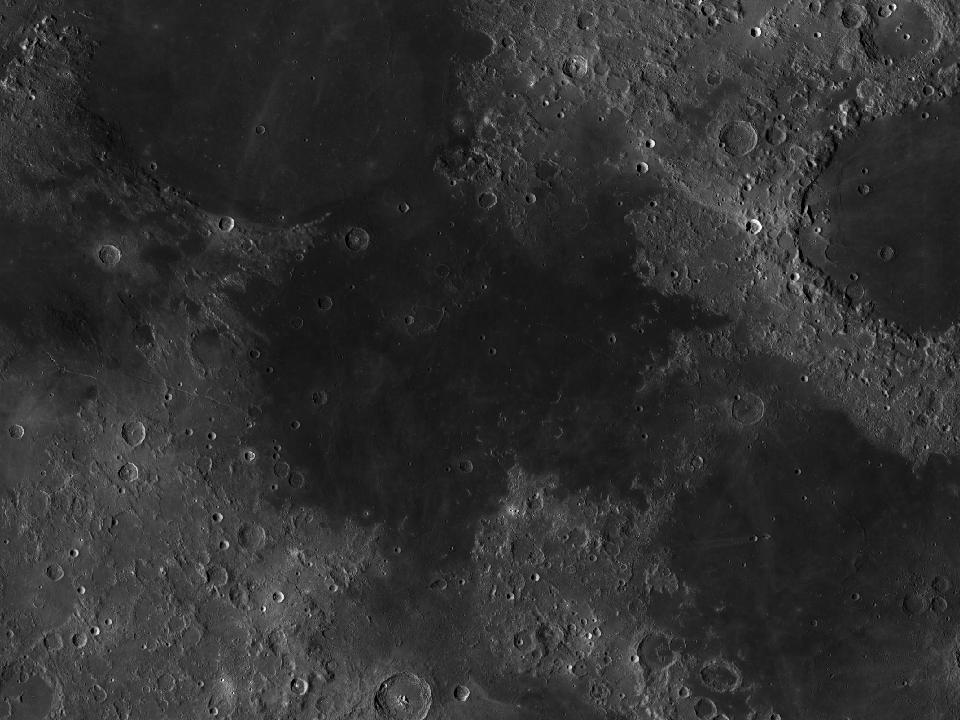
The Sea of Serenity is a rounded dark plain in the northern near side. Its shape is easy to recognise among the connected lunar maria.
 Sea / bay
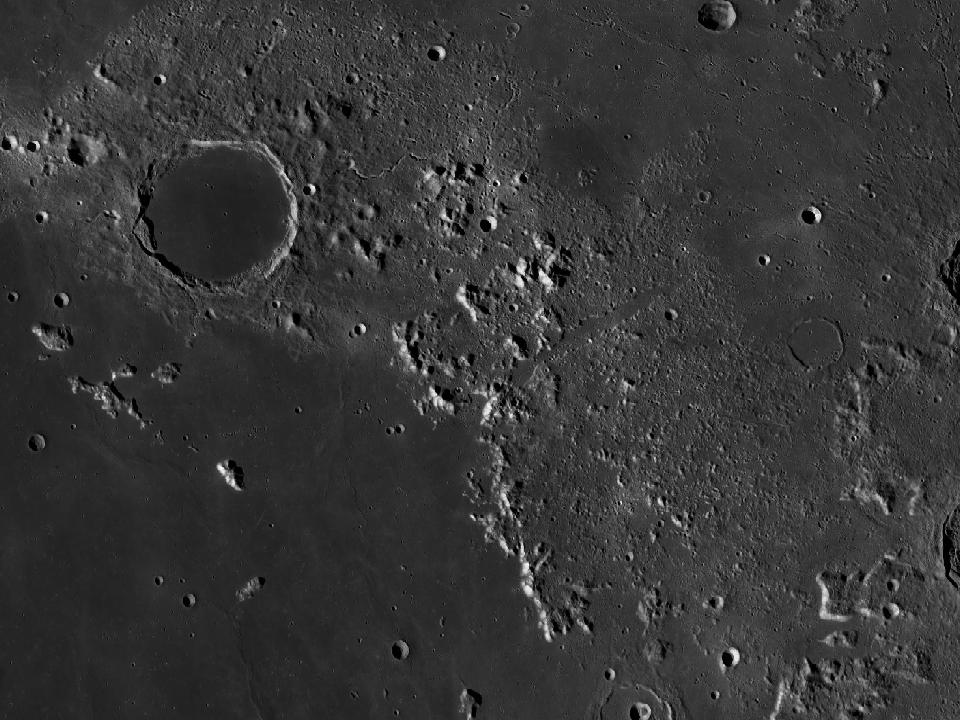
The Sea of Tranquility is an irregular dark plain in the eastern near side, known as the region of the Apollo 11 landing.
 Mountain range
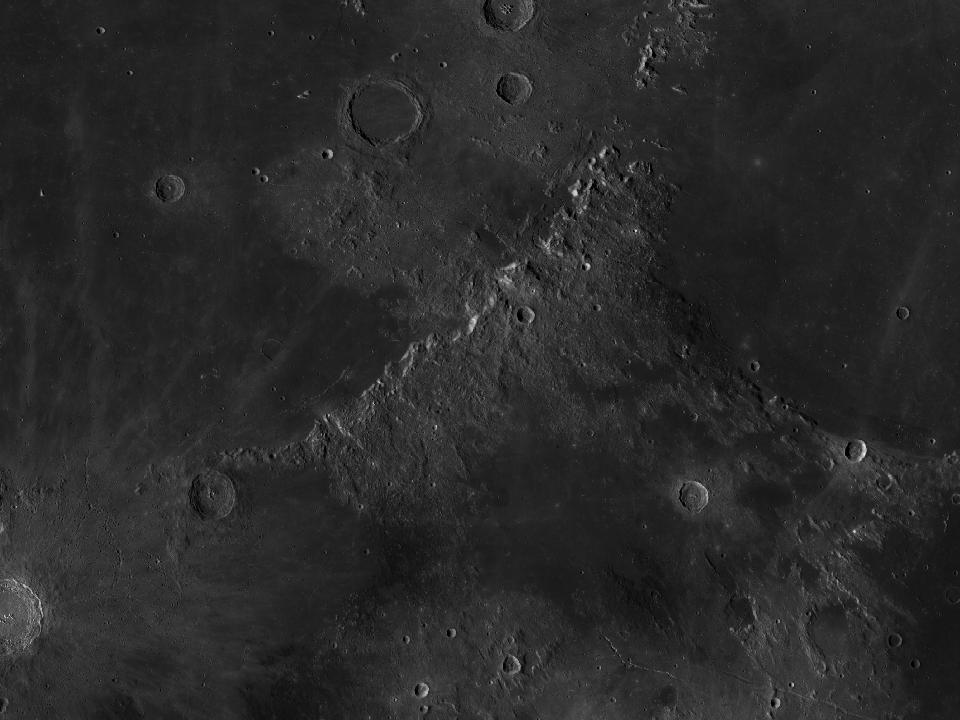
A mountainous region along the northeastern border of Mare Imbrium. Vallis Alpes cuts a distinctive path through this terrain.
 Mountain range
A mountain arc bordering southeastern Mare Imbrium. Its ridges and peaks cast long shadows across the adjacent plain under low sunlight.
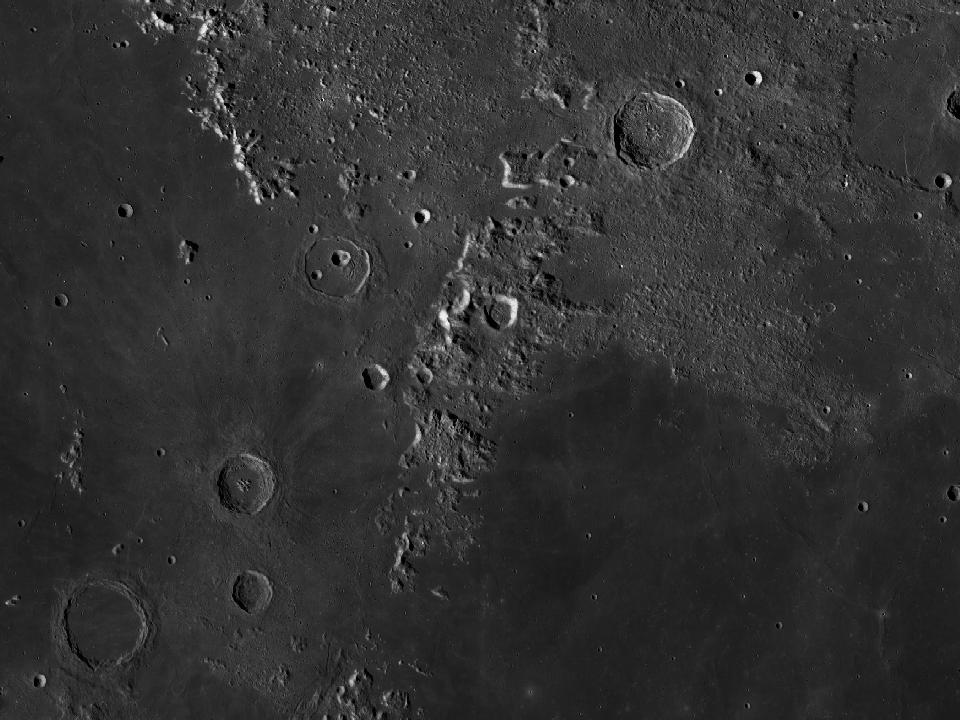 Mountain range
A mountain group between Mare Imbrium and Mare Serenitatis. It forms a useful bridge between two major lunar plains.
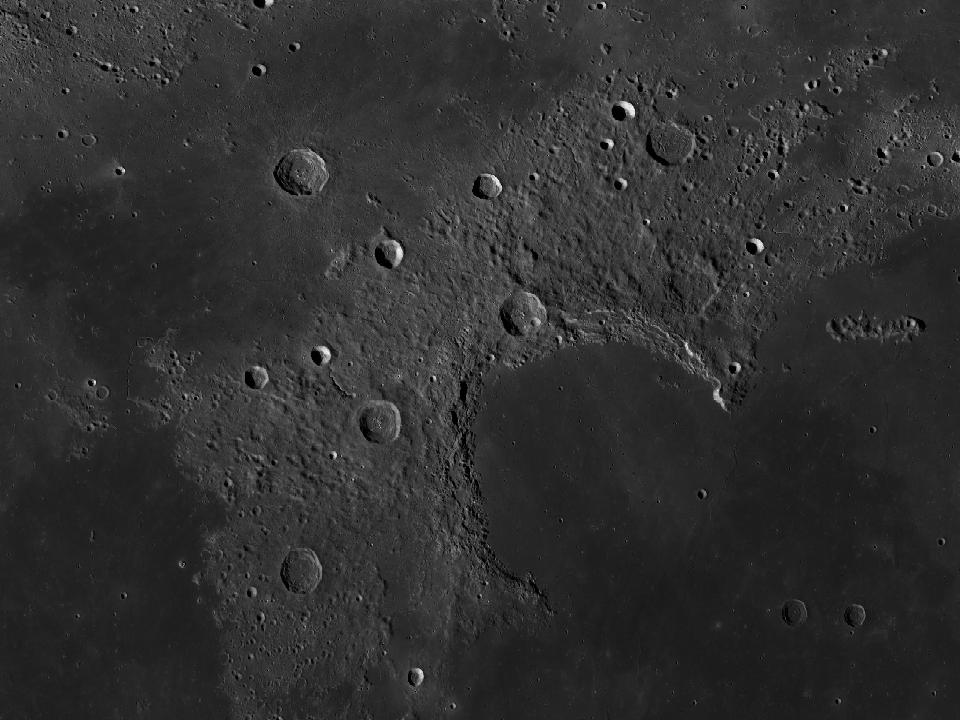 Mountain range
The curved mountain border of Sinus Iridum. Its arc is a conspicuous outline along the northwestern edge of Mare Imbrium.
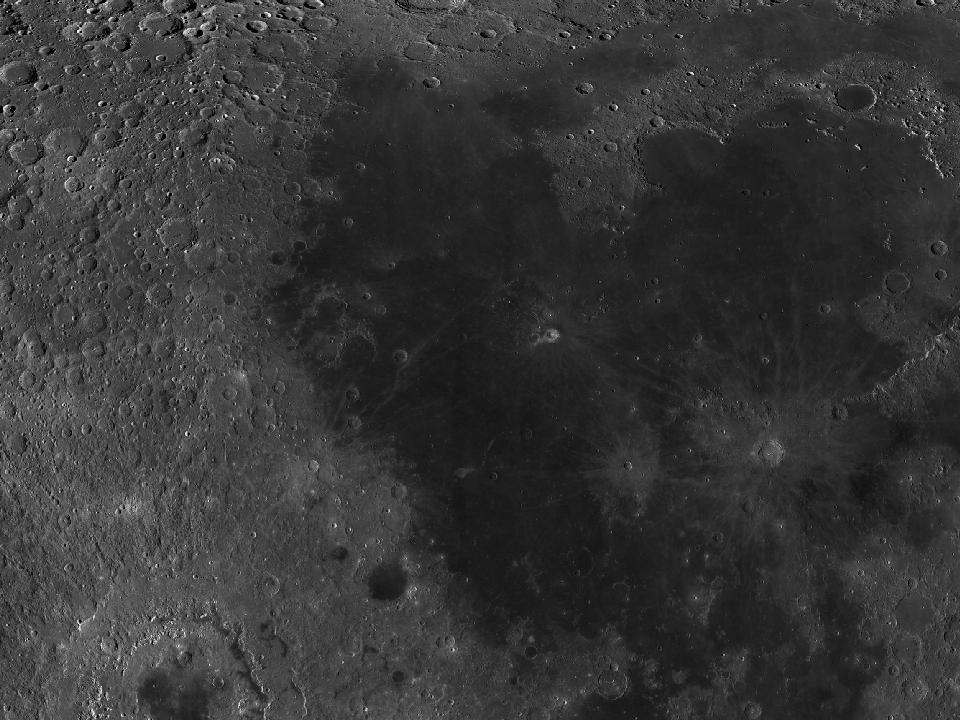 Sea / bay
The Ocean of Storms is an extensive dark region across the western near side. Unlike the compact circular maria, it has a broad irregular outline.
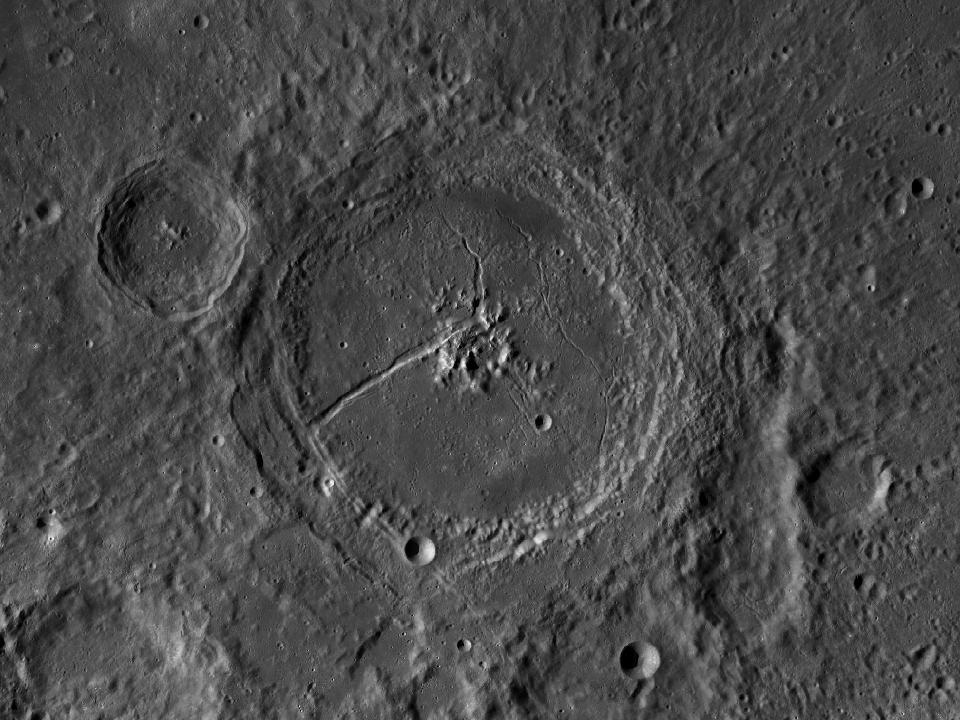 Impact crater
A large crater near the southeastern limb with a prominent central mountain complex. Its position makes its appearance sensitive to viewing geometry.
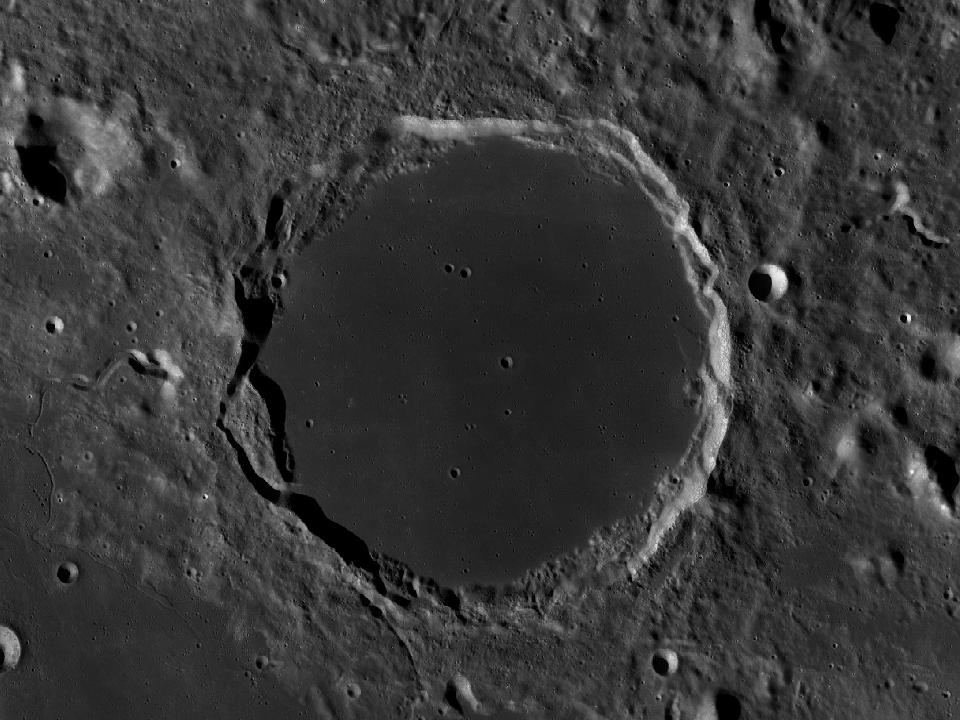 Impact crater
A dark-floored crater along the northern edge of Mare Imbrium. Its smooth interior contrasts with the surrounding rugged terrain.
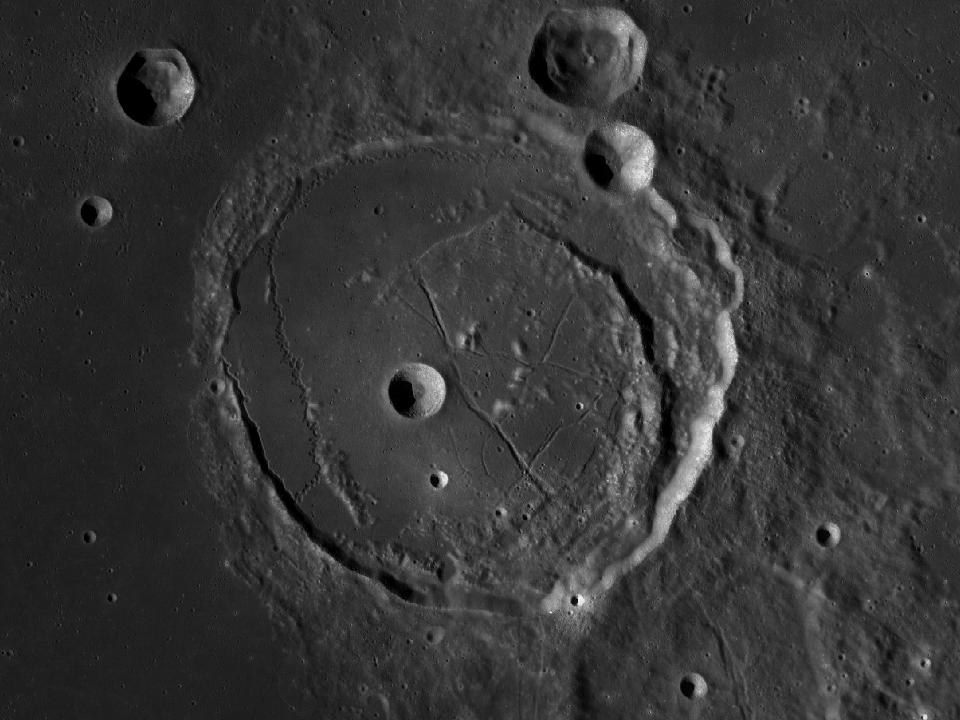 Impact crater
A large crater on the northeastern margin of Mare Serenitatis. Its fractured floor is easier to distinguish under low sunlight.
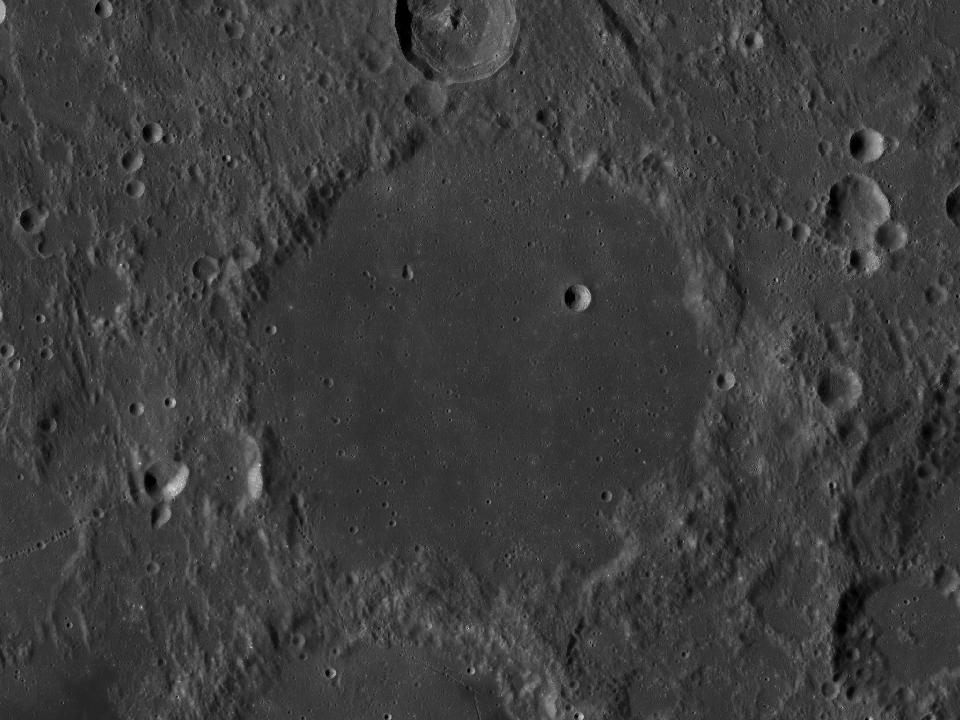 Impact crater
A large, relatively smooth-floored crater near the centre of the visible lunar disc. Its broad outline is a useful landmark in the central highlands.
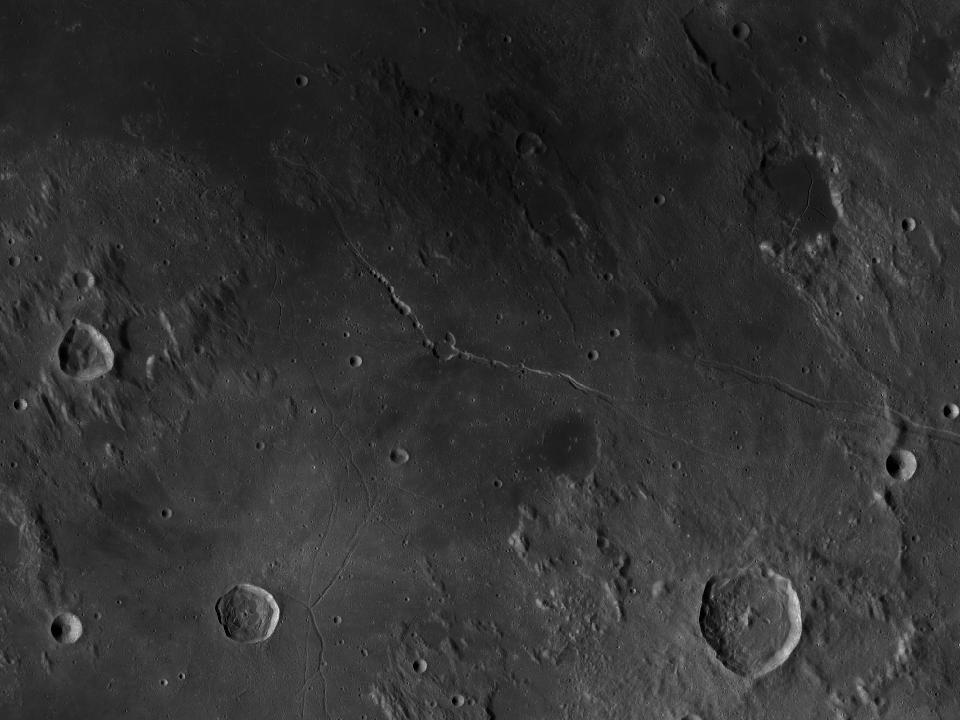 Valley / rille / scarp
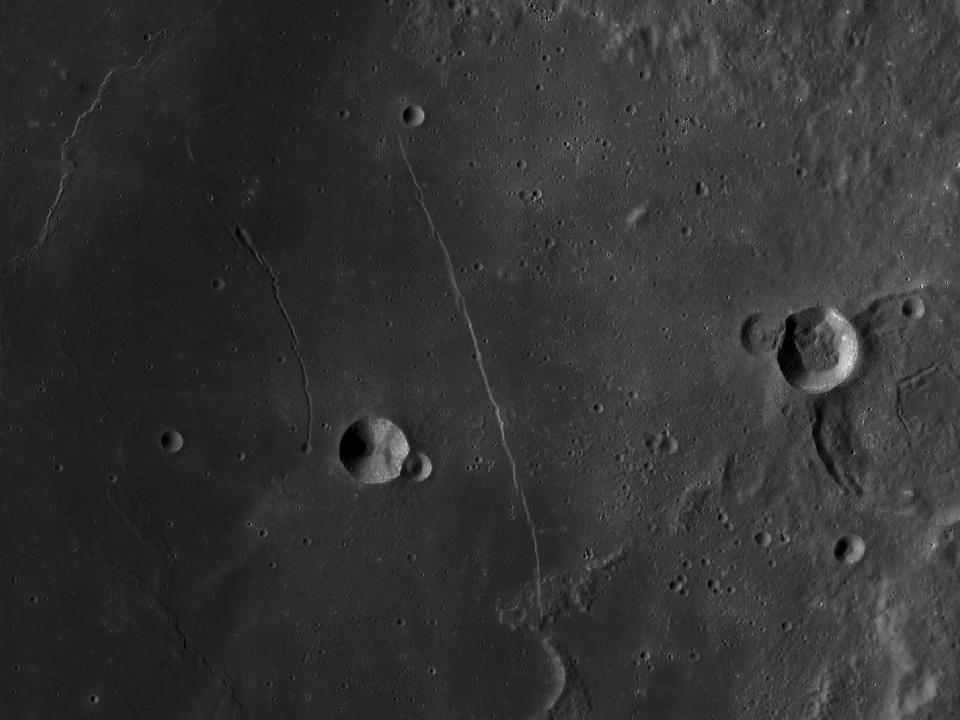
A narrow linear feature crossing the small crater Hyginus near the centre of the near side. It is a more demanding target than the broad maria.
 Valley / rille / scarp
The Straight Wall is a linear scarp in Mare Nubium. Its appearance depends strongly on the direction and height of the sunlight.
 Impact crater
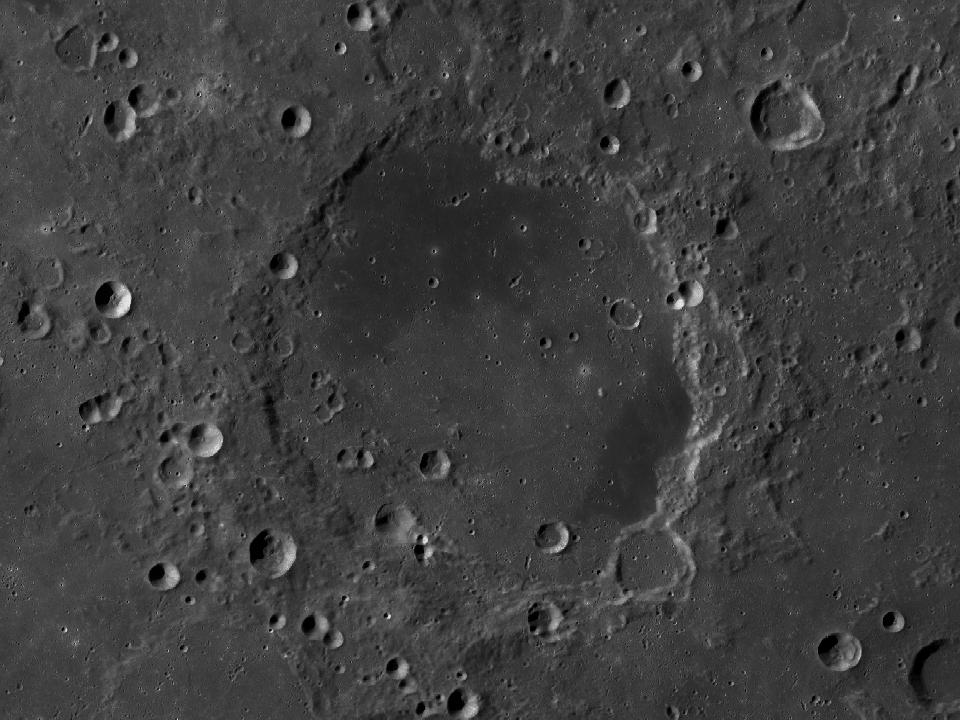
A broad walled plain in the southwestern lunar highlands. Different parts of its floor have noticeably different surface brightness.
 Impact crater
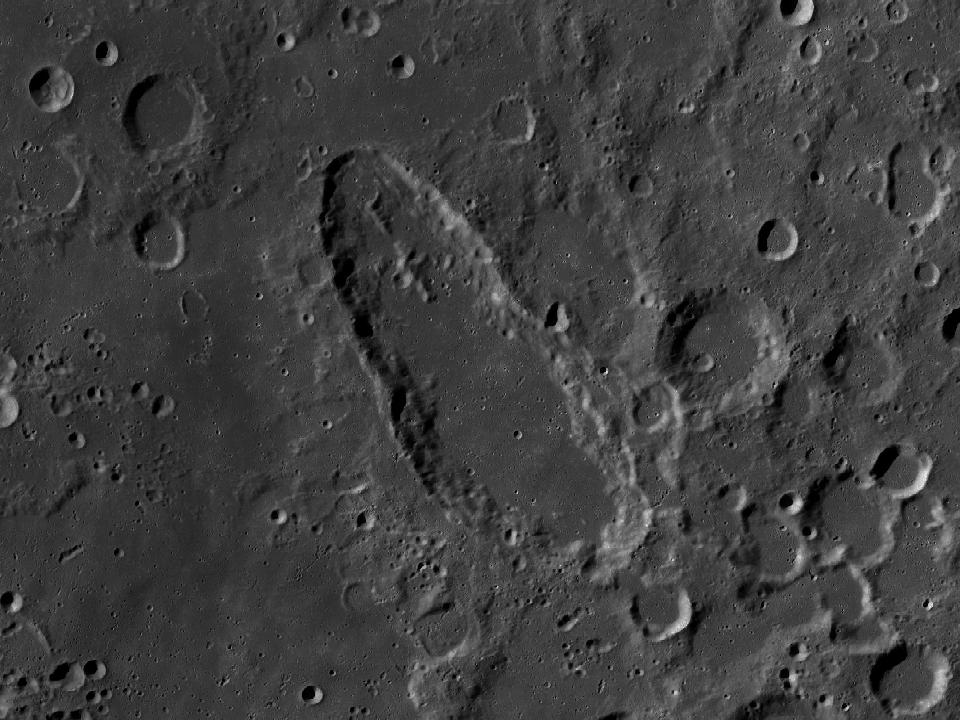
A markedly elongated crater in the southwestern highlands. Its shape stands out among the more rounded neighbouring formations.
 Impact crater
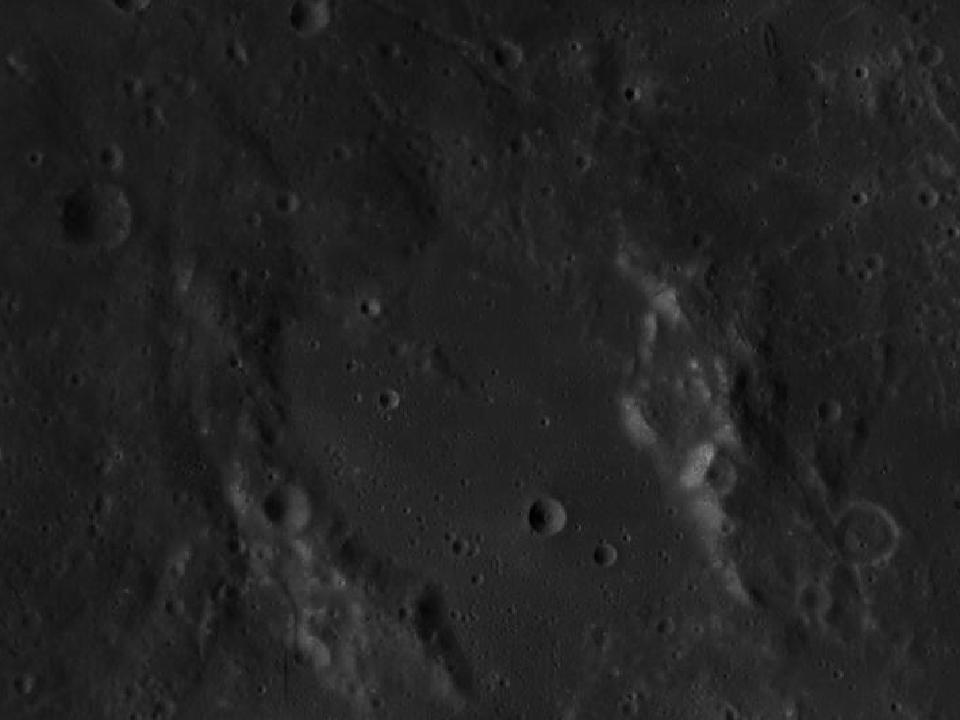
A worn crater in the central near-side region, north of the Sinus Medii area. It is a subtler target than the major bright ray craters.
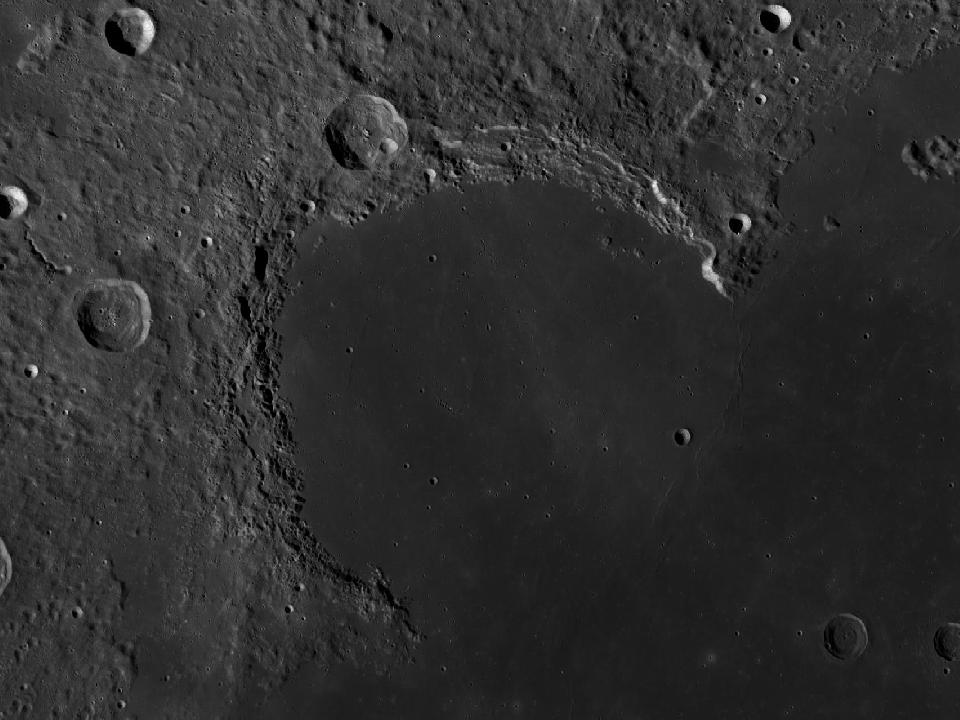 Sea / bay
The Bay of Rainbows is a curved embayment on the northwestern edge of Mare Imbrium, bordered by Montes Jura.
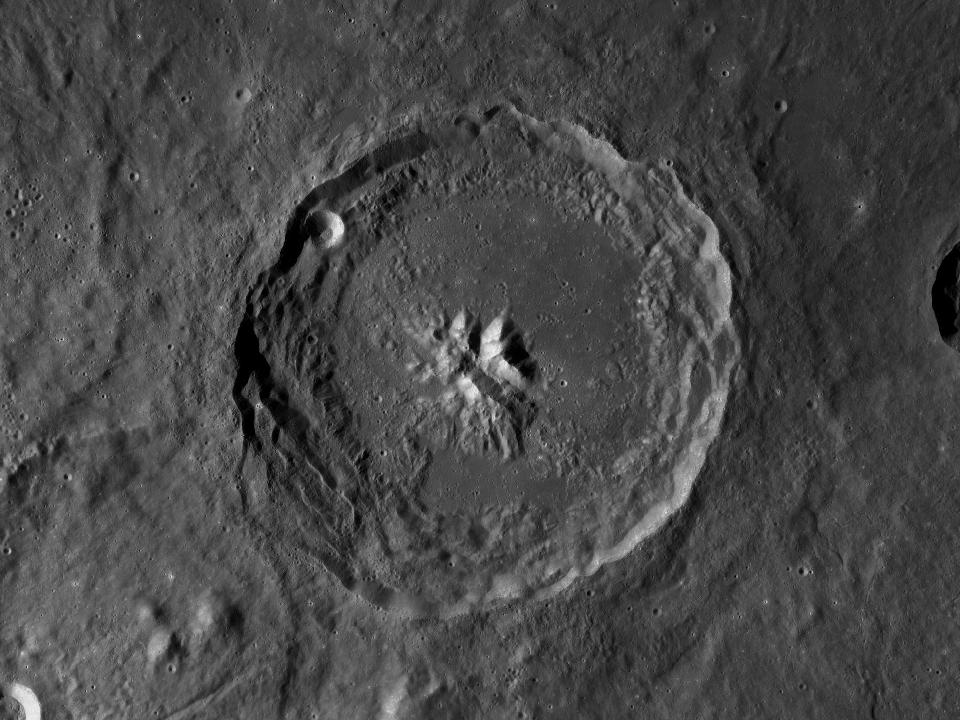 Impact crater
The northern member of the Theophilus–Cyrillus–Catharina group beside Mare Nectaris. Its prominent central mountains contrast with its older-looking neighbours.
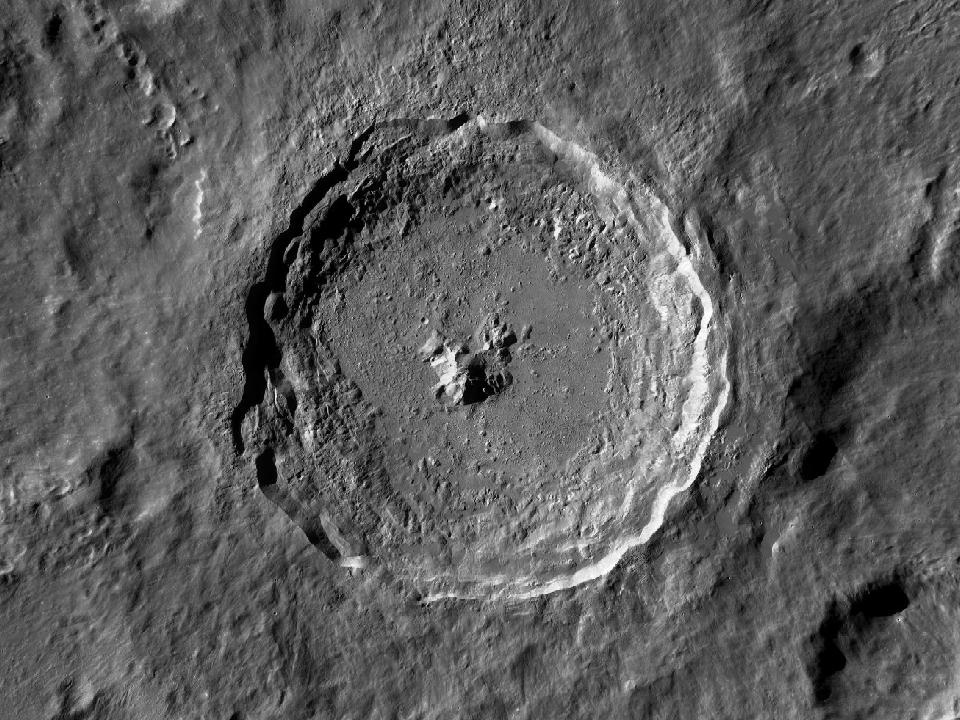 Impact crater
A crater in the southern highlands surrounded by bright impact rays. Its rim, central peak and terraced walls stand out against the older, densely cratered terrain.
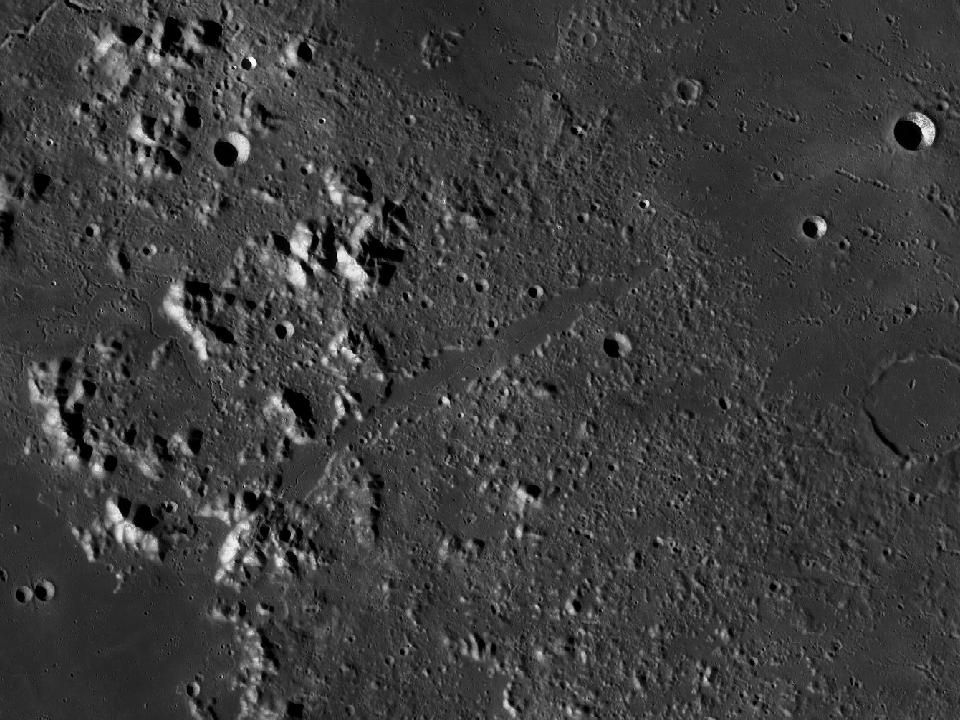 Valley / rille / scarp
The Alpine Valley cuts through Montes Alpes near the northeastern edge of Mare Imbrium. The main valley is much easier to detect than the narrow channel within it.
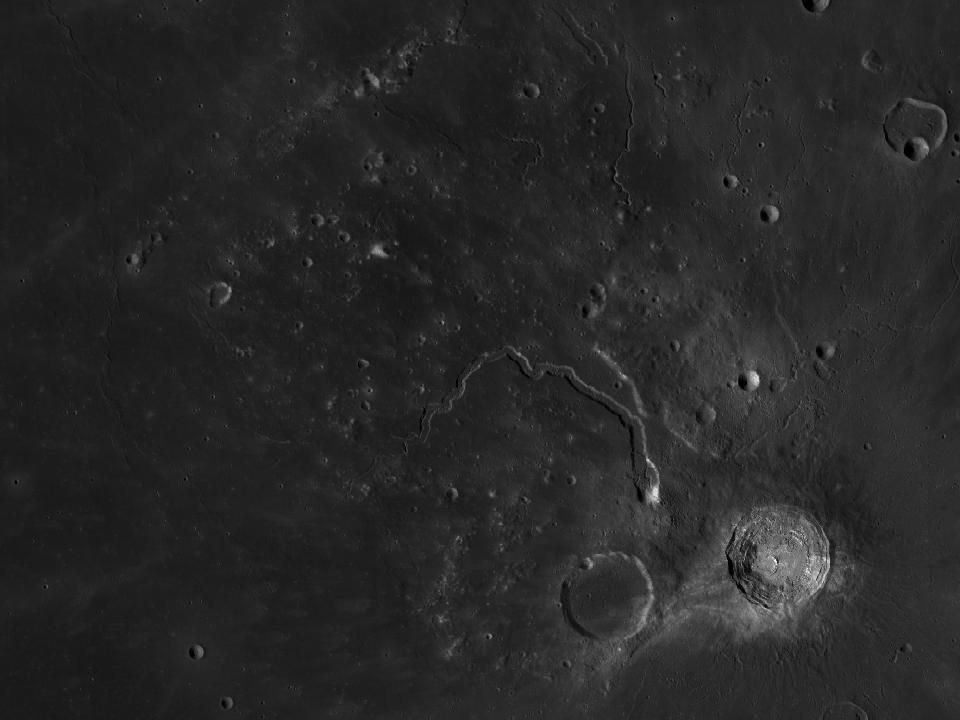 Valley / rille / scarp
A winding valley on the Aristarchus plateau. Its shape contrasts with the straight fractures and impact features elsewhere on the Moon.