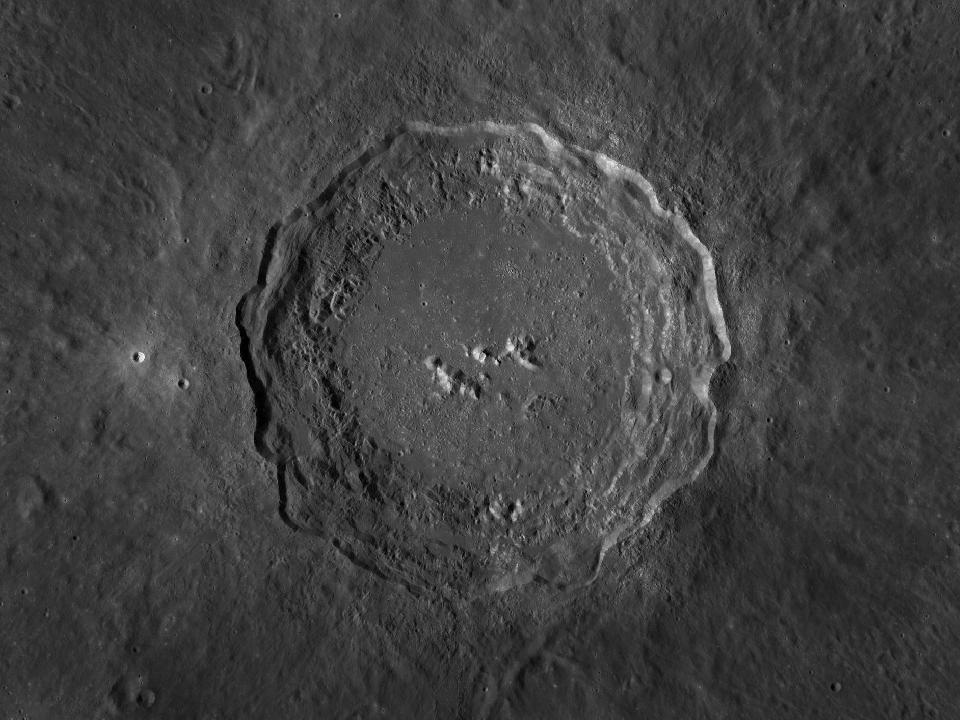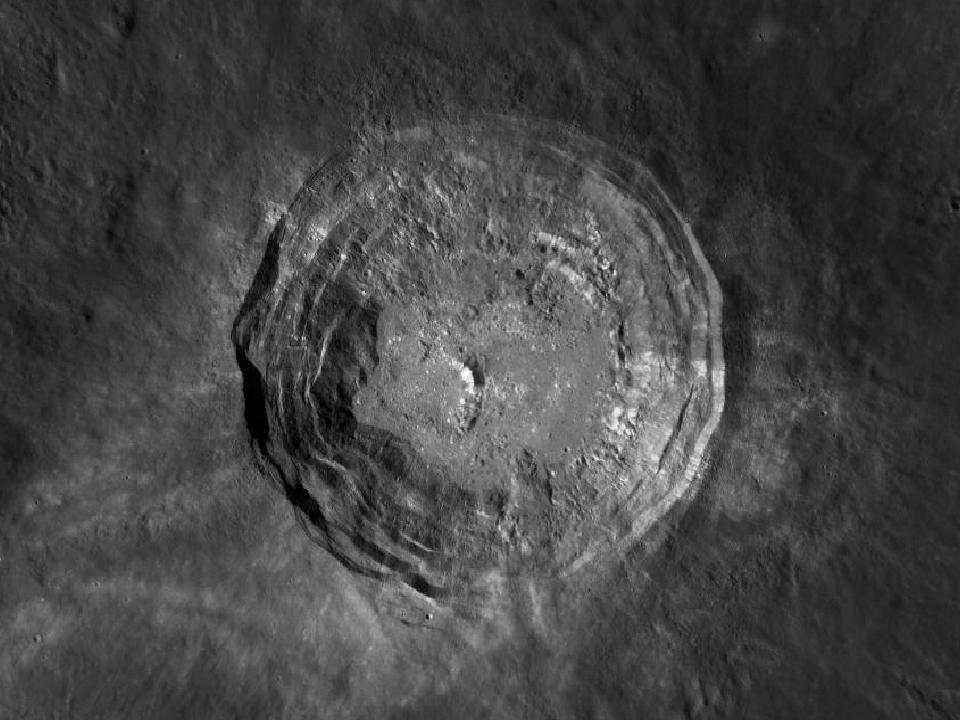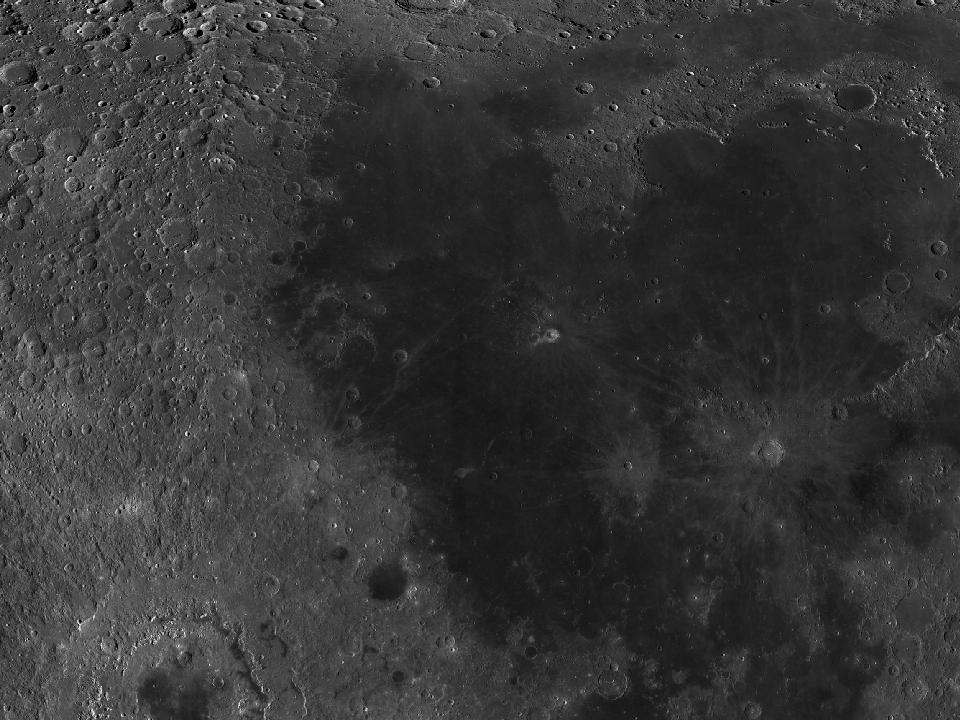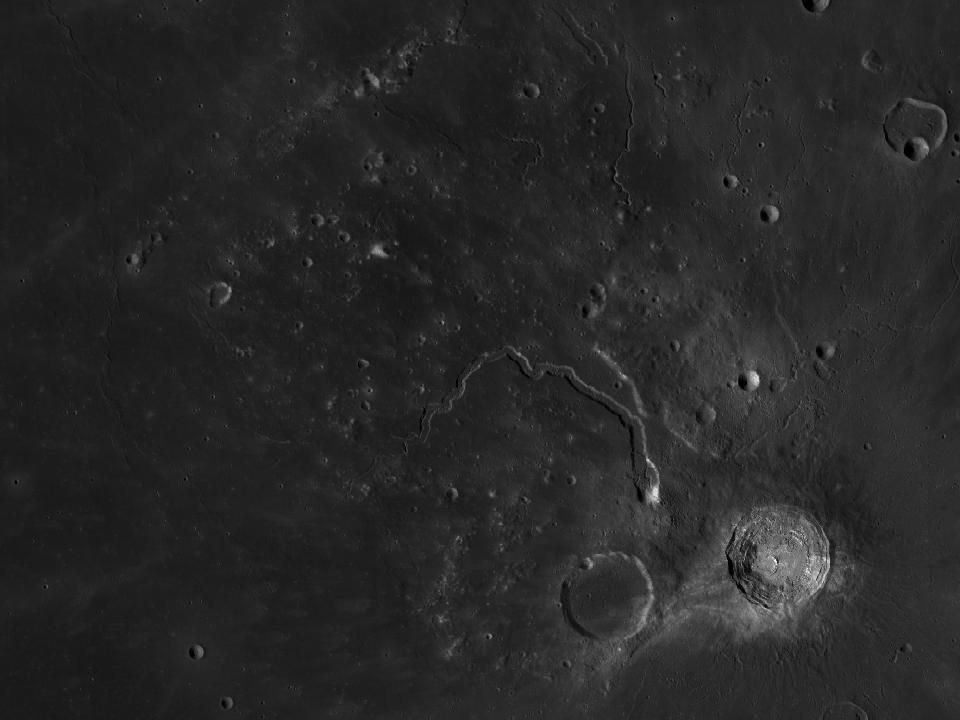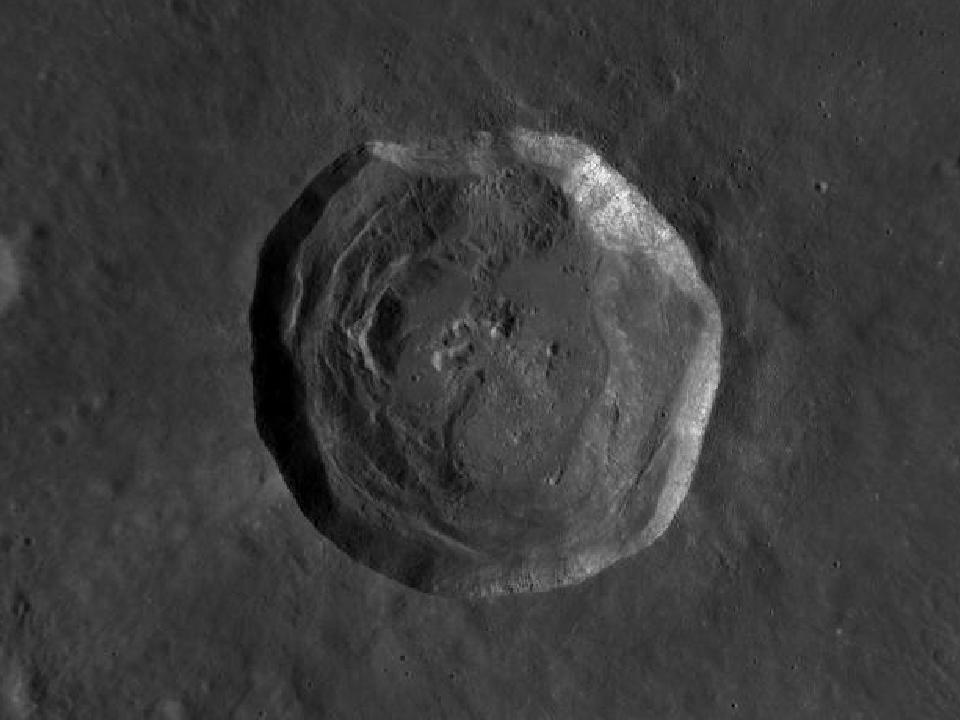
How to observe Kepler
Use higher illumination to trace the rays over the darker plains, then revisit near the terminator for the crater itself.
Finding the region
Look at 8.12° N, 38.01° W on the lunar disc. The chart marker identifies the catalogue centre. Start with a wide field and use the nearby formations below as landmarks.
Equipment & conditions
Start at low magnification to identify the rim. Move to a moderate power when the air is steady; low sunlight usually makes walls and floor relief easier to distinguish. A bright ray system can be more conspicuous near full Moon.
Lighting
For surface relief, try a time when the Sun is low over this region. To compare surface brightness and any bright rays, return under higher illumination. The atlas calculates the solar elevation at the formation’s centre for any selected date.
View Kepler in the atlas →