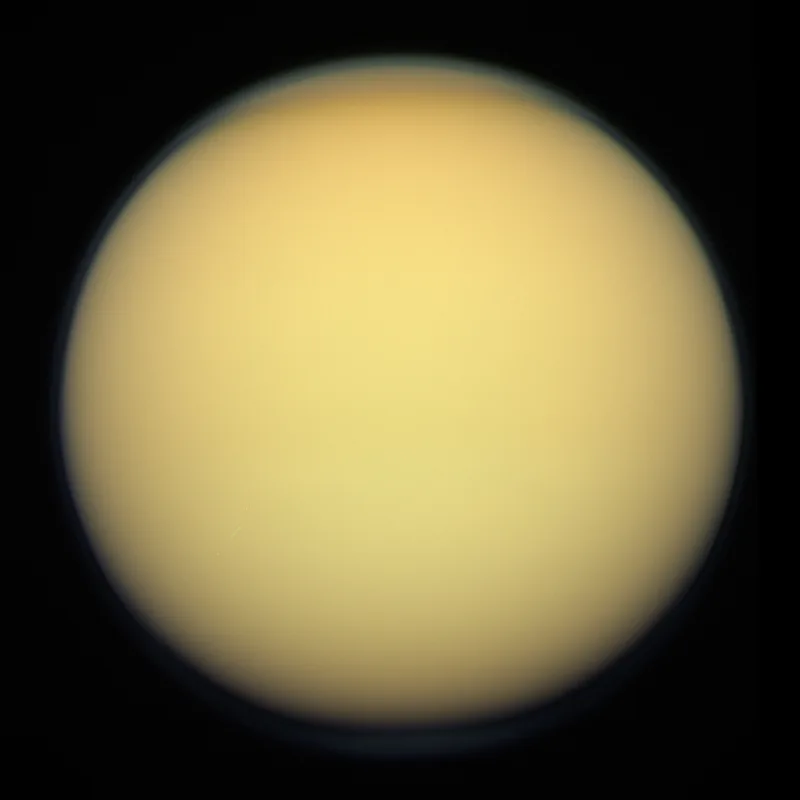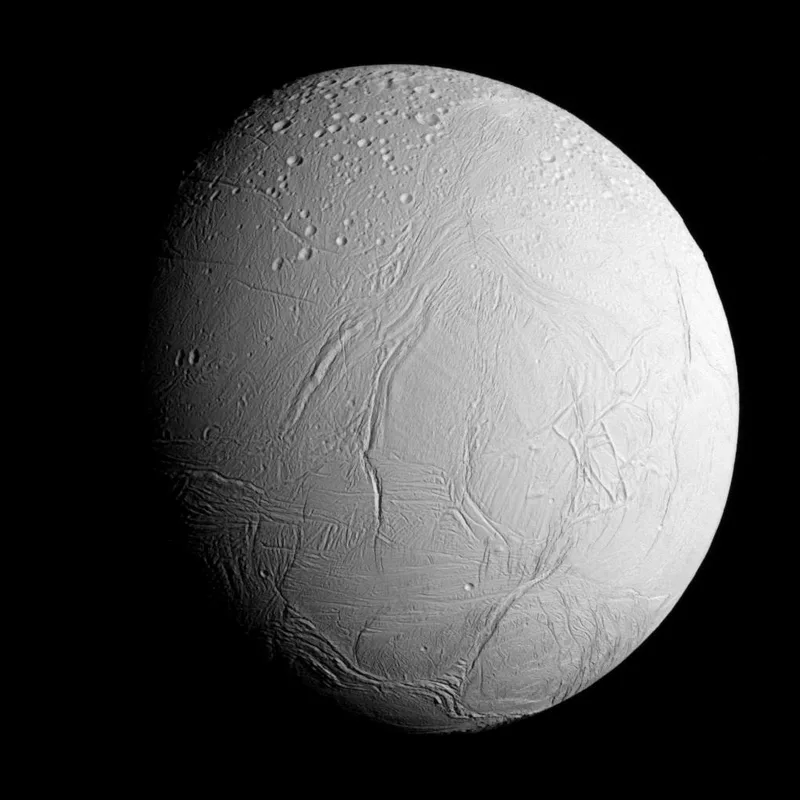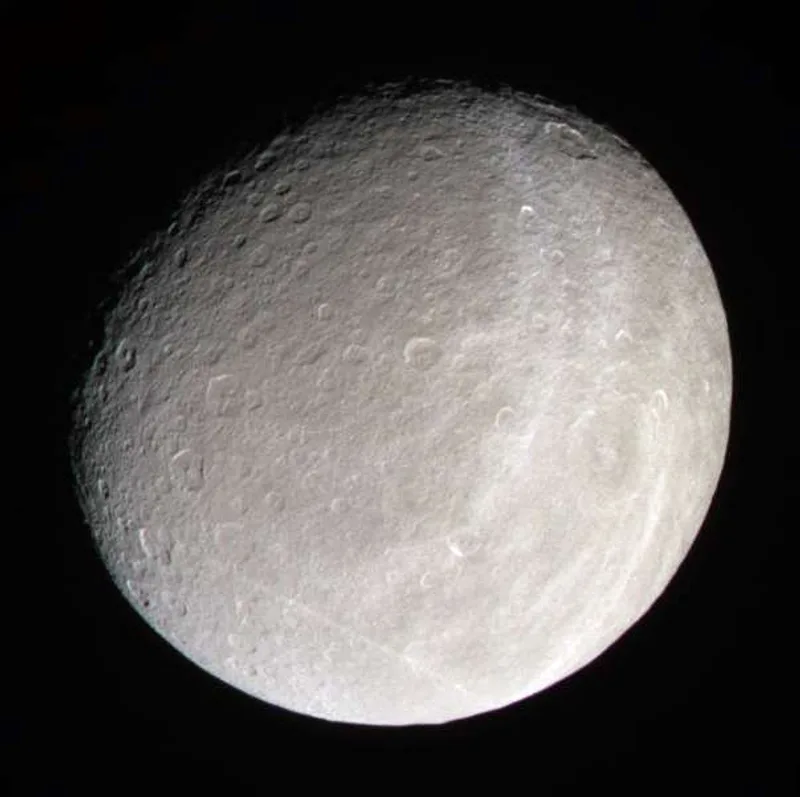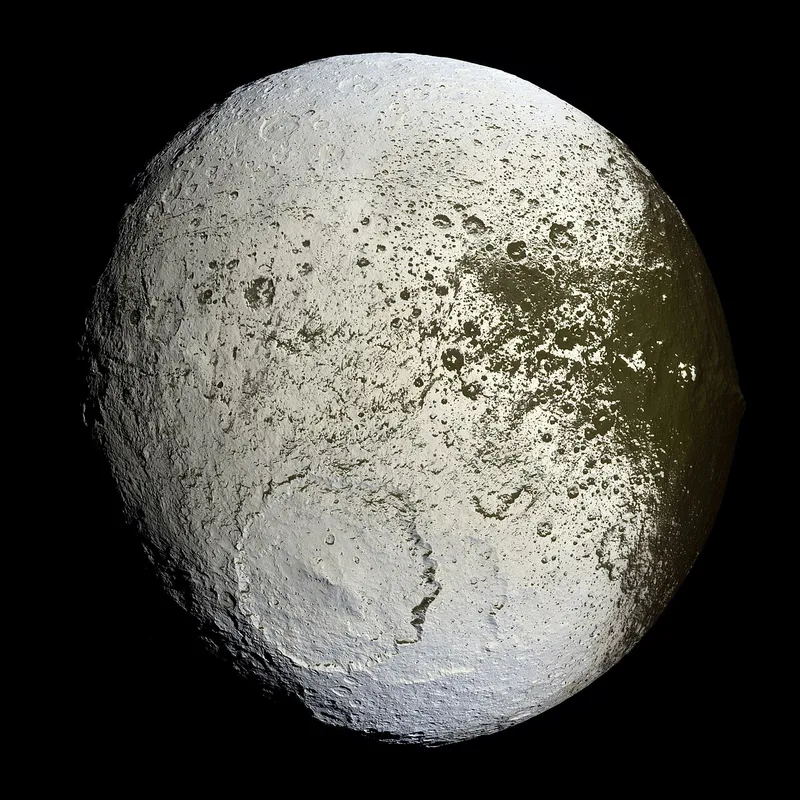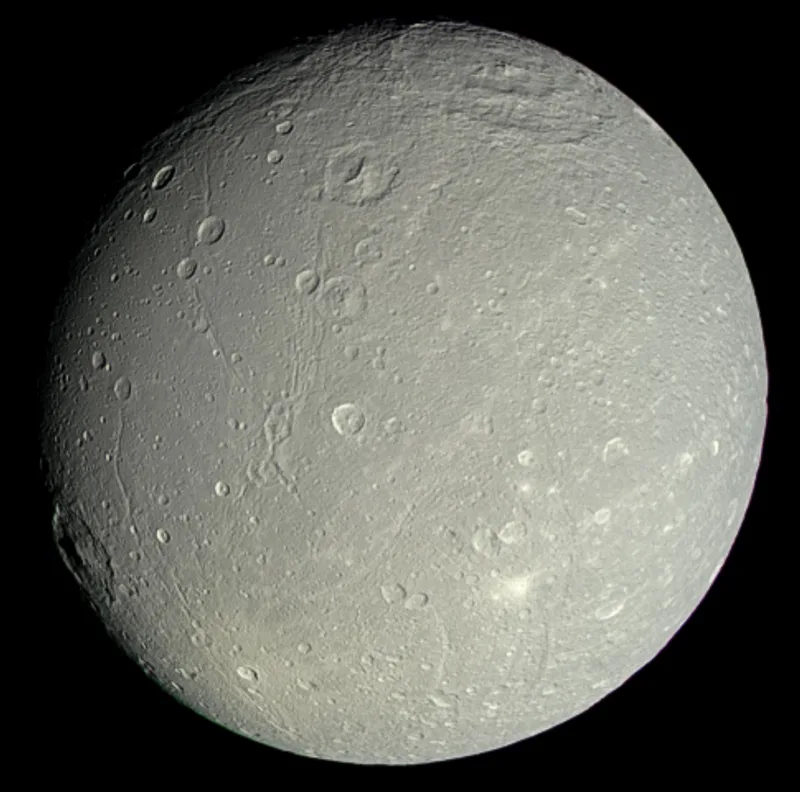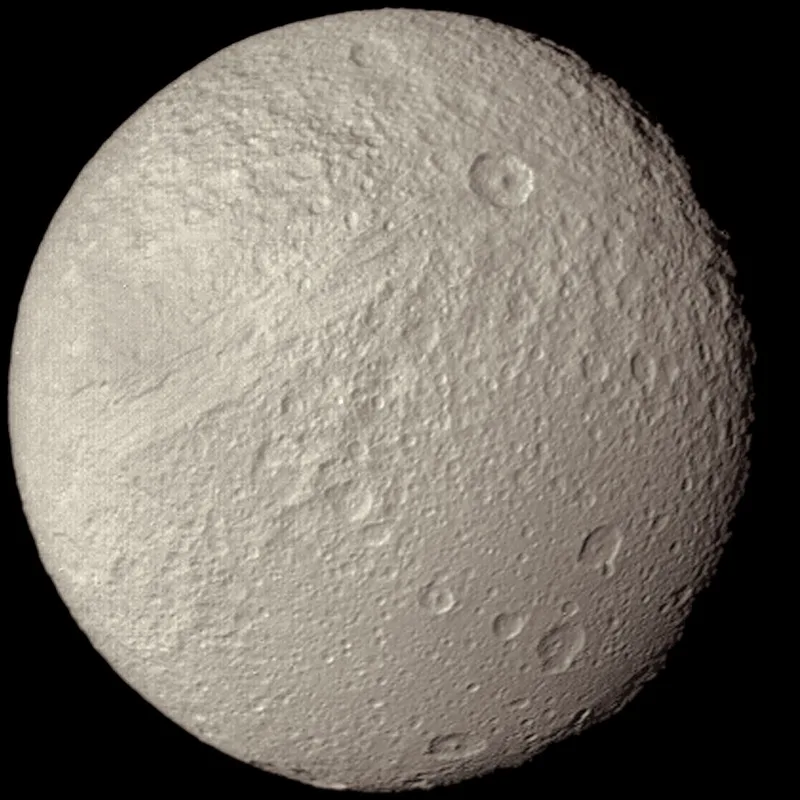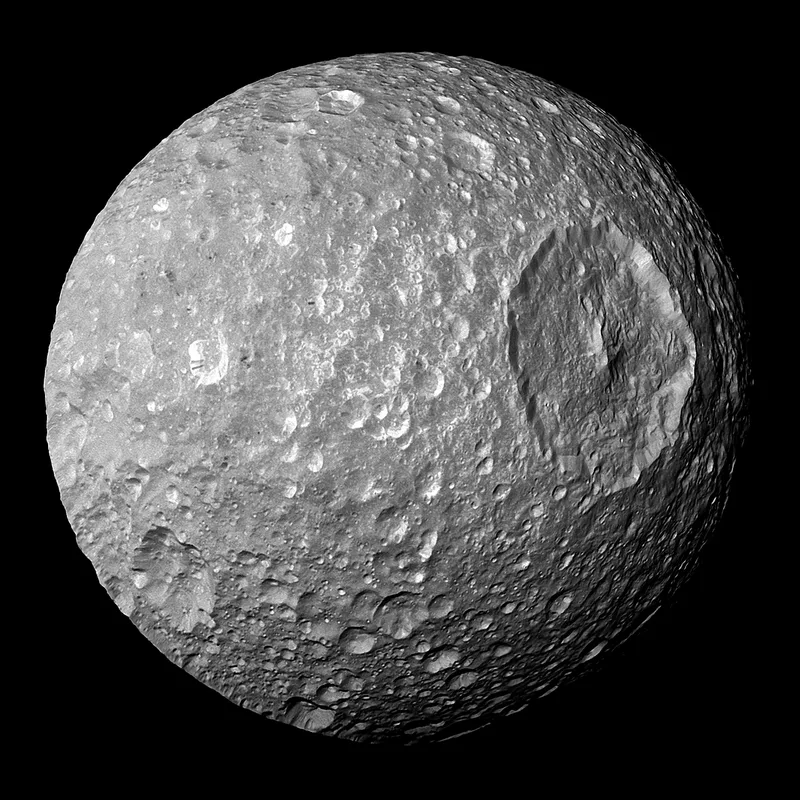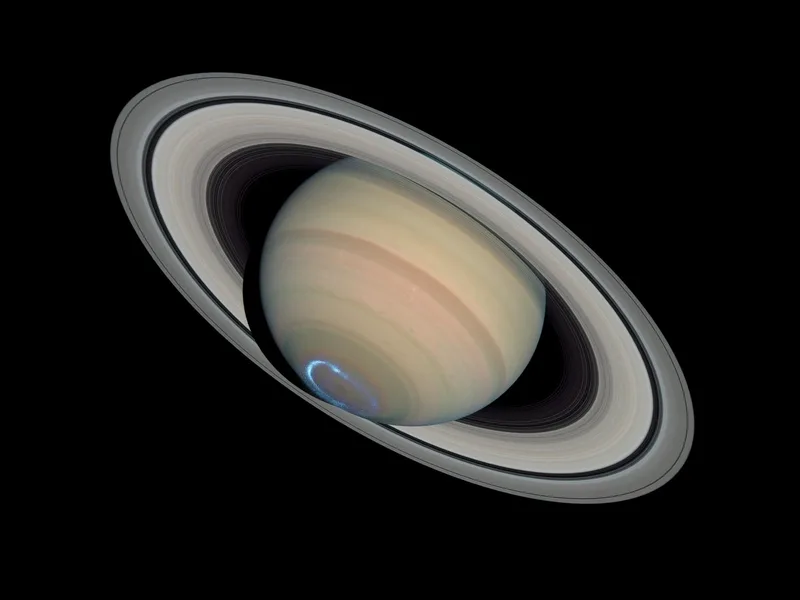
Saturn is a gas giant about nine times Earth's diameter, famous for a broad ring system of ice and rock. Its average density, 0.687 g/cm³, is lower than that of water. Saturn orbits at 9.58 AU and needs almost 29.5 years to circle the Sun. Among its many moons are Titan, with its thick atmosphere, and Enceladus, with its hidden ocean, both priority targets in the search for habitable environments.
How to observe Saturn
A small telescope can separate the rings from Saturn’s globe. Their apparent opening changes through Saturn’s orbit: near edge-on they look much narrower, and the Cassini Division becomes harder to distinguish. Look for Titan nearby and wait for Saturn to climb high. Opposition is a favourable season, not a requirement for a good view.
Scientific context
The Cassini spacecraft orbited Saturn from 2004 to 2017, studying the rings, the hexagon-shaped jet stream around the north pole, and the water plumes of Enceladus before plunging into the planet. The main rings span hundreds of thousands of kilometers yet are typically only tens of meters thick.
- Radius
- 58,232 km
- Diameter
- 116,464 km
- Mass
- 5.683E+26 kg
- Mean density
- 0.687 g/cm³
- Surface gravity
- 10.44 m/s² (1.065 g)
- Mean temperature
- -140°C
- Orbital period
- 10,759 days (29.457 years)
- Semi-major axis
- 9.58 AU
- Mean sunlight travel time
- 79.67 minutes
At your observing time
21 Nov 2026, 10:34 · now
- Apparent magnitude
- 0.5
- Disc diameter
- 18.3 arcsec
- Constellation
- Cetus
- Ring opening from Earth
- 6.2°
- Next opposition
- 18 Oct 2027, 00:18 UTC