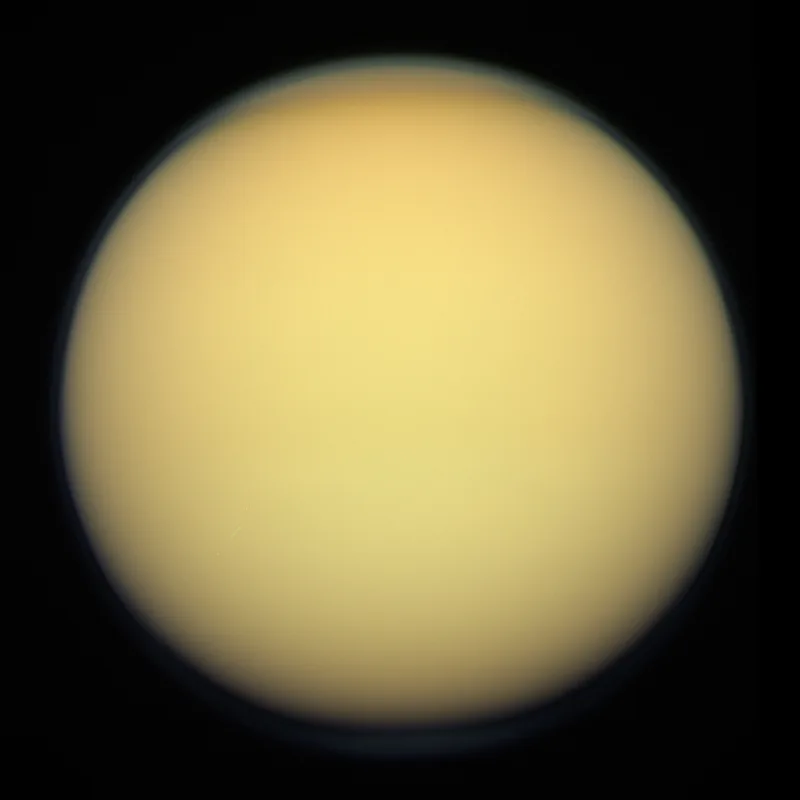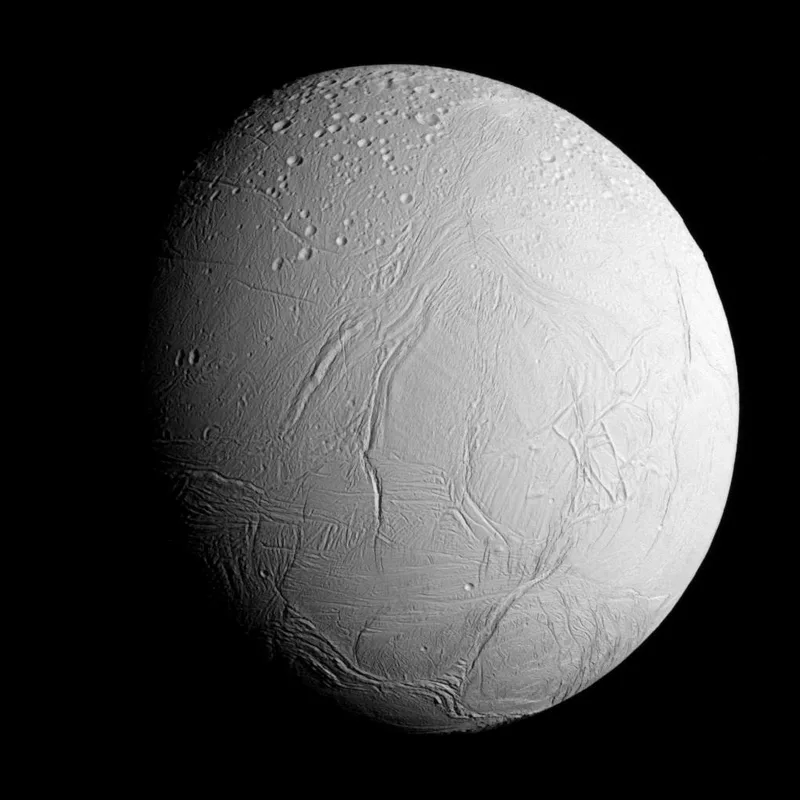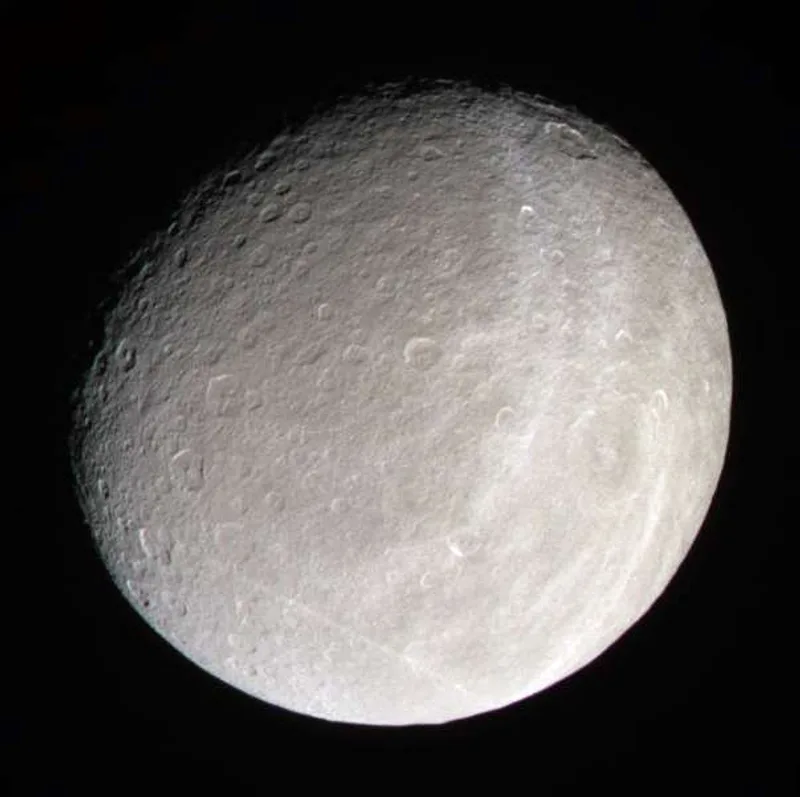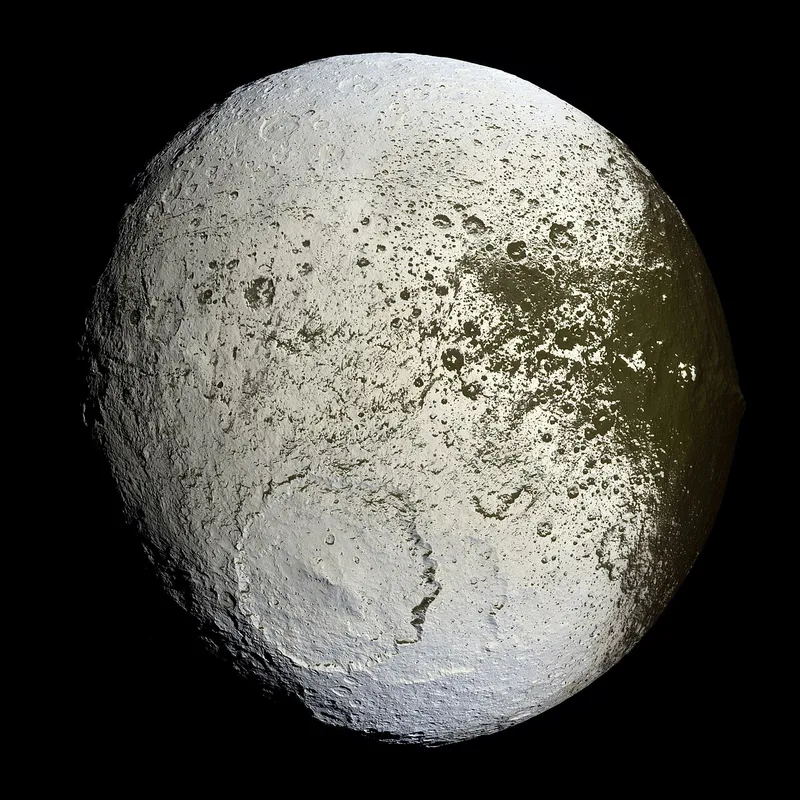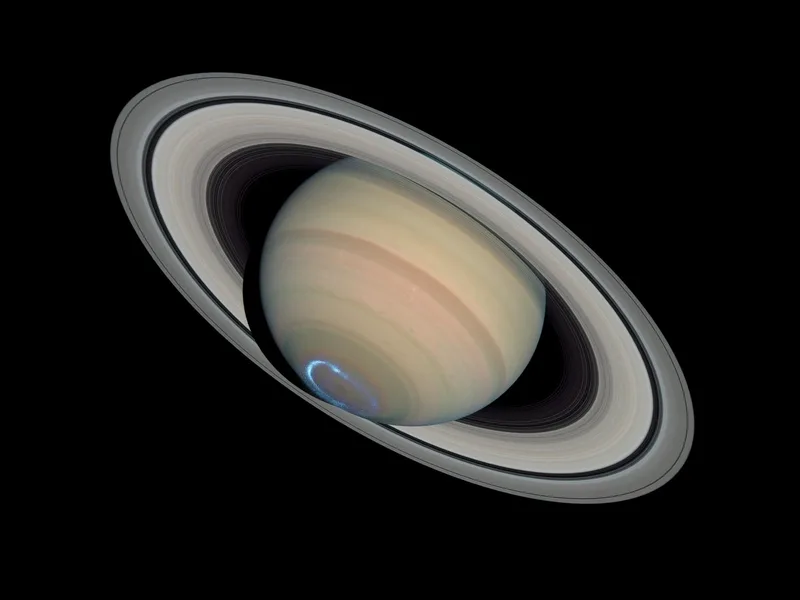
Saturn is a gas giant best known for its spectacular ring system made of ice and rock. It has dozens of moons including Titan and Enceladus, which are high-priority targets for astrobiology. Saturn is approximately 116,464 km across.
How to observe Saturn
A small telescope can separate the rings from Saturn’s globe. Their apparent opening changes through Saturn’s orbit: near edge-on they look much narrower, and the Cassini Division becomes harder to distinguish. Look for Titan nearby and wait for Saturn to climb high. Opposition is a favourable season, not a requirement for a good view.
Scientific context
Useful scale comparisons are 9.14 Earth diameters, 1.065 g surface gravity, 29.457 Earth years per orbit. These values are rounded from the catalogue measurements shown on this page.
- Radius
- 58,232 km
- Diameter
- 116,464 km
- Mass
- 5.683E+26 kg
- Mean density
- 0.687 g/cm³
- Surface gravity
- 10.44 m/s² (1.065 g)
- Mean temperature
- -140°C
- Orbital period
- 10,759 days (29.457 years)
- Semi-major axis
- 9.58 AU
- Mean sunlight travel time
- 79.67 minutes
Source: NASA Science ↗
At your observing time
3 Oct 2026, 14:54 UTC · Change observing time
- Apparent magnitude
- 0.2
- Disc diameter
- 19.0 arcsec
- Constellation
- Cetus
- Ring opening from Earth
- 7.5°
- Next opposition
- 4 Oct 2026, 12:12 UTC