Observer's guide
About NGC 6981
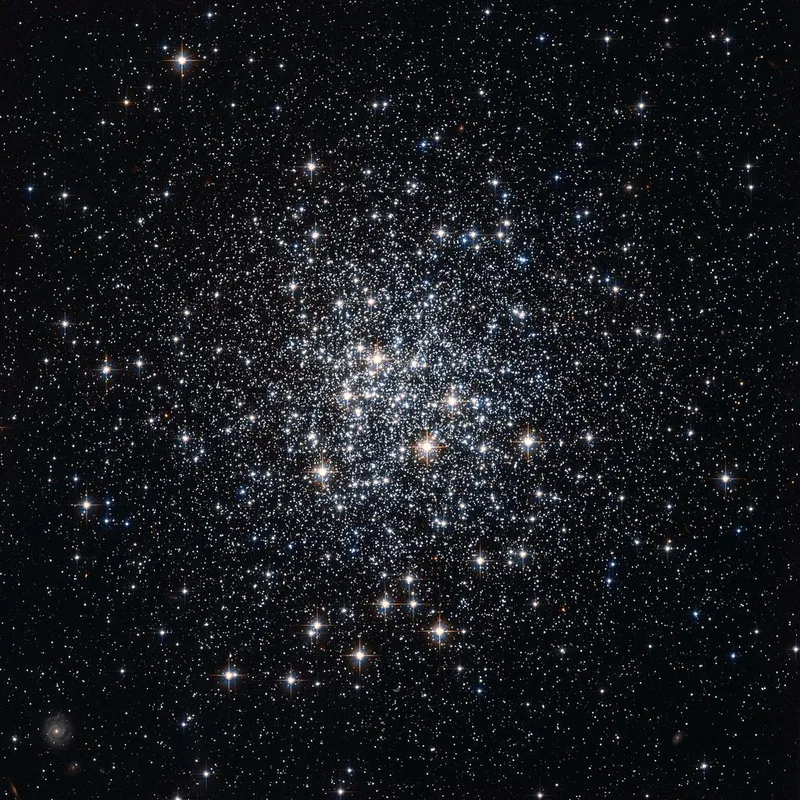
Far out in the halo of the Milky Way, about 52,800 light-years away, M72 (NGC 6981) is one of the more distant globular clusters in the Messier catalog. It shines at magnitude 9.3 in western Aquarius, a little over a degree west of the asterism M73. Its small size and low brightness make it a good test of sky conditions for anyone working through the Messier list.
Observing tips
Start at Epsilon Aquarii (Albali) and move about 3 degrees south-southeast to find M72. Binoculars show at most a faint smudge. A 70 to 100 mm telescope shows a small, round, hazy patch with little central brightening. With 200 mm at 150x to 200x, the outer edge becomes grainy and a few faint stars may resolve with averted vision. From 52 degrees north it peaks at about 25 degrees altitude, so dark, transparent skies matter more than aperture.
Because it is faint, use a larger aperture where possible, avoid bright Moon conditions, and use averted vision.
What to expect
M72 is an old globular cluster in the outer halo of the Milky Way. It lies roughly twice as far away as M13, which is why it appears so small and faint even though it holds a typical population of ancient stars.
M72 is small, so 1200 mm or more helps resolve its stars. Use moderate exposures and good seeing; with a shorter focal length you can frame it together with M73 just over a degree to the east.