Observer's guide
About NGC 6838
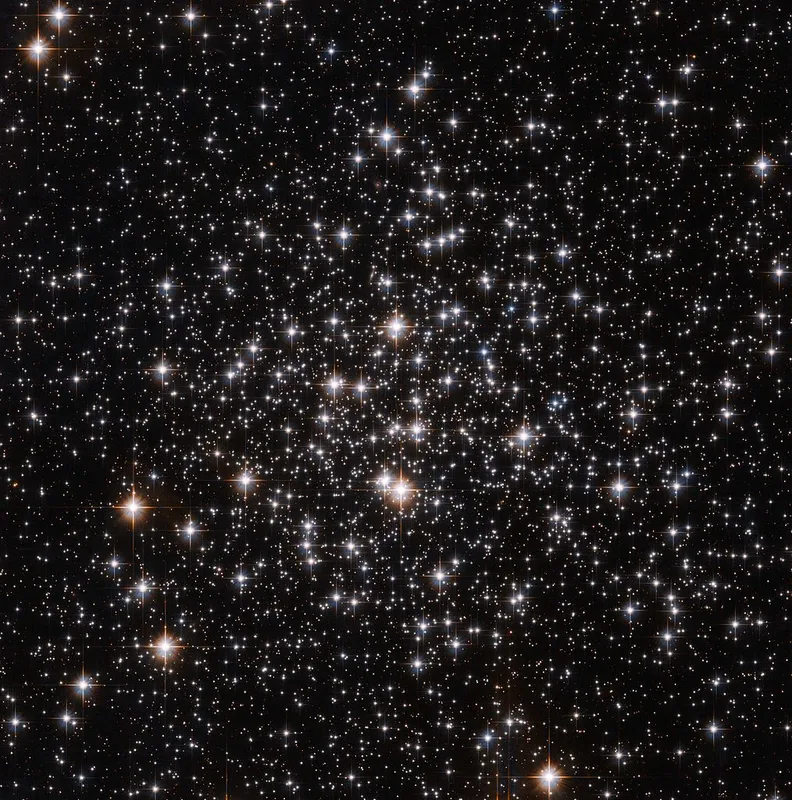
In the small constellation Sagitta, between the stars of the arrow's shaft, lies M71 (NGC 6838), a loose globular cluster of magnitude 8.3 about 11,700 light-years away. For decades astronomers debated whether it was a rich open cluster or a sparse globular, because it lacks the dense core typical of globulars. It sits in a busy Milky Way field that is pleasant to sweep with any instrument.
Observing tips
Find Delta and Gamma Sagittae, the two stars toward the point of the arrow, and look about halfway between them, slightly to the south. Binoculars show a faint, slightly elongated haze. A 70 to 100 mm telescope at 60x reveals a grainy glow with a few resolved stars. With 200 mm at 120x to 150x, many faint stars resolve across its face, with no strong central concentration. Averted vision brings out the dimmer members against the crowded background.
A small telescope under reasonably dark skies is a good starting point; use the live altitude chart to choose its highest point.
What to expect
M71 is now accepted as a globular cluster, based on studies of the ages and composition of its stars. It is relatively metal-rich and lies close to the disk of the Milky Way, which helps explain its loose look and the dimming from foreground dust.
At about 6 to 7 arcminutes, M71 suits 800 to 1200 mm, while 400 mm frames it within the rich star fields of Sagitta. Its stars show warm colors, so keep exposures short enough to preserve them.