Observer's guide
About NGC 4590
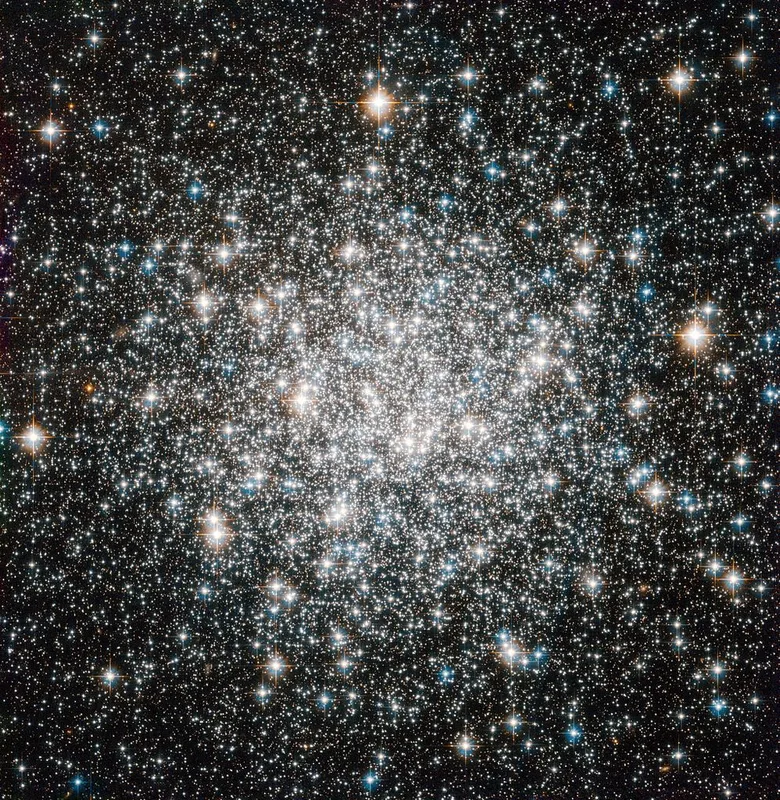
NGC 4590 (M68) is catalogued as a globular cluster in Hydra. Its J2000 position is RA 12:39:28.01, Dec -26:44:34.9, corresponding to 189.8666 degrees RA and -26.7441 degrees Dec. The local catalogue places it about 33,300 light-years away. Its referenced angular extent is approximately 12 by 12 arcminutes.
Observing tips
This is rated as a very hard target at magnitude 7.8. It is associated with spring observing, with midnight placement typically strongest around March. From 52 degrees north its theoretical meridian altitude is about 11.3 degrees; local horizons and the live altitude chart determine the practical window.
A small telescope under reasonably dark skies is a good starting point; use the live altitude chart to choose its highest point.
What to expect
The SIMBAD classification for the matched source is GlC. A published radial velocity value is -93.2 km/s. The SIMBAD record currently connects it to 1077 bibliographic references.
At roughly 12 arcminutes across, it benefits from a narrower field and adequate image scale. Use the listed 12 by 12 arcminute extent to check framing, and treat catalogue magnitude as integrated brightness rather than a direct measure of visual contrast.