Observer's guide
About NGC 6779
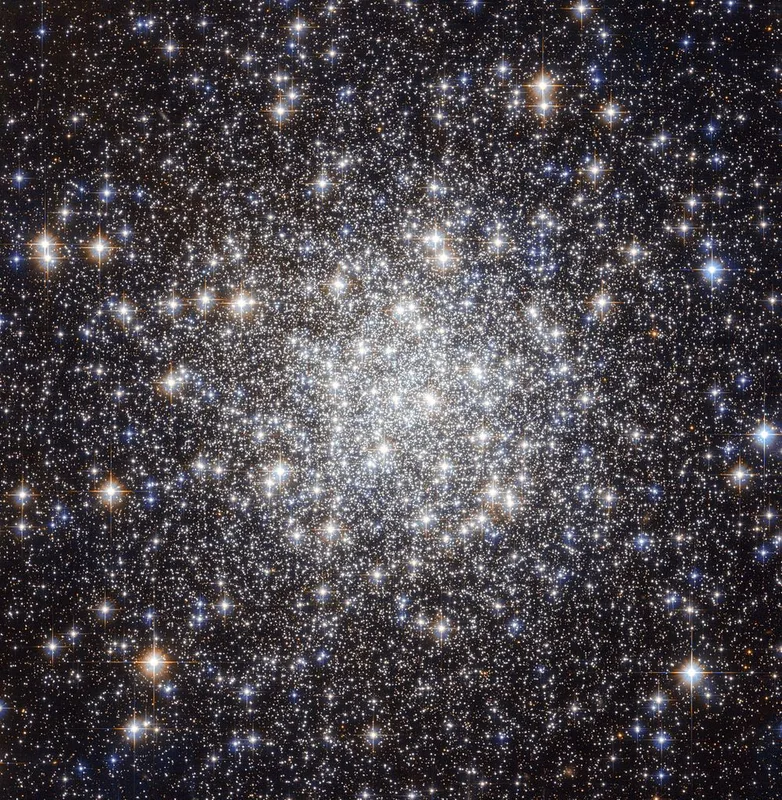
Halfway along the line from Albireo to Sulafat in Lyra sits M56 (NGC 6779), a compact globular cluster of magnitude 8.3. It lies about 31,600 light-years away against a rich Milky Way star field, which makes the surrounding view worth a slow look. It is far smaller and fainter than the better known M13 in Hercules, but its grainy glow and crowded background give it a character of its own.
Observing tips
Start at Albireo, the head of Cygnus, and sweep about halfway toward Gamma Lyrae (Sulafat); M56 shows up in binoculars as a small, fuzzy star among dense Milky Way fields. A 70 to 100 mm telescope at 60x to 100x shows a round glow with a slightly brighter center and a hint of grainy texture. In a 200 mm scope at 150x or more, the outer halo begins to break into individual faint stars, though the core stays unresolved. Use averted vision and give your eyes time, since its brightest members are faint and the field around it is crowded.
A small telescope under reasonably dark skies is a good starting point; use the live altitude chart to choose its highest point.
What to expect
Like other globular clusters, M56 is a tightly bound ball of very old stars orbiting in the halo of the Milky Way. Its stars are poor in elements heavier than helium, a sign that they formed early in the history of our galaxy, more than 10 billion years ago.
At only a few arcminutes across, M56 needs 1000 mm of focal length or more to show detail. Short subexposures keep the core from saturating, and the rich star field also makes a wider frame at 400 to 600 mm worthwhile.