Observer's guide
About NGC 5024
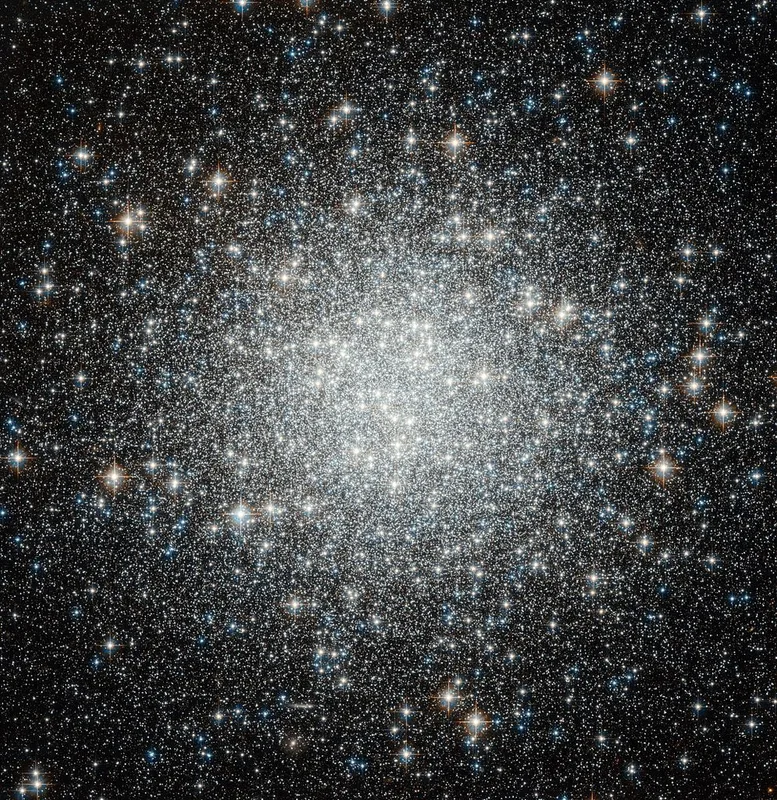
M53 (NGC 5024) is a globular cluster in Coma Berenices, about 56,400 light-years away and one of the more distant globulars in the Messier catalog. It shines at magnitude 7.6, spans about 13 to 14 arcminutes and lies close to the star Alpha Comae Berenices. The fainter, looser globular NGC 5053 lies about a degree away and makes a good contrast.
Observing tips
Find Alpha Comae Berenices (Diadem) and move about 1 degree northeast; M53 appears in binoculars as a small fuzzy star in the same field. A 70 to 100 mm scope at 100x shows a round, evenly bright glow with a compact core. A 200 mm telescope at 150x to 200x resolves the outer halo into faint stars. Then move about a degree southeast to try NGC 5053, a much fainter and more diffuse globular that needs averted vision.
A small telescope under reasonably dark skies is a good starting point; use the live altitude chart to choose its highest point.
What to expect
M53 lies in the outer halo of the Milky Way, far from the galactic center, and is one of the more metal-poor globulars known. Its stars formed very early from gas that had been only slightly enriched by earlier generations of stars.
At about 13 arcminutes, M53 frames well at 1,000 to 1,500 mm. A 500 mm frame can include NGC 5053, though that cluster needs long integration to show well.