Observer's guide
About NGC 5272
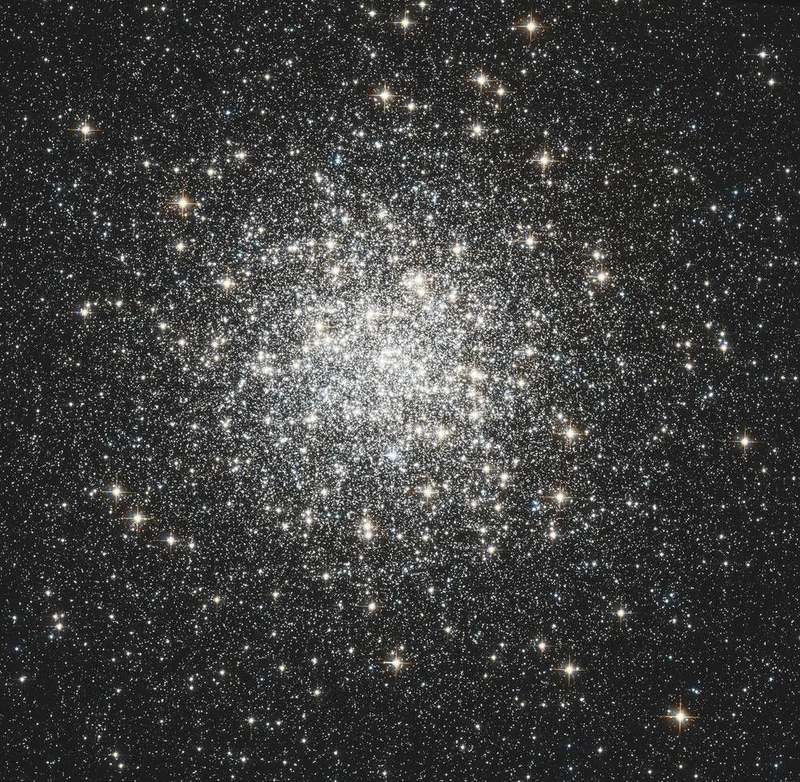
In the small spring constellation Canes Venatici, M3 (NGC 5272) is one of the finest globular clusters visible from northern latitudes. It shines at magnitude 6.2, spans about 18 arcminutes and lies some 33,900 light-years away. Charles Messier found it in 1764, and it was the first object in his catalog that he discovered himself rather than taking from earlier observers.
Observing tips
M3 sits in a blank stretch of sky roughly halfway between Arcturus and Cor Caroli, a little closer to Arcturus. Sweep along that line with binoculars and it appears as a soft, round glow with a brighter center. A 70 to 100 mm scope at 100x shows a bright, evenly concentrated ball with a grainy edge. In a 200 mm or larger telescope at 150x to 250x, the outer regions resolve into hundreds of stars, and chains of stars seem to run outward from the core. It climbs high from mid-northern latitudes, so it rewards high magnification on steady nights.
A small telescope under reasonably dark skies is a good starting point; use the live altitude chart to choose its highest point.
What to expect
M3 holds roughly half a million stars and is known for its variable stars: more than 200 have been found, most of them RR Lyrae types that pulse with periods of less than a day. Their predictable brightness makes them useful yardsticks for measuring the cluster's distance.
A focal length of 800 to 1,500 mm frames the 16 to 18 arcminute halo with room to spare. Use many shorter exposures, or an HDR combination, to keep the bright core from saturating while capturing the outer stars.