Observer's guide
About NGC 7099
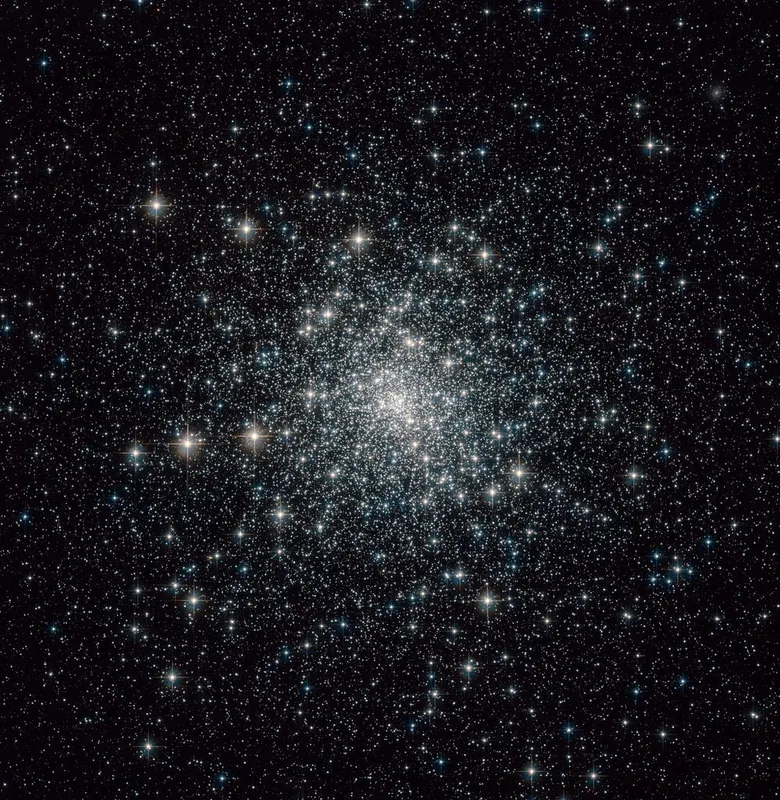
M30 (NGC 7099) is a globular cluster in Capricornus, about 24,800 light-years away. It shines at magnitude 7.2 and, like M15, has a dense, core-collapsed center. Because it rises just before dawn in early spring, it is the traditional final target of a Messier marathon, though autumn evenings give a far more comfortable view.
Observing tips
From Zeta Capricorni, move about 3 degrees east; M30 shows in binoculars as a small, fuzzy star. A 70 to 100 mm scope at 100x shows a bright, compact center with a faint halo. In a 200 mm telescope at 150x to 200x, the halo resolves and curved star chains appear to stream outward from the core. From 52 degrees north it peaks at around 15 degrees, so you need a clear southern horizon and should observe it close to the meridian.
A small telescope under reasonably dark skies is a good starting point; use the live altitude chart to choose its highest point.
What to expect
In a core-collapsed cluster like M30, close encounters between stars have driven the heaviest stars toward the center, creating an extremely dense core. Such cores are rich in blue stragglers and binary stars formed through those encounters.
At about 11 arcminutes, M30 fits well at 1,000 to 1,500 mm. Short subexposures help hold the core, and imaging near the meridian matters because it stays low from northern sites.