Observer's guide
About NGC 7089
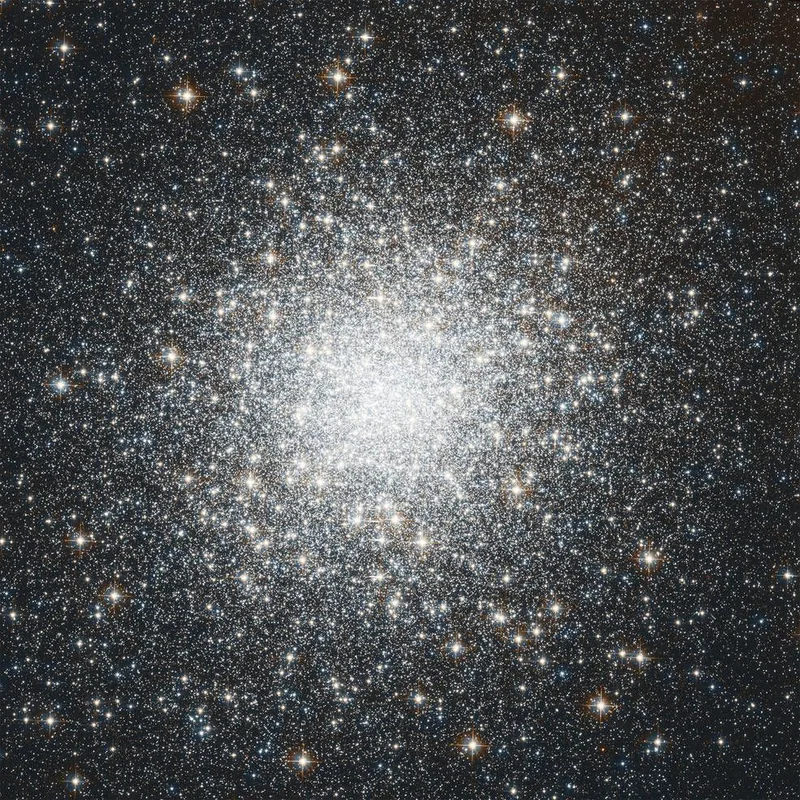
Globular cluster M2 (NGC 7089) sits in a sparse region of northern Aquarius, less than a degree south of the celestial equator, so it can be seen from almost anywhere on Earth. At magnitude 6.5 it is one of the brighter globulars of the autumn sky, and it lies around 37,500 light-years away. Its core is compact and bright, which makes the cluster look almost starlike at low power.
Observing tips
Find Beta Aquarii (Sadalsuud) and look about 5 degrees due north; M2 shows as a fuzzy star in a finder or binoculars, and its stellar-looking core is the giveaway. A 70 to 100 mm scope at around 100x reveals a round glow that brightens sharply toward the center, with the edges just starting to break up. In a 200 mm telescope at 150x to 200x, the outer halo resolves into many faint stars while the core stays a dense, slightly elongated blaze. Steady seeing makes a large difference here.
A small telescope under reasonably dark skies is a good starting point; use the live altitude chart to choose its highest point.
What to expect
M2 is a massive, ancient globular cluster in the Milky Way's halo, holding well over 100,000 stars. Like other globulars, its stars formed early in the galaxy's history, and today they are mostly old, low-mass stars, with red giants as the brightest members.
With a halo about 12 to 13 arcminutes across, M2 frames well at 800 to 1,500 mm. Keep subexposures short enough to avoid burning out the core, and stack plenty of them to show the faint outer stars.