Observer's guide
About NGC 7078
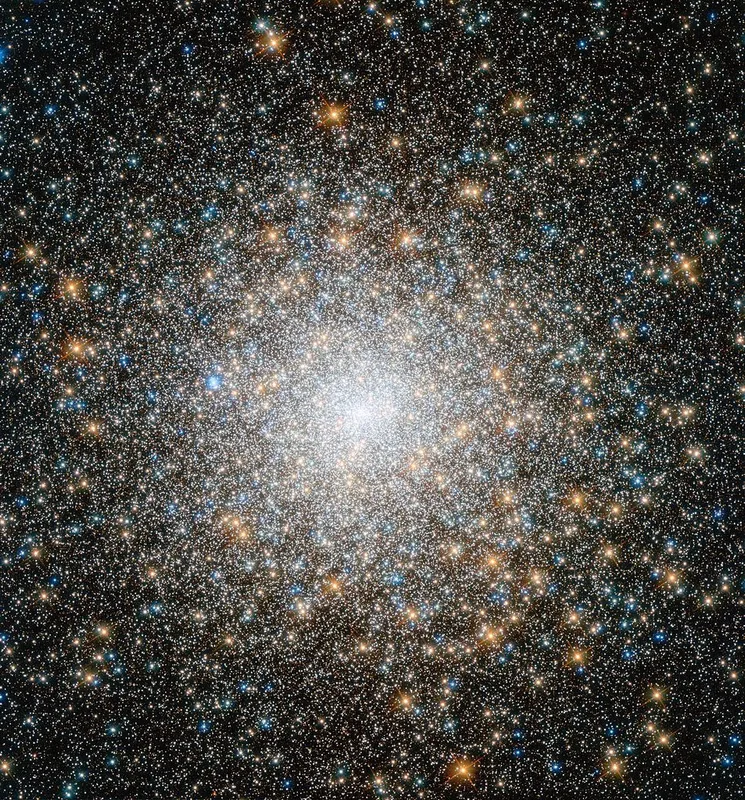
In Pegasus, a few degrees from the bright star Enif, lies M15 (NGC 7078), one of the most densely packed globular clusters in the Milky Way. It shines at magnitude 6.2, spans about 12 arcminutes and lies roughly 33,600 light-years away. Its core has undergone what astronomers call core collapse, and the cluster also contains Pease 1, the first planetary nebula found inside a globular.
Observing tips
Find Enif (Epsilon Pegasi), the nose of the horse, and move about 4 degrees west-northwest. In binoculars M15 shows as a fuzzy star with a bright center. A 70 to 100 mm scope at 100x shows a bright, compact core inside a halo that starts to break up at the edges. A 200 mm or larger telescope at 200x and up resolves the outer halo well, while the intense core stays nearly stellar. Pease 1 is a challenge for 300 mm and larger scopes and needs an OIII filter blinked over the core.
A small telescope under reasonably dark skies is a good starting point; use the live altitude chart to choose its highest point.
What to expect
In a core-collapsed globular, gravitational interactions have pulled the heaviest stars inward until the center is extremely crowded. M15 is one of the best-known examples, and it holds well over 100,000 stars along with many variables and several pulsars.
Use 1,000 to 1,500 mm to frame the cluster. Its bright core saturates quickly, so use short subexposures or HDR blending, and wait for good seeing to separate stars near the center.