Observer's guide
About Intergalactic Wanderer
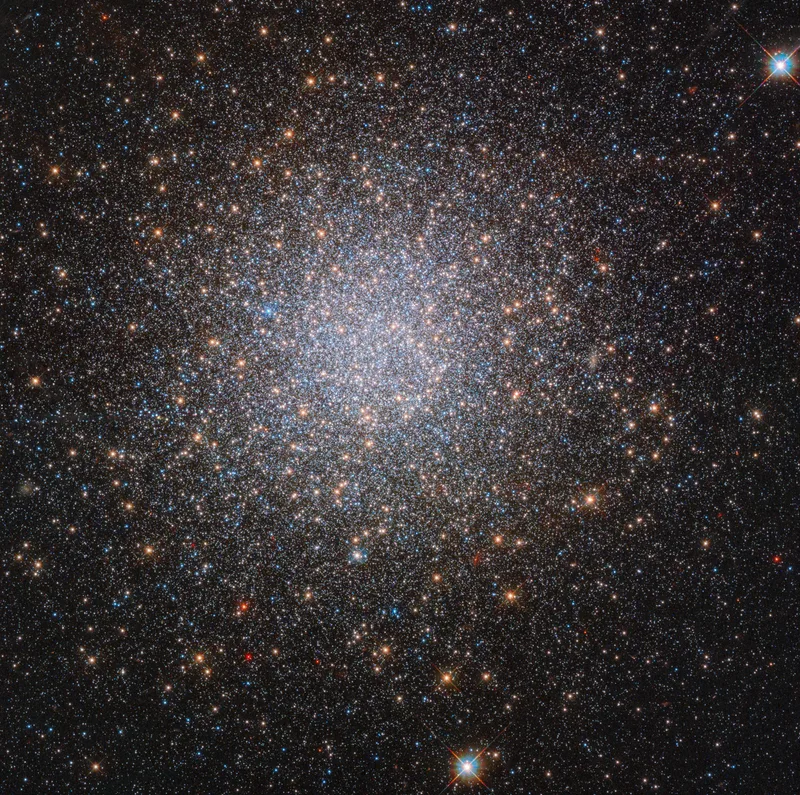
NGC 2419, Caldwell 25, is a globular cluster in Lynx nicknamed the Intergalactic Wanderer. At about 275,000 light-years, it is one of the most distant globular clusters belonging to the Milky Way, farther away than the Magellanic Clouds. That distance makes it appear small and faint, at magnitude 9.1 and about 4 arcminutes across.
Observing tips
Start at Castor in Gemini and move about 7 degrees north, slightly east, into the southern part of Lynx. Binoculars show at best a faint, starlike glow. In a 70–100 mm scope it is a small, round fuzzy patch, easily mistaken for a galaxy. With 200 mm or more at 150–200x, it shows a slightly brighter center, but its stars are too faint to resolve except in very large amateur instruments. The view is modest, but its distance is the reason most observers seek it out.
Because it is faint, use a larger aperture where possible, avoid bright Moon conditions, and use averted vision.
What to expect
NGC 2419 is an old, massive globular cluster in the far outer halo of the Milky Way. Because it is so remote, it takes a very long time to complete an orbit, and its origin, possibly in a captured dwarf galaxy, is still debated.
At about 4 arcminutes, it needs 1,500–2,500 mm. Good seeing and long total integration help resolve the outer stars, which are very faint.