Observer's guide
About NGC 3195
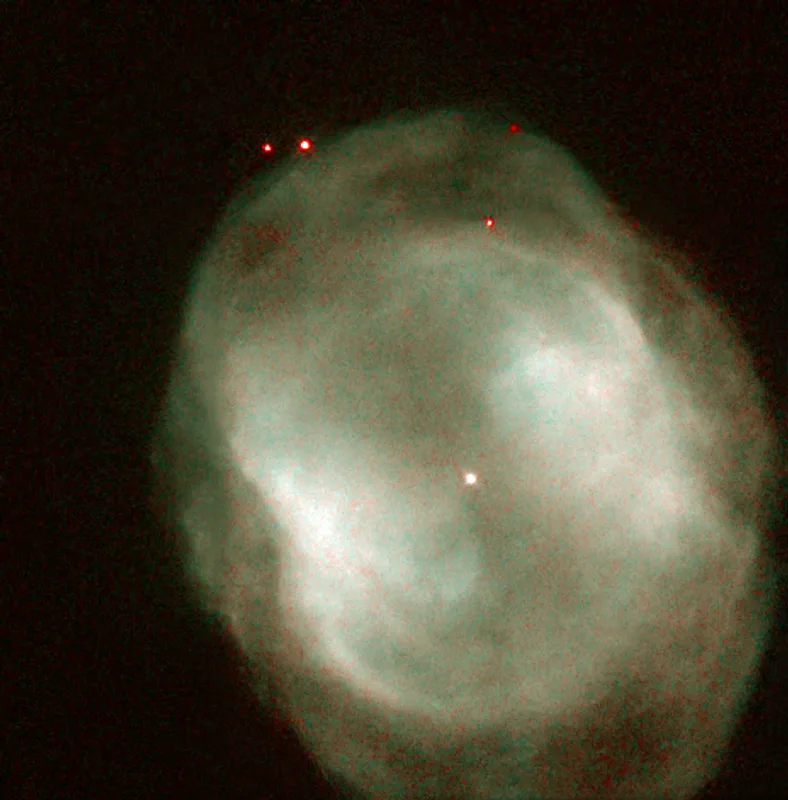
NGC 3195, Caldwell 109, is a small planetary nebula in Chamaeleon, about 5,400 light-years away, deep in the south polar sky. It is the southernmost object in the Caldwell catalogue. At magnitude 10.6 and only about 0.7 arcminutes across, it is a challenge for small telescopes, but its position keeps it above the horizon all night from much of the Southern Hemisphere.
Observing tips
Find the naked-eye pair Delta1 and Delta2 Chamaeleontis and move about 1.5° west. In binoculars it is invisible. A 100 mm scope at 100x shows a faint, small disk, and an OIII filter helps confirm it. In a 200 mm telescope at 150x to 200x, it shows an oval disk with a pale glow. From 52°N it never rises; it is practical only from the Southern Hemisphere, and it is circumpolar from most of it, best in February through April.
Because it is faint, use a larger aperture where possible, avoid bright Moon conditions, and use averted vision.
What to expect
NGC 3195 is the ejected outer layers of a dying star, now lit by its hot remnant core. Its far southern position, out of reach of the large northern observatories, kept it less studied than most bright planetaries.
This tiny target needs 1500 mm or more of focal length and good seeing. Short OIII and H-alpha exposures will capture the bright disk and faint shell.