Observer's guide
About NGC 6101
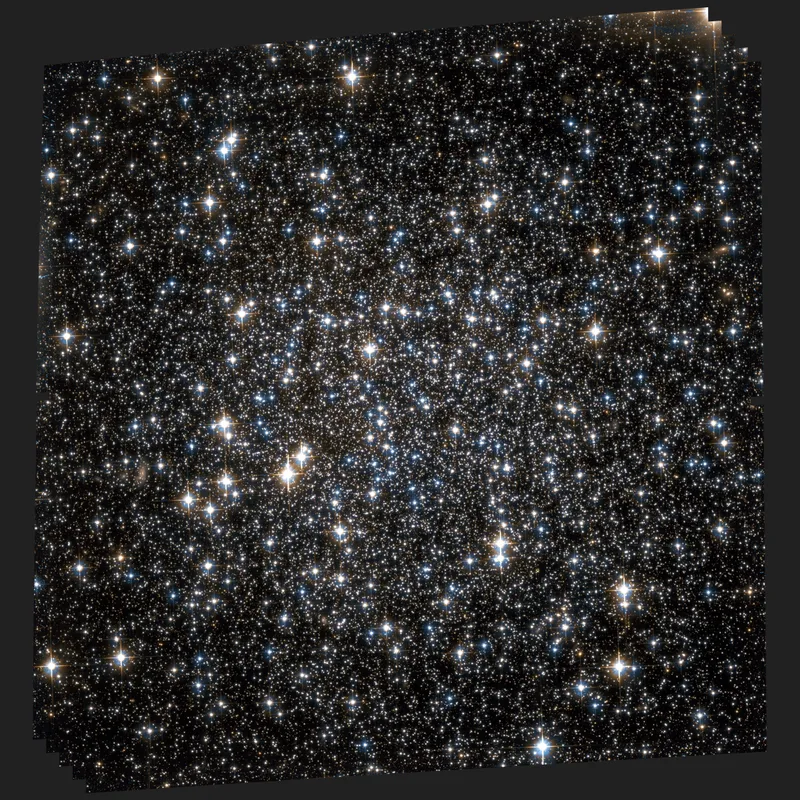
NGC 6101, Caldwell 107, is a faint, loose globular cluster in Apus, about 49,900 light-years away. At magnitude 9.2 and about 11 arcminutes across, it has a low surface brightness and is one of the harder southern Caldwell globulars. Its sparse, scattered appearance is unusual for a globular cluster and makes dark skies essential.
Observing tips
From Alpha Trianguli Australis, move about 4° south-southwest. In binoculars it is hard to see, a faint glow at best. A 100 mm scope shows a faint, round haze with little central concentration. A 200 mm telescope at 150x resolves a few faint stars over the haze. Choose a dark, moonless night, since the low surface brightness makes it vanish under light pollution. From 52°N it never rises; it is practical from about 8°N southward, best in May through July.
Because it is faint, use a larger aperture where possible, avoid bright Moon conditions, and use averted vision.
What to expect
NGC 6101 is an old, metal-poor globular cluster in the Milky Way's halo. Its stars are among the oldest in the galaxy, and its loose structure makes it a useful test of how globular clusters evolve.
At about 11 arcminutes, 1000 to 1500 mm frames it well. Aim for long integration to lift its faint stars and a dark sky to keep the background clean.