Observer's guide
About 47 Tucanae
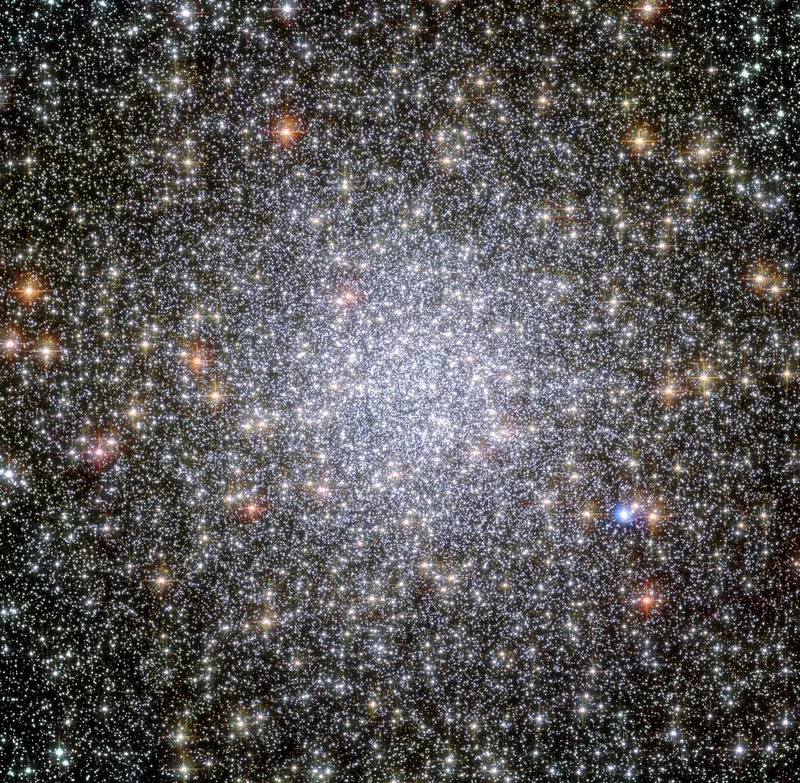
47 Tucanae, NGC 104 or Caldwell 106, is one of the brightest and most massive globular clusters in the sky, second only to Omega Centauri. It lies about 14,700 light-years away in Tucana, next to the Small Magellanic Cloud, and at magnitude 4.1 it is easy to see with the naked eye. Its very bright, compact core and large halo make it a favorite of southern observers.
Observing tips
Find the Small Magellanic Cloud and look just west of it; 47 Tuc appears as a fuzzy 4th-magnitude star. In binoculars it is a bright glow with a strong, concentrated core. A 100 mm scope at 60x resolves stars across the halo, and a 200 mm telescope shows a dense, bright core and countless stars spread across the field. From 52°N it never rises; it is practical from about 8°N southward, best in September through November.
Its brightness makes it a practical binocular or small-telescope candidate when it is well above the horizon.
What to expect
47 Tucanae is an old globular cluster with many millisecond pulsars and blue stragglers. Both are signs of frequent close encounters and stellar mergers among the tightly packed stars in its dense core.
At about 44 arcminutes, 400 to 800 mm frames it well, and 200 to 300 mm includes the Small Magellanic Cloud. Aim for short subexposures to keep the core resolved.